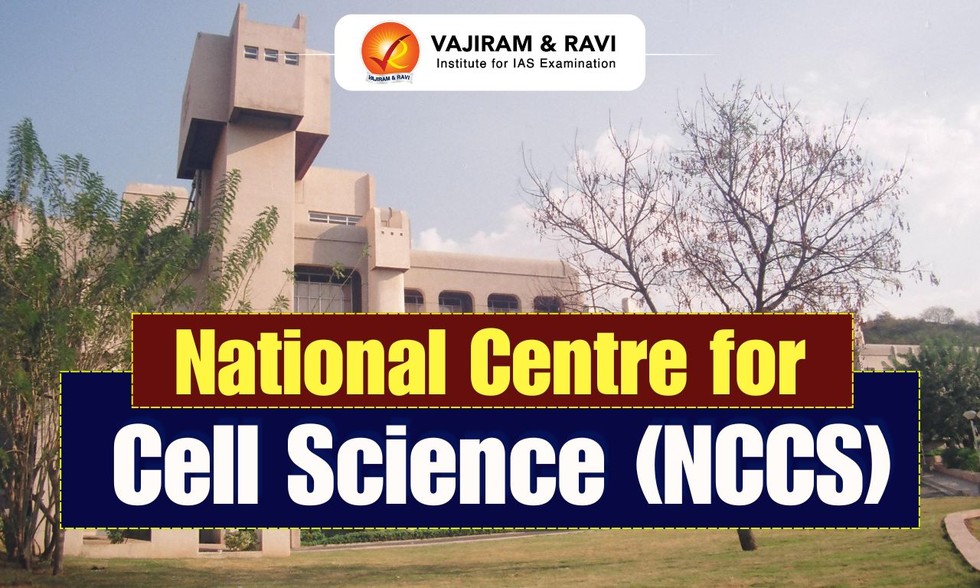
About National Centre for Cell Science (NCCS):
- It is an autonomous organisation aided by the Department of Biotechnology, Ministry of Science and Technology, Government of India.
- It was established to facilitate cell biology research in the country.
- It is located on the campus of Savitribai Phule Pune University, Pune,
- Origin:
- The institute traces its origin to the National Tissue Culture Facility (1986) and was established as the National Facility for Animal Tissue and Cell Culture Collection (NFATCC) in 1988.
- It was renamed National Centre for Cell Science (NCCS) in 1996.
- The tripartite mandate of NCCS includes the following as its key functions:
- To serve as a National Cell Repository.
- To perform basic research in cell biology.
- Human resource development through teaching and training.
- NCCS is engaged in cutting-edge research in the diverse areas of modern cell biology, broadly categorized as
- Cell Biology and Cancer Biology.
- Structural Biology, Bioinformatics, and Omics.
- Infectious diseases, Immunology, and Microbiology.
- Neurobiology & Stem Cell Biology.
- The research addresses challenging health issues like cancer, infectious diseases, metabolic disorders, and regenerative medicine through approaches that integrate modern and conventional disciplines.
- The institute hosts a National Cell Repository that maintains and distributes well-characterized animal cell lines to various colleges, universities, and research institutions in India at affordable costs.
- NCCS hosts the DBT-funded National Centre for Microbial Research for collecting, identifying, preserving, and distributing microbial cultures from various ecological niches across the country.
- NCCS has the third-largest microbial collection in the world.