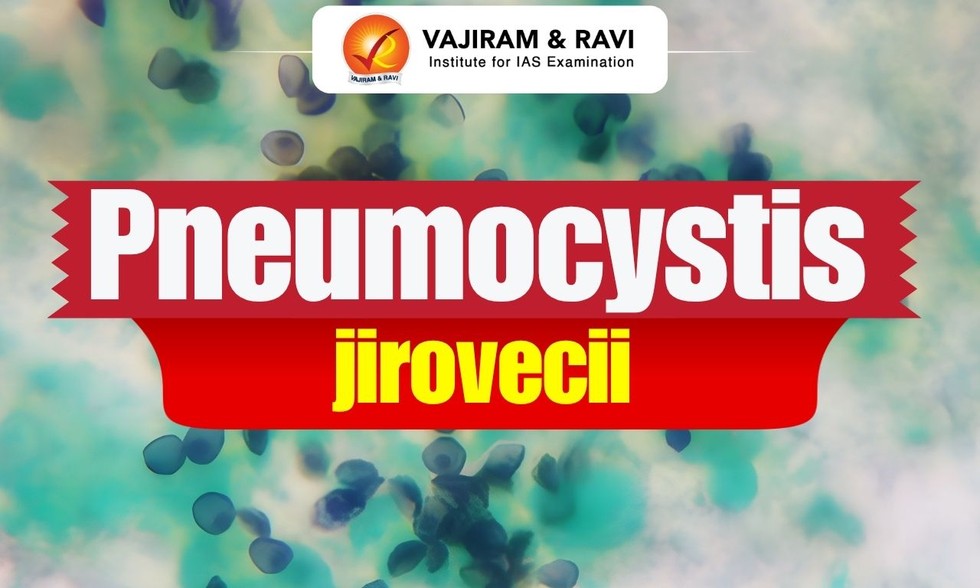
About Pneumocystis jirovecii:
- It is an opportunistic fungal pathogen.
- It can cause pneumonia in patients with impaired immune systems, such as those with AIDS or who are receiving immunosuppressive drugs.
- It is a ubiquitous organism transmitted by aerosol route and causes no disease in immunocompetent patients.
- Initially classified as a protozoan, it has been considered a fungus since the 1990s based on molecular analyses.
- Its life cycle primarily consists of trophic (eg, trophozoites) and cystic forms.
What is Pneumocystis pneumonia (PCP)?
- It is a lung infection that mainly affects people with weakened immune systems. The fungus Pneumocystis jirovecii causes it.
- Signs and symptoms of Pneumocystis pneumonia: Fever, Chills, Cough, Shortness of breath (dyspnea), Fatigue etc.
- Transmission: jirovecii is transmitted from one person to another through the air when someone coughs, sneezes or talks.
- Treatment: It is treated with high doses of the antibiotic trimethoprim-sulfamethoxazole (TMP-SMX).