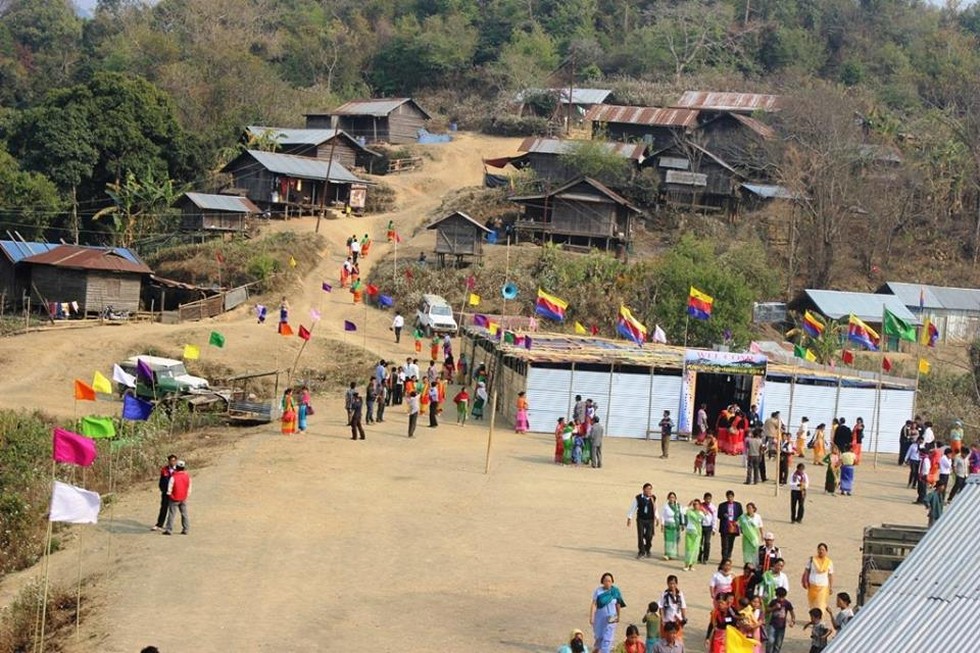
For generations, the Anal Naga tribe in Manipur has followed Uju and Rangkang, community-led forest systems that protect trees, water sources and village life.
About Anal Naga Tribe:
They are an indigenous Tibeto-Burman ethnic group found in Manipur, India, and in Myanmar.
They are one of the first settlers of 19 Naga tribes in Manipur.
They are confined mostly in Chandel District, Manipur.
They are recognized as a Scheduled Tribe in India.
They speak the Anāl language, a Northern Kukish dialect of the Sino-Tibetan family.
Religion:
The ancient religion of Anal is ‘animist’.
At present, the overwhelming majority of the population are Christians.
Livelihood:
They make their living by farming and animal husbandry.
For generations, the Anal Naga tribe has protected forests through Uju and Rangkang-community-led systems.
What is Uju?
It refers to community-managed reserved forests located near Anal villages.
These are protected collectively, usually under the supervision of village authorities and elders, who regulate how resources can be used.
Decisions are made collectively during annual assemblies attended by residents.
Discussions range from land disputes and road repairs to forest regulations and jhum cultivation cycles.
Commercial logging is prohibited.
Trees cannot be cut without permission.
Forest products such as mushrooms, herbs, wild vegetables, flowers, fruits, berries, and medicinal plants may be gathered carefully for household use, but extraction for profit is restricted.
What is Rangkang?
It refers to untouched forest areas located deeper within jhum cultivation landscapes.
Unlike Uju, which is actively managed, Rangkang forests are left largely undisturbed.
Over generations, communities have intentionally avoided cultivating these regions, allowing dense ecosystems to regenerate naturally.
Dear Student,
You have still not entered your mailing address. Please enter the address where all the study materials will be sent to you. (If applicable).