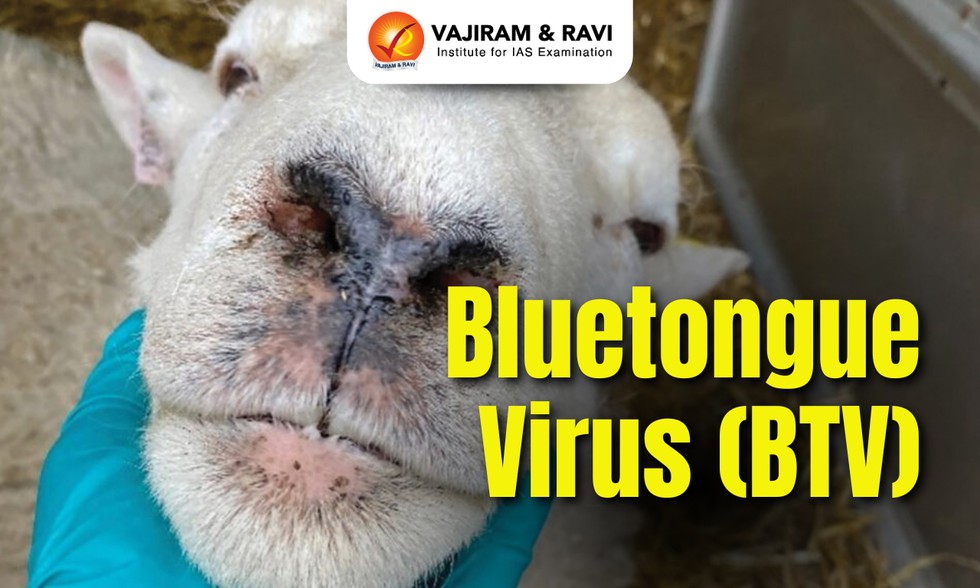
About Bluetongue Virus (BTV):
- It is responsible for causing the severe haemorrhagic disease, bluetongue (BT).
- It is an infectious, non-contagious, vector-borne
- It can infect domestic ruminants, including cattle, sheep, and goats, along with wild animals such as buffalo, deer, antelope, and camels.
- Of the domestic species, sheep are the most severely affected.
- Transmission:
- BTV is predominantly spread between ruminants through the bites of infected Culicoides midges, tiny blood-feeding insects that can be found in large numbers on most farms.
- Some BTV strains can be transferred from a ruminant mother to her fetus during pregnancy.
- Can the BTV Spread to Humans?
- BTV does not infect humans.
- There are no food safety issues, and meat and dairy products are safe to consume.
- BT can result in high rates of morbidity and even mortality in flocks and herds and can affect production (e.g. milk yields) and trade.
- Treatment:
- There is no effective treatment for bluetongue.
- Vaccines are available for certain types of the disease and are used in Africa, Asia, and parts of Europe.