Jan. 15, 2019
Prelims Pointers
Jan. 15, 2019
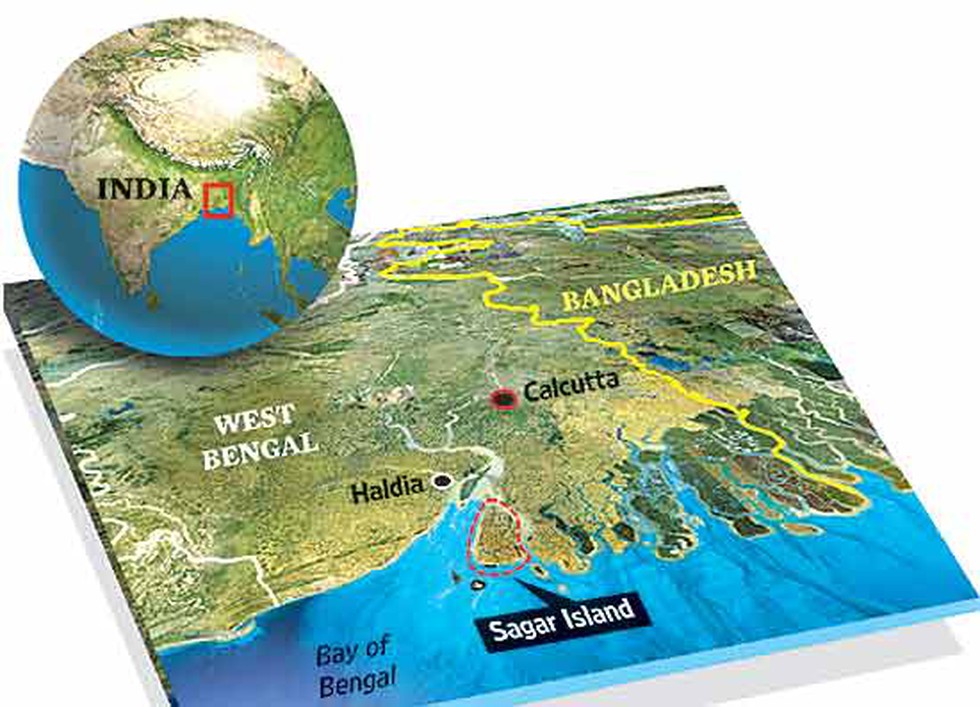
Sagar Island:
- Also known as: Gangasagar or Sagardwip.
- Location: It is an Island in the Ganges delta, lying on the continental shelf of Bay of Bengal. This Island falls under South 24 Parganas District in West Bengal.
- Flora and fauna: Although Sagar island is a part of Sunderban Administration, it does not have any tiger habitation or mangrove forests or small river tributaries as is characteristic of the overall sunderban delta.
Ganga Sagar Mela:
- Sagar island is a place of Hindu pilgrimage.
- Every year on the day of Makar Sankranti, hundreds of thousands of Hindus gather to take a holy dip at the confluence of river Ganges and Bay of Bengal and offer prayers (puja) in the Kapil Muni Temple.
Prelims Pointers
Jan. 15, 2019
About:
- Objective: “Womaniya on GeM” is an initiative to enable women entrepreneurs and women self-help groups (WSHGs) to sell handicrafts and handloom, accessories, jute and coir products etc. directly to various Government ministries, departments and institutions.
- Features:
- Products like handicrafts and handloom, accessories, jute and coir products, home décor and office furnishings are categorized for ease-in-procurement.
- The initiative aligns with Government’s initiatives for MSMEs, especially to reserve 3 percent in government procurement from women entrepreneurs.
- Products like handicrafts and handloom, accessories, jute and coir products, home décor and office furnishings are categorized for ease-in-procurement.
- Implementing agency: Government e Marketplace (GeM), a 100 % government owned company setup in 2016 under the aegis of Ministry of Commerce and Industry for procurement of common use goods and services by Government ministries, departments and CPSEs.
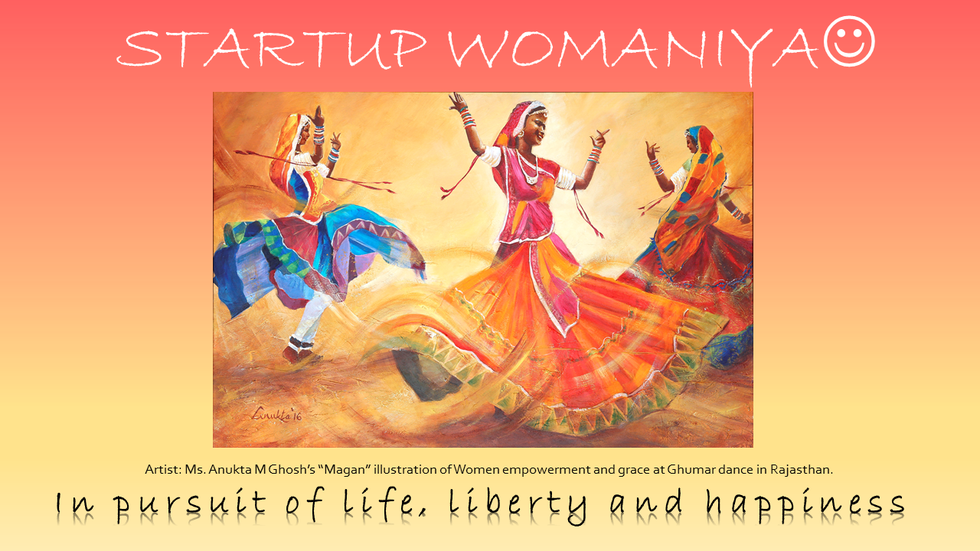
- Artist Anukta M Ghosh’s artwork “Magan”, an illustration of women empowerment and grace, is the face of Womaniya on GeM.
Prelims Pointers
Jan. 15, 2019
About:
- Mandate: NIPCCD is a premier organisation devoted to promotion of voluntary action, research, training, and documentation in the overall domain of women and children development.
- Centres: NIPCCD already has four such Regional Centres one each at Bangalore, Guwahati, Indore and Lucknow besides the Headquarters at New Delhi.
- Parent agency: Ministry of Women and Children Development.
- Established in: 1966.
Prelims Pointers
Jan. 15, 2019
About:
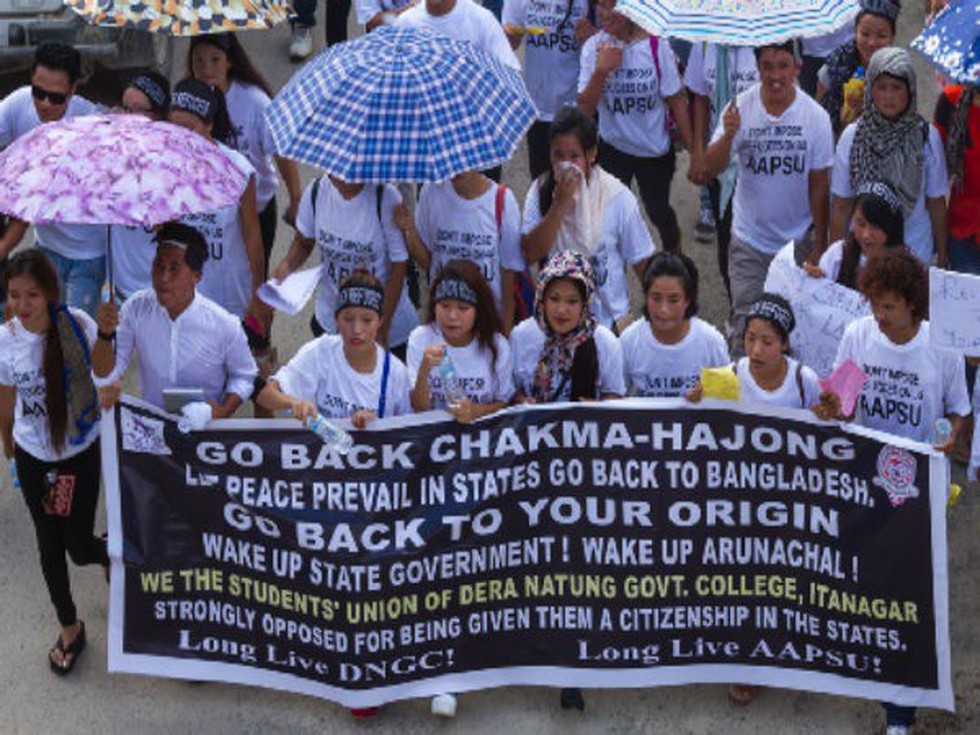
- The Chakmas and Hajongs are ethnic people. Chakmas are predominantly Buddhists; Hajongs are Hindus.
- They were inhabitants of the Chittagong Hill Tracts of erstwhile East Pakistan (now Bangladesh) who migrated to India due to –
- Submergence of their land by the Kaptai dam on the Karnaphuli River in the 1960s.
- religious persecution they faced in East Pakistan as they were non-Muslims.
- Submergence of their land by the Kaptai dam on the Karnaphuli River in the 1960s.
- The Indian government set up relief camps in Arunachal Pradesh and a majority of them continue to live there even after 50 years.
- An estimated 1 lakh Chakma and Hajong refugees are staying in India. When they came in 1964, there were about 15,000 Chakmas and about 2,000 Hajongs.
Prelims Pointers
Jan. 15, 2019
About:
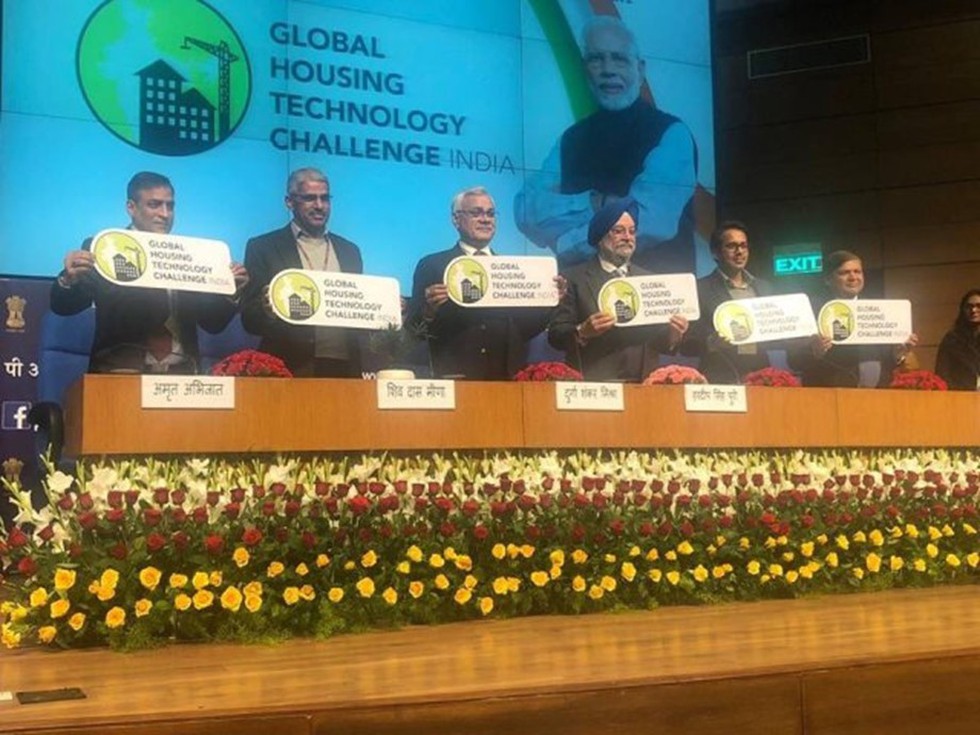
- Parent programme: Pradhan Mantri Awas Yojana Urban (PMAY-U).
- Objective: To fast-track the construction of affordable housing and meet the target of constructing 1.2 crore houses by 2022.
- Salient Features:
- Under it, Centre will offer about ₹150 crore as a technology innovation grant to build 6,000 homes — cheaper, faster and better — using alternative technologies and materials.
- The challenge will focus on identifying and mainstreaming proven demonstrable technologies through ASHA (Affordable Sustainable Housing Accelerators) — India.
- Under the challenge, a grand expo-cum-conference on GHTC will be organised in March which will be a unique platform for the various stakeholders.
- Under it, Centre will offer about ₹150 crore as a technology innovation grant to build 6,000 homes — cheaper, faster and better — using alternative technologies and materials.
Pradhan Mantri Awas Yojana Urban (PMAY-U)?
- The PMAY (U), was launched in 2015 to ensure Housing for all by 2022 through financial assistance.
- The PMAY-U mission has four verticals – In-situ Slum Redevelopment (ISSR), Affordable Housing in Partnership (AHP), Beneficiary-led Individual house construction or Enhancement (BLC), and Credit-Linked Subsidy Scheme (CLSS).
- Around 68.5 lakh houses have been approved so far for construction under the PMAY (U).
Prelims Pointers
Jan. 15, 2019
About:
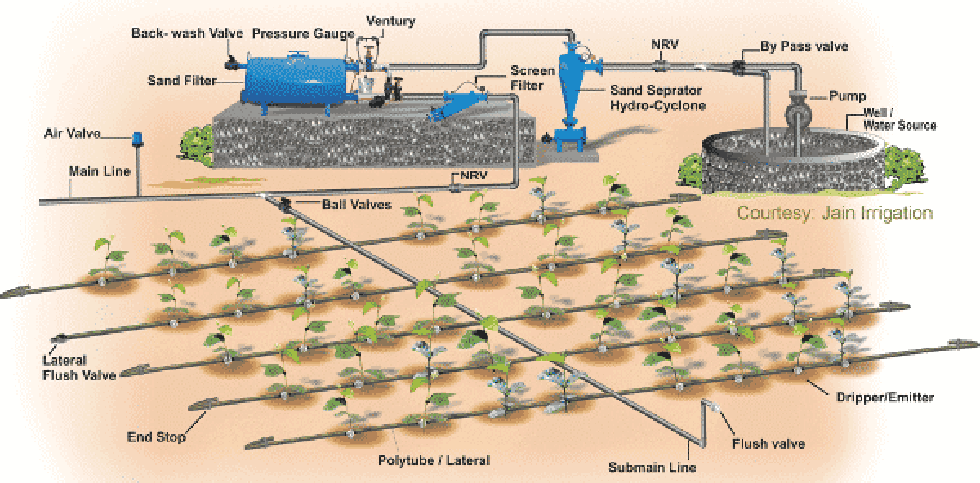
- Agenda: The event will be a multi-disciplinary dialogue discussing issues related to micro irrigation for modern agriculture, new techniques in micro irrigation for increased crop productivity, micro irrigation in cluster level farming etc.
- Organizers: it is being organized by the Union Ministry of Water Resources, River Development and Ganga Rejuvenation, in association with International Commission on Irrigation and Drainage (ICID), Indian National Committee on Surface Water (INCSW) and WAPCOS Limited, a CPSE under the Union Ministry of Water Resources.
- Venue: Aurangabad in Maharashtra.
- Duration: From January 16–18, 2019.
- Background: International Commission on Irrigation and Drainage (ICID) launched the hosting of international Micro Irrigation Congress commencing from the year 1971 by its member countries. The 8th MIC was held in 2011 in Tehran, Iran.
Prelims Pointers
Jan. 15, 2019
Key Findings of the report:
- Desalination plants capacity: There are almost 16,000 desalination plants worldwide with capacity concentrated in the Middle East and North Africa.
- Global brine production:
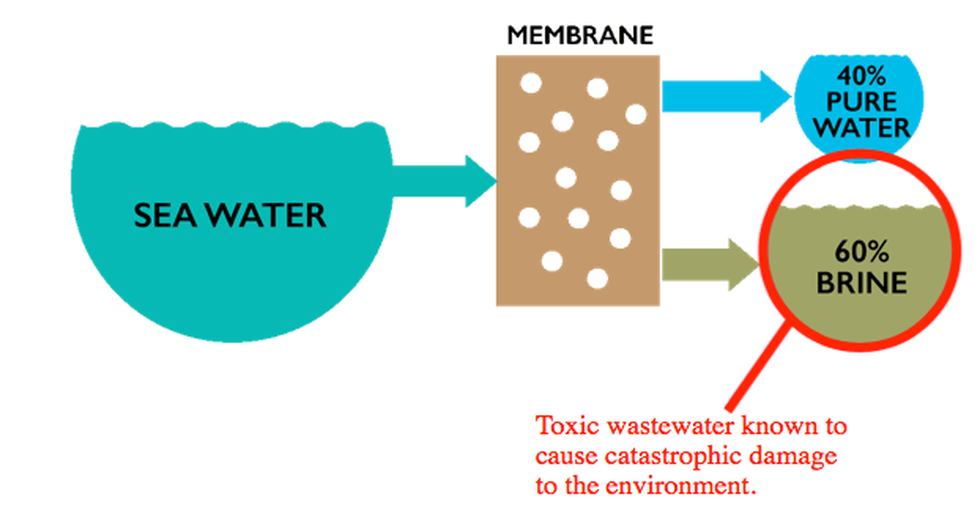
- Brine refers to all concentrate discharged from desalination plants.
- For every litre of freshwater output, however, desalination plants produce on average 1.5 litres of brine (the chemical leftover).
- Globally, plants now discharge 142 million cubic metres of hypersaline brine every day (a 50% increase on previous assessments).
- Brine refers to all concentrate discharged from desalination plants.
- Major Brine producers: 55% of global brine is produced in just four countries: Saudi Arabia (22%), UAE (20.2%), Kuwait (6.6%), and Qatar (5.8%).
- Impact:
- Desalination plants near the ocean (almost 80% of brine is produced within 10 km of a coastline) often discharge brine directly back into the marine environment.
- Brine poses major risks to ocean life and marine ecosystems by greatly raising the salinity of the receiving seawater, and by polluting the oceans with toxic chemicals used in the desalination process (copper and chlorine are of major concern).
- Desalination plants near the ocean (almost 80% of brine is produced within 10 km of a coastline) often discharge brine directly back into the marine environment.
- Way ahead: The paper also highlights economic opportunities to use brine in aquaculture, to irrigate salt tolerant species, to generate electricity, and by recovering the salt and metals contained in brine — including magnesium, calcium, potassium etc.
U.N. University’s Canadian-based Institute for Water, Environment and Health (UNU-INWEH)?
- The UNU Institute for Water, Environment and Health is a member of the United Nations University family of organisations. It is the UN think tank on water, created by the UNU Governing Council in 1996.
- UNU-INWEH is hosted by the Government of Canada and McMaster University.
- Its mission is to help resolve pressing water challenges of concern to the UN.
Prelims Pointers
Jan. 15, 2019
About:
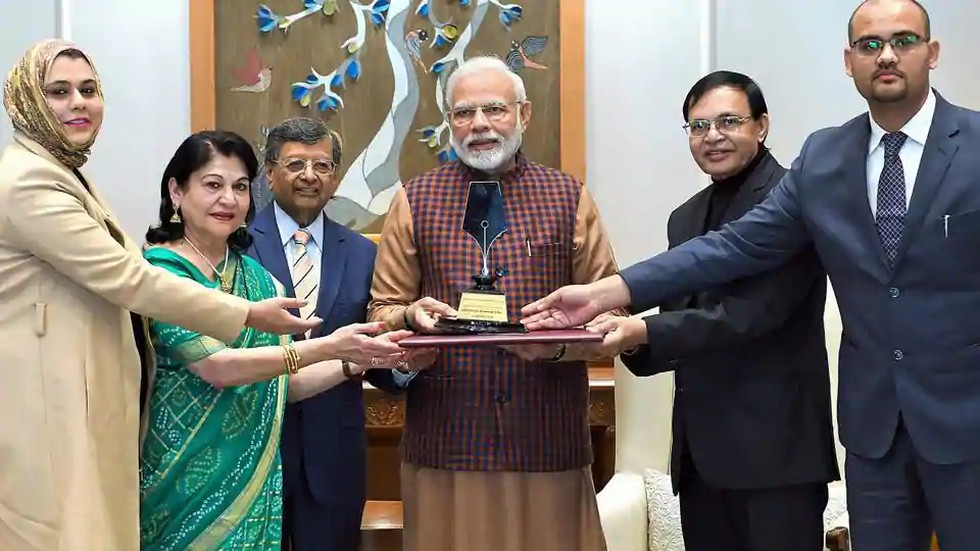
- The Award will be offered annually to the leader of a Nation.
- It focuses on the triple bottom-line of People, Profit and Planet.
- The award to PM Modi was presented by the World Marketing Summit India. The WMS has previously only given awards to recognise achievements in advertising and marketing.
- The awards are named after Prof. Philip Kotler, a world-renowned Professor of Marketing at North-western University, Kellogg School of Management. He is a celebrated marketing and management guru, who is also the founder of the World Marketing Summit (WMS) Group.
- PM Modi is selected for his outstanding leadership for the nation. Initiatives such as Make in India, Start-up India, Digital India, and Swachh Bharat, have positioned India as one of the most lucrative manufacturing and business destinations in the world.
The World Marketing Summit Group was founded by Philip Kotler in 2011.
The WMS Group signed an agreement with Kotler Impact (its own marketing and sales partner) and Suslence Research International Institute Pvt Ltd, an Aligarh-based company established in 2017, to hold WMS in India for three years.
Prelims Pointers
Jan. 15, 2019

About:
- Sake Dean Mahomed (1759 – 1851) was an Anglo-Indian traveller, surgeon and entrepreneur, who made a name for himself by building cultural connections between India and England.
- He was born in Patna. He served in the army of the British East India Company as a trainee surgeon. In 1782, he resigned from the Army and moved to Britain.
- In 1794, Mahomed published his travel book, The Travels of Dean Mahomed which describes several important cities in India and a series of military conflicts with local Indian principalities. With this, he became the first Indian author to publish a book in English.
- In 1810, after moving to London, Mahomed opened the Hindostanee Coffee House, Britain’s first Indian restaurant —ushering in what would become one of Great Britain’s most popular cuisines.
- He went on to find success as the “The Shampooing Surgeon of Brighton”.
- In Brighton, he opened a spa named Mahomed’s Baths offering luxurious herbal steam baths. His specialty was a combination of a steam bath and an Indian therapeutic massage—a treatment he named “shampooing”.
- In 1822, King George IV appointed Mahomed as his personal ‘shampooing surgeon’, which greatly improved his business.
- In Brighton, he opened a spa named Mahomed’s Baths offering luxurious herbal steam baths. His specialty was a combination of a steam bath and an Indian therapeutic massage—a treatment he named “shampooing”.
Prelims Pointers
Jan. 15, 2019
About:
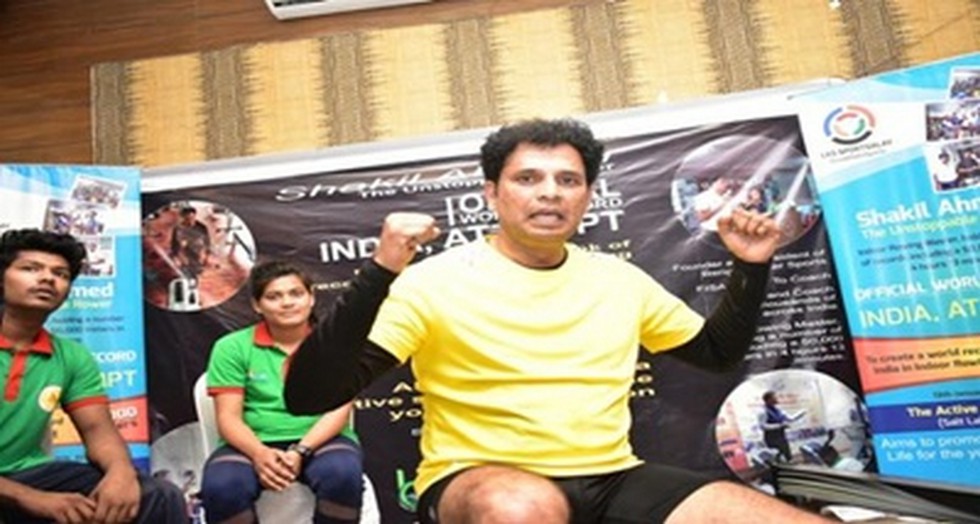
- Asian Cup gold medallist and noted oarsman Shakil Ahmed achieved the feat in Salt Lake stadium complex by covering one lakh metres of simulated distance in 10 hours.
- Shakeel also has the record of completing 50,000 (fifty thousand) metres of simulated rowing in four hours and 13 minutes which is already in the Limca Book of Record.
Jan. 14, 2019
Prelims Pointers
Jan. 14, 2019
About:
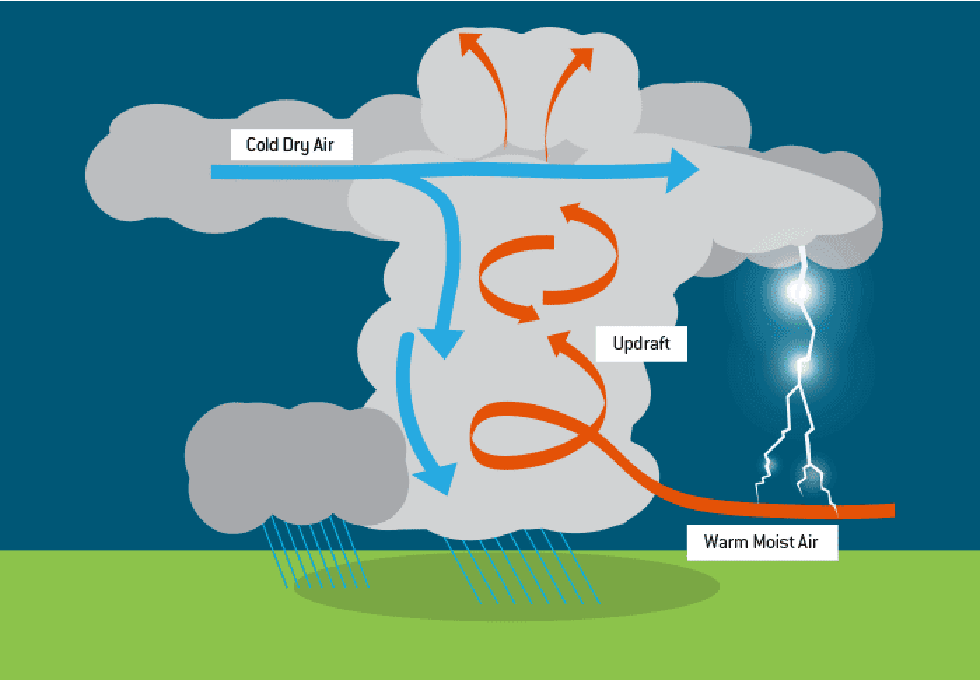
- Thunderstorms are severe weather events associated with frequent lightning, high winds, and heavy rainfall. They are so called because of the thunderous loud noise they make because of thunder.
- Important characteristic of Thunderstorms: Formation of Squall, strong updraft and down draft, towering cumulonimbus associated with turbulence and icing, in cloud electrification and associated lightning, localized Strong rain and hailstorm.
- When do they occur? They can and do occur at any time of the year, but are most likely to happen during the afternoon and evening hours and during the spring and summer seasons.
- Types: Considering the intensity, the thunderstorms in India are categorised as –
- Moderate thunderstorm: if there are loud peals of thunder with frequent lightning flashes, moderate to Strong rains and maximum wind speed 29 to 74 kmph
- Severe thunderstorm: if there is continuous thunder and lightning, Strong rains and maximum wind speed ≥ 75 kmph.
- Moderate thunderstorm: if there are loud peals of thunder with frequent lightning flashes, moderate to Strong rains and maximum wind speed 29 to 74 kmph
- Reason for their occurrence in India: The heating of North Indian plains during peak monsoon season, clubbed with winds bringing moisture from the Arabian Sea, the Bay of Bengal or due to a western disturbance, forms conditions that lead to formation of a thunderstorm.
Recent Development:
- A team of scientists from the India Meteorological Department (IMD), the Indian Institute of Tropical Meteorology (IITM) and the National Centre for Medium Range Weather Forecasting (NCMRWF) are working on models to forecast thunderstorms well in advance.
- The IMD, the IITM and NCMRWF work under the Ministry of Earth Sciences.
- The IMD plans to have Standard Operating Procedures (SOPs) in place by April for dealing with thunderstorm instances. Sending early warnings to States will give them more time to respond.
- Background: In May 2018, over 200 people died in thunderstorm incidents. In Rajasthan and Uttar Pradesh alone, violent winds killed nearly 180 people.
Prelims Pointers
Jan. 14, 2019
About:
- Founded in: Until 1968, the Intelligence Bureau (IB), which is responsible for India’s internal intelligence, also handled external intelligence.
- Working: It was founded primarily to counter China’s influence, but over time it has shifted its focus to India’s other traditional rival, Pakistan.
- Mandate: Gathering foreign intelligence, engaging in counter-terrorism, promoting counter-proliferation and advancing India's foreign strategic interests. It is also involved in the security of India's nuclear programme.
- Role in foreign policy: RAW claims that it contributed to several foreign policy successes –
- the creation of Bangladesh in 1971;
- India’s growing influence in Afghanistan;
- the northeast state of Sikkim’s accession to India in 1975;
- the security of India’s nuclear program;
- the success of African liberation movements during the Cold War.
- the creation of Bangladesh in 1971;
- HQ: New Delhi.
- Administration: It works under the direct command of the Prime Minister, and reports on an administrative basis to the Cabinet Secretary of India, who reports to the Prime Minister.
Prelims Pointers
Jan. 14, 2019
About:
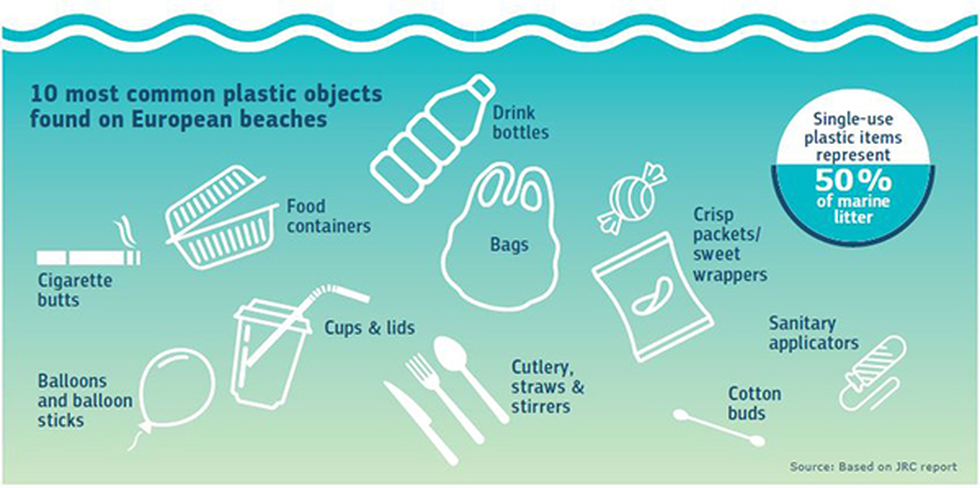
- Meaning: Single-use plastics, often also referred to as disposable plastics, are commonly used for plastic packaging and include items intended to be used only once before they are thrown away or recycled.
- Application: These include, among other items, grocery bags, food packaging, bottles, straws, containers, cups and cutlery
- Benefits: Single-use plastic bags are widely used because they are strong, cheap and hygienic ways to transport goods.
- Environmental impact: They can take up to thousands of years to decompose, contaminating soil and water, and posing significant ingestion, choking and entanglement hazards to wildlife on
- land and in the ocean.
- Recent developments:
- In June 2018, on the occasion of World Environment Day, PM Narendra Modi announced that India will abolish all single-use plastic by 2022.
- in June 2018, Tamil Nadu government had announced that it would ban the use of plastic items including non-biodegradable carry bags from January 1, 2019.
- In June 2018, on the occasion of World Environment Day, PM Narendra Modi announced that India will abolish all single-use plastic by 2022.
Prelims Pointers
Jan. 14, 2019
About:
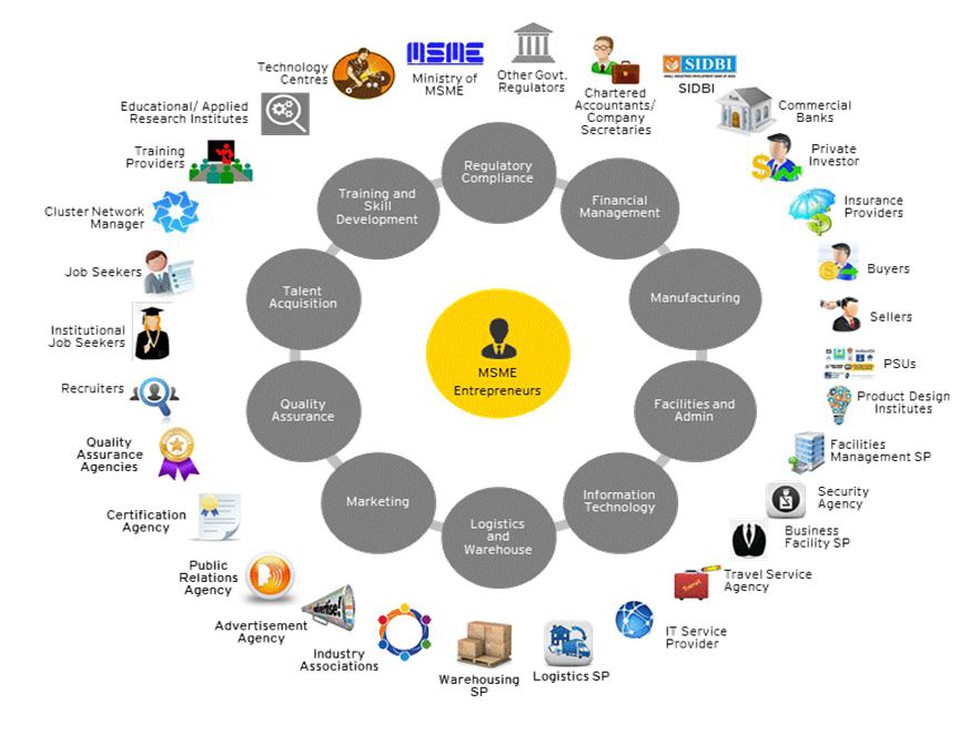
- Objectives: The Programme is expected to improve the competitiveness of Micro, Small and Medium Enterprises (MSMEs) in key manufacturing industries across India by:
- facilitating improved access to manufacturing technology
- improving further the availability and employability of skilled workers
- establishing strong focus in providing business & technical advisory services
- facilitating improved access to manufacturing technology
- Components:
- Establishment of New Technology Centres
- Engaging the services of world class Technology Partner(s) (TPs)
- Engaging the services of reputed Cluster Network Manager(s) (CNMs) to establish linkages amongst key stakeholders including MSMEs, academia, large industry players
- (OEMs), applied research institutions and the Technology Centres in each cluster
- Establishment of New Technology Centres
- Funding: It is being funded with support in funds from the World Bank.
Prelims Pointers
Jan. 14, 2019
About:
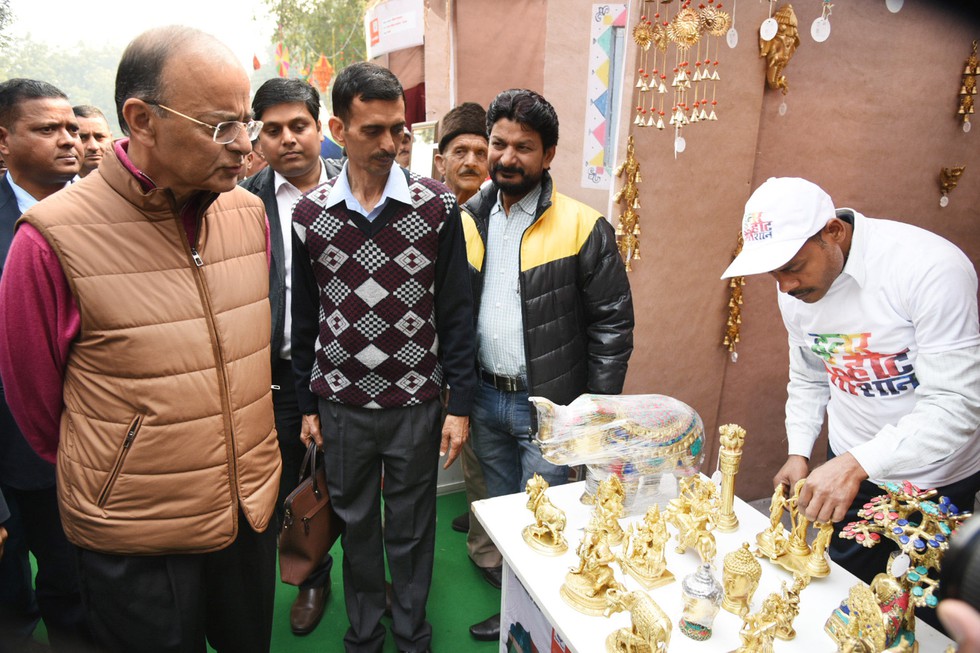
- Objective: Hunar Haat is being organised across the country by the Ministry of Minority Affairs under a mission to provide market and opportunity to master artisans and craftsmen.
- Achievements: During the last one year, Hunar Haat has been successful in providing employment and marketing opportunities to more than 1 lakh 50 thousand artisans and associated people.
- Venue:
- This Hunar Haat has been organised at State Emporia Complex, Baba Kharak Singh Marg, Connaught Place, New Delhi from 12th to 20th January, 2019.
- Earlier, “Hunar Haat” had been organised at Allahabad, Pragati Maidan and Baba Kharak Singh Marg at New Delhi; Puducherry and Mumbai. In the coming days, “Hunar Haat” will be organised at other states of the country.
- This Hunar Haat has been organised at State Emporia Complex, Baba Kharak Singh Marg, Connaught Place, New Delhi from 12th to 20th January, 2019.
- Way ahead: Ministry of Minority Affairs is also working to establish “Hunar Hub” across the country to provide a platform to master artisans and craftsmen to display as well sell their products.
Prelims Pointers
Jan. 14, 2019
Key Findings by 42nd standing committee on energy on stressed gas-based power plants:
- Out of India’s total installed capacity of about 345 GW of power, gas-based capacity is about 25 GW or 7.2%. However, its share in terms of generation is only 3.8% as 14,305 MW of gas-based capacity is stranded due to non-availability of domestic gas and unaffordability of imported gas.
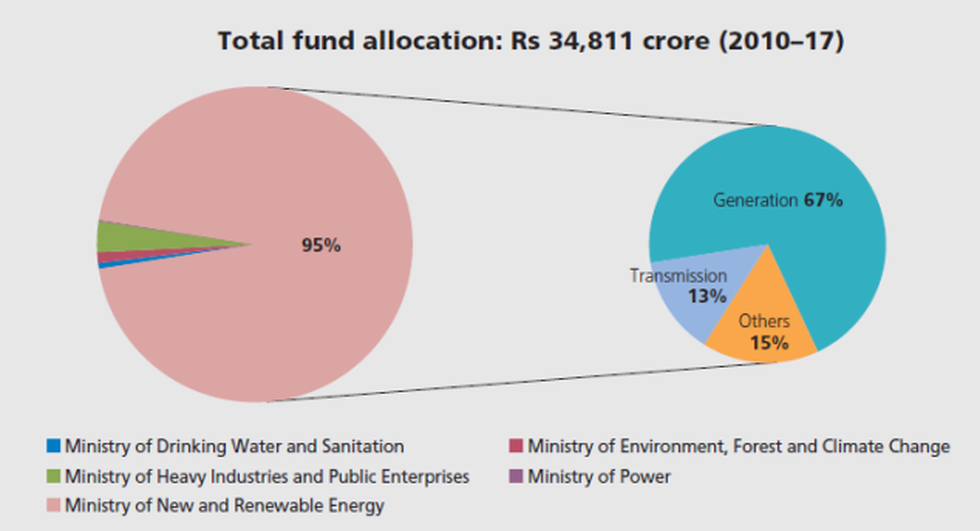
- It has criticized the government for diverting coal cess to compensate States for revenue loss post-GST. The coal cess collected from 2010-11 to 2017-18 amounts to Rs. 86,440 crore, out of which only Rs. 29,645 crore has actually been transferred to the NCEF.
- It has recommended financial support to the stressed gas-based power projects in the country from National Clean Energy Fund (NCEF).
National Clean Energy Fund (NCEF):
- Background: The National Clean Energy Fund (NCEF) is a fund created in 2010-11.
- Funding of NCEF: The Fund has been created out of cess on coal produced / imported under the “polluter pays” principle.
- Usage of Fund: For funding research and innovative projects in clean energy technologies of public sector or private sector entities, upto the extent of 40% of the total project cost.
- Features:
- Any project/scheme relating to Innovative methods to adopt to Clean Energy technology and Research & Development are eligible for funding under the NCEF.
- Assistance is available as a loan or as a viability gap funding, as deemed fit by the Inter-Ministerial group, which decides on the merits of such projects.
- Any project/scheme relating to Innovative methods to adopt to Clean Energy technology and Research & Development are eligible for funding under the NCEF.
- Administration:
- The Fund is designed as a non-lapsable fund under Public Accounts and with its secretariat in Department of Expenditure, Ministry of Finance.
- An Inter-Ministerial Group, chaired by the Finance Secretary in Ministry of Finance recommends projects eligible for funding under NCEF.
- The Fund is designed as a non-lapsable fund under Public Accounts and with its secretariat in Department of Expenditure, Ministry of Finance.
Prelims Pointers
Jan. 14, 2019
About:
- The farm-to-port project will be similar to a special economic zone (SEZ) but in the style of a corporatized farm.
- Features:
- In these corporatized farms, the crops would be grown keeping a specific UAE market in mind, with dedicated logistics infrastructure all the way to the port.
- The new food security laws in India may not apply to the produce from these special food zones.
- In these corporatized farms, the crops would be grown keeping a specific UAE market in mind, with dedicated logistics infrastructure all the way to the port.
- The concept has been accepted by both governments.
- Significance:
- Ensuring food security remains an area of high priority for the two sides. The UAE imports 80-90% of its food requirements due lack of arable land, water scarcity and a hot climate—much of the land being desert.
- If successful, it will create a whole new sector for agro-industries.
- Ensuring food security remains an area of high priority for the two sides. The UAE imports 80-90% of its food requirements due lack of arable land, water scarcity and a hot climate—much of the land being desert.
Prelims Pointers
Jan. 14, 2019
About:
- background:
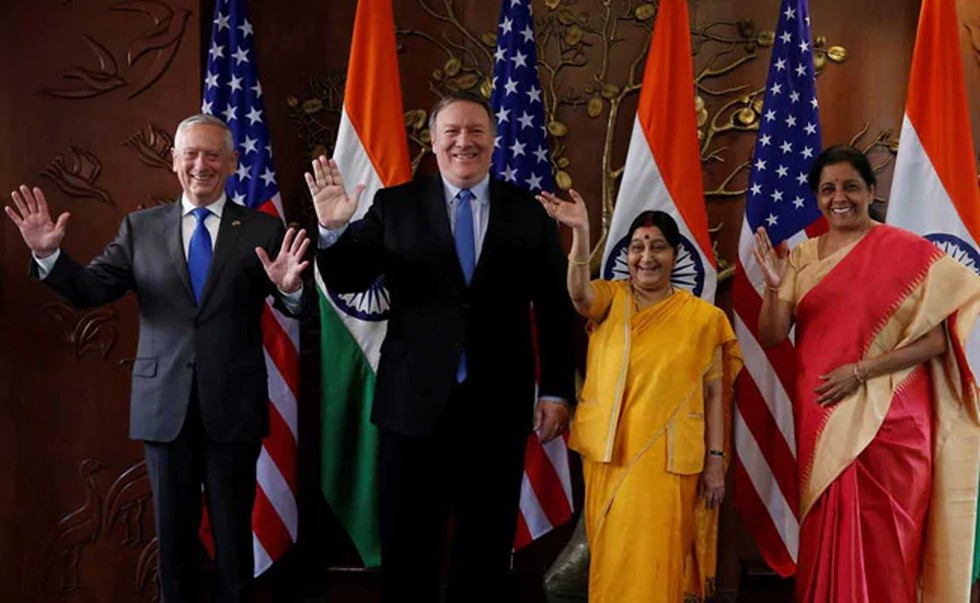
- The inaugural 2+2 dialogue was held last September and was chaired by the Defence and External Affairs Ministers and their U.S. counterparts.
- The dialogue is similar to India-Japan 2+2 Dialogue between foreign and defence secretaries of the two countries.
- The inaugural 2+2 dialogue was held last September and was chaired by the Defence and External Affairs Ministers and their U.S. counterparts.
- Objective: To elevate and insulate the India-US strategic relationship from trade and commercial disputes between the two nations and replaces the India-US Strategic and Commercial Dialogue.
- As the next step in furthering defence cooperation, negotiations are on to conclude the ISA and the BECA.
- Industrial Security Annex (ISA):
- It allows sharing of classified information from the U.S. government and American companies with the Indian private sector, which is so far limited to the Indian government and the defence public sector undertakings.
- It is essential as the Indian industry looks for a greater role in defence manufacturing.
- It allows sharing of classified information from the U.S. government and American companies with the Indian private sector, which is so far limited to the Indian government and the defence public sector undertakings.
- Basic Exchange and Cooperation Agreement for Geo-spatial Cooperation (BECA):
- It would facilitate exchange of geospatial information between India and United States for both military and civilian use.
- The U.S. has already shared a draft of BECA, the last foundational agreement to be signed.
- It would facilitate exchange of geospatial information between India and United States for both military and civilian use.
Prelims Pointers
Jan. 14, 2019
About:
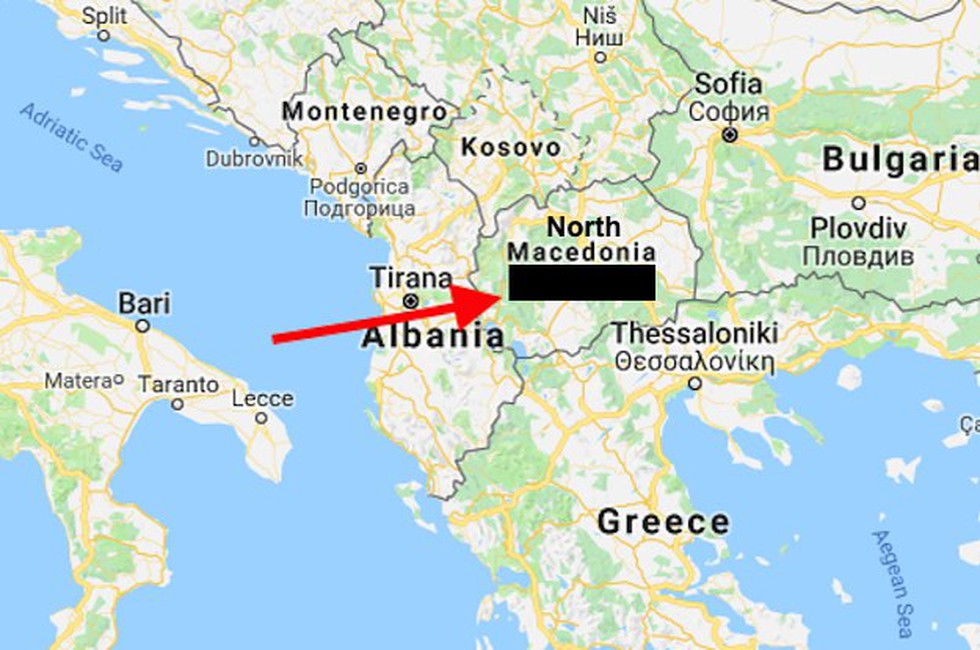
- Location: The Republic of Macedonia is a country in the Balkan Peninsula in Southeast Europe.
- Neighbours: A landlocked country, it has borders with Kosovo to the northwest, Serbia to the north, Bulgaria to the east, Greece to the south, and Albania to the west
- Capital city:
- Membership of International Organizations: it is a member of the UN and of the Council of Europe. Since 2005 it has also been a candidate for joining the European Union and has applied for NATO membership.
Naming dispute:
- When Macedonia peacefully gained independence from Yugoslavia in 1991, Greece objected at the name, saying it implied territorial ambitions toward Greece.
- Greece also has a region called Macedonia. It's in the northern, mountainous part of the country and includes Greece's second-largest city, Thessaloniki, and ancient Philippi, a UNESCO World Heritage Site.
- The United Nations has been calling it the Former Yugoslav Republic of Macedonia (FYROM).
- In addition to causing confusion, the similar names have been a stumbling block for the nation of Macedonia to join the European Union and NATO because of Greece's objections.
- In June 2018, Greece and Macedonia signed an the “PRESPA AGREEMENT”, to rename the latter the Republic of North Macedonia.
Prelims Pointers
Jan. 14, 2019
About:
- What is it?
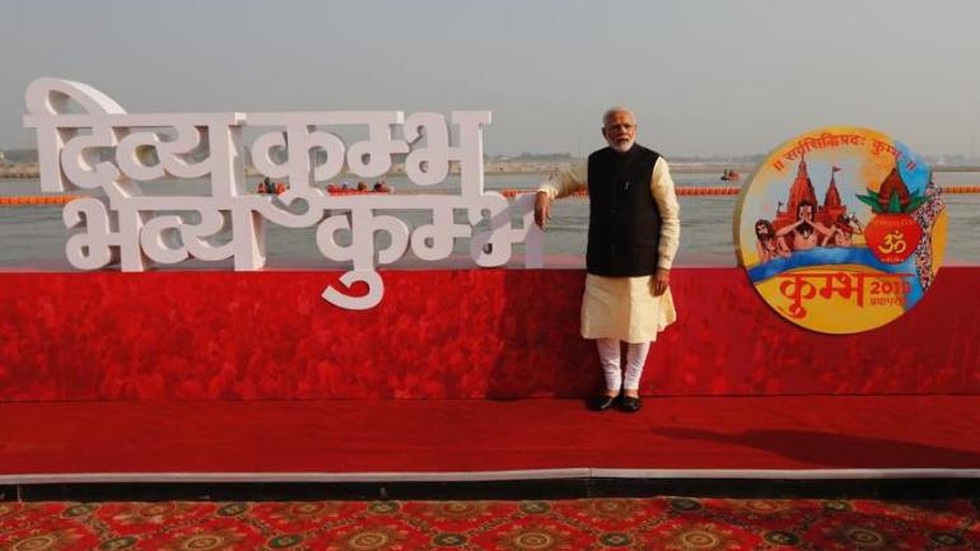
- Kumbh Mela is the largest peaceful congregation of pilgrims which includes ascetics, saints, sadhus, aspirants-kalpavasis and visitors.
- During it, participants bathe or take a dip in a sacred river as they believe that by doing this one gets freed from sins and thus liberating her/him from the cycle of birth and death.
- Kumbh Mela is the largest peaceful congregation of pilgrims which includes ascetics, saints, sadhus, aspirants-kalpavasis and visitors.
- When held?
- Prayagraj Kumbh Mela is held at every 6 years and Maha Kumbh at every 12 years.
- The Kumbh Mela at Prayagraj is held in the month of Magh of Hindu calendar when Jupiter is in Aries and Sun and Moon are in Capricorn or Jupiter is in Taurus and Sun in Capricorn.
- Prayagraj Kumbh Mela is held at every 6 years and Maha Kumbh at every 12 years.
- Location:
- The festival is held at Prayagraj, Haridwar, Ujjain and Nasik every four years by rotation. As it is held in four different cities in India, it involves different social and cultural activities, making this a culturally diverse festival.
- At any given place, the Kumbh Mela is held once in 12 years. There is a difference of around 3 years between the Kumbh Melas at Haridwar and Nashik; the fairs at Nashik and Ujjain are celebrated in the same year or one year apart.
- At Haridwar and Prayagraj, an Ardha ("Half") Kumbh Mela is held every sixth year.
- The festival is held at Prayagraj, Haridwar, Ujjain and Nasik every four years by rotation. As it is held in four different cities in India, it involves different social and cultural activities, making this a culturally diverse festival.
- Nomenclature: Earlier they were known as Ardh Kumbh and Kumbh. But this year the government has announced the Ardh Kumbh will be known as Kumbh and Kumbh as Maha Kumbh.
- Recognition:
- In 2017, the UNESCO inscribed Kumbh Mela on the list of Intangible Cultural heritage for humanity.
- According to UNESCO, Kumbh Mela (the festival of the sacred Pitcher) is the largest peaceful congregation of pilgrims on earth attended by millions of people. The congregation includes ascetics, saints, sadhus, aspirants-kalpavasis and visitors.
- In 2017, the UNESCO inscribed Kumbh Mela on the list of Intangible Cultural heritage for humanity.
Jan. 13, 2019
Prelims Pointers
Jan. 13, 2019
About:
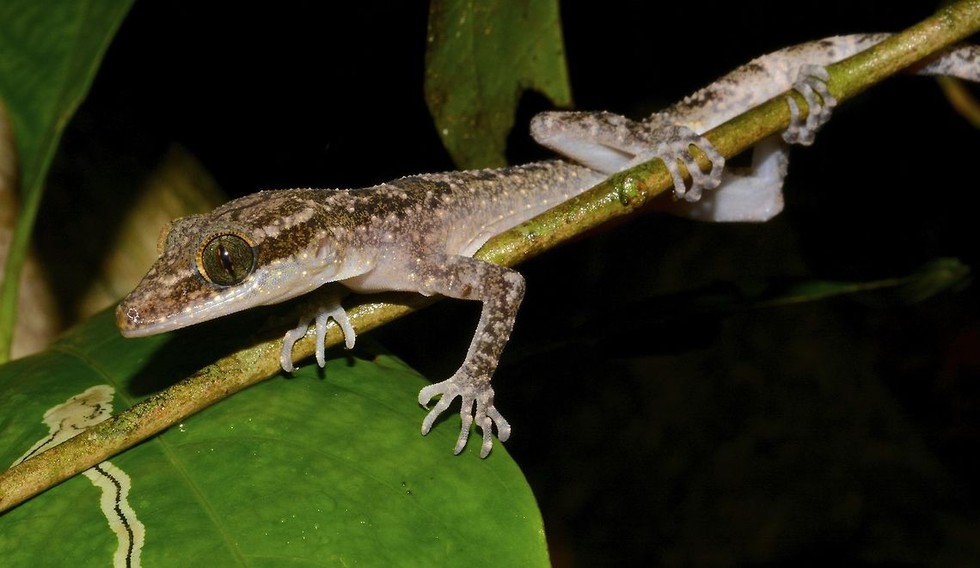
- Bent-toed geckos are a diverse genus of a type of small lizard.
- Genus:
- Number of gecko species under it: This genus has more than 250 described species at present. making it the largest of all gecko genera.
- Common name: They are called bent-toed or bow-fingered geckos, named after their bent toes.
- The six newly discovered species are –
- Guwahati bent-toed gecko,
- Kaziranga bent-toed gecko,
- Jaintia bent-toed gecko
- Nagaland bent-toed gecko,
- Abhayapuri bent-toed gecko (found near Abhayapuri town in Assam’s Bongaigaon district) and
- Jampui bent-toed gecko (found in Tripura’s Jampui Hills).
- Guwahati bent-toed gecko,
- The discovery increases the number of bent-toed geckos described from the Himalaya and north-eastern India to 15 (nine of which have been described this year alone).
Prelims Pointers
Jan. 13, 2019
About:
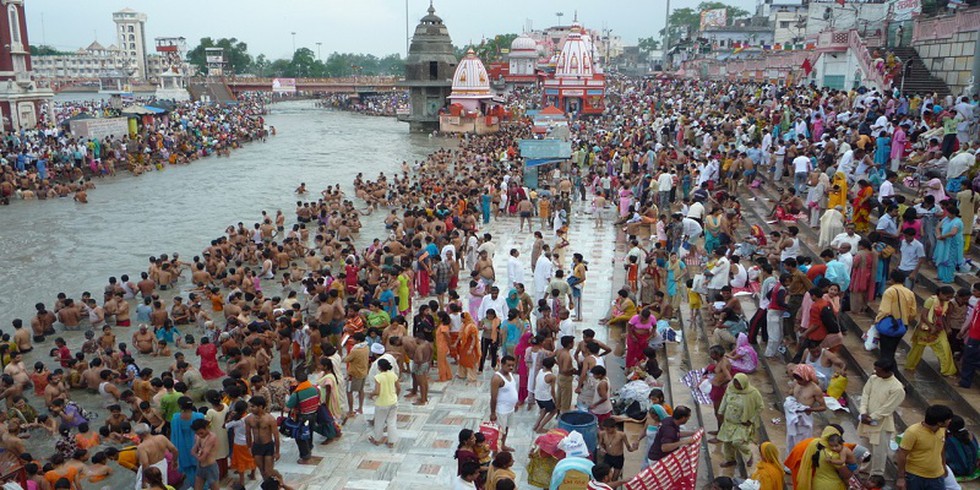
- The findings come Four-and-a-half years after the Union Government launched its flagship Namami Gange programme to clean up the Ganga.
- The third-party assessment done by the Quality Council of India (QCI), which was conducted in November and December 2018, was commissioned by the Ministry of Urban Development (MoUD).
- It covered 92 of the 97 towns along the river, located in five States: Uttarakhand, Uttar Pradesh, Bihar, Jharkhand and West Bengal.
- The towns were assessed on four parameters: overall cleanliness; the availability of a municipal solid waste plant; the installation of screens placed over nullahs; and solid waste management services.
Key findings of the study:
- Of the 92 towns surveyed, 75% still have old or legacy dump sites on the Ghats. Only 19 towns have a municipal solid waste plant.
- 72% of towns have at least one nullah or drain flowing into the river.
- 85% of the drains discharging into the Ganga did not even have screens to stop garbage from entering the river.
- 1/3rd of towns have solid waste floating on the river surface.
Prelims Pointers
Jan. 13, 2019
About:
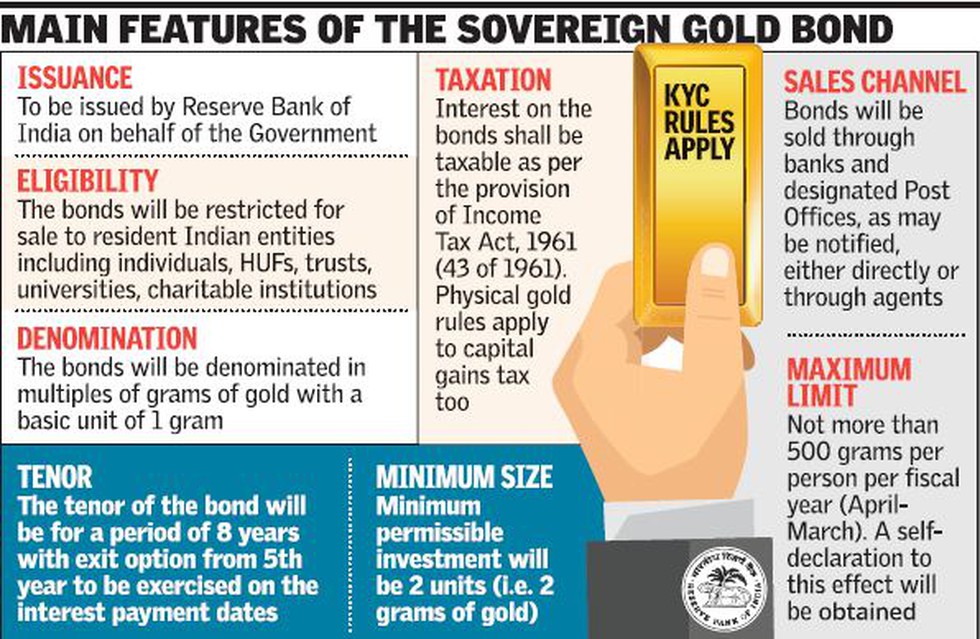
- Background: The Sovereign Gold Bond was launched by Government of India in 2015.
- Objective of the scheme: To reduce the demand for physical gold and shift a part of the domestic savings into financial assets.
- Issuance: To be issued by Reserve Bank India on behalf of the Government of India.
- Eligibility: The Bonds will be restricted for sale to resident Indian entities including individuals, HUFs, Trusts, Universities and Charitable Institutions.
- Interest Rate: The bonds carry a 2.5 % annual interest for investors and investors will get the interest payable semi-annually on the nominal value of investment.
- Tenure: The tenure of the Bond will be for a period of 8 years with exit option in 5th, 6th and 7th year, to be exercised on the interest payment dates.
- Limits:
- Minimum permissible investment will be 1 gram of gold.
- The maximum limit of subscribed shall be 4 KG for individual, 4 Kg for HUF and 20 Kg for trusts and similar entities per fiscal year.
- Minimum permissible investment will be 1 gram of gold.
Prelims Pointers
Jan. 13, 2019
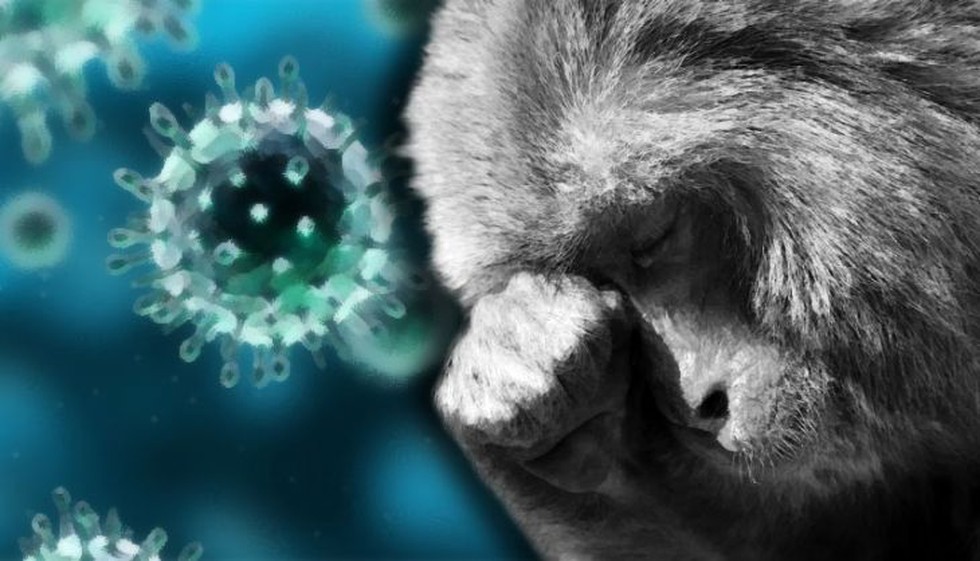
- Kyasanur Forest disease (KFD) is a tick-borne viral haemorrhagic fever.
- Nomenclature:
- The disease was first reported from Kyasanur Forest of Karnataka in India in 1957, hence it is known as Kyasanur Forest disease (KFD).
- The disease first manifested as an epizootic outbreak among monkeys killing several of them in the year 1957. Hence, it is also known as monkey fever.
- The disease was first reported from Kyasanur Forest of Karnataka in India in 1957, hence it is known as Kyasanur Forest disease (KFD).
- Distribution: The disease is endemic to South Asia. It has mainly occurred in Karnataka and the adjacent states including Kerala, Maharashtra, Goa, Tamil Nadu and Gujarat.
- Cause and Transmission:
- It is caused by a virus belonging to the family Flaviviridae, which also includes yellow fever and dengue fever.
- The vector for disease transmission is Haemaphysalis spinigera, a forest tick. Humans contract infection from the bite of nymphs of the tick.
- It is caused by a virus belonging to the family Flaviviridae, which also includes yellow fever and dengue fever.
- Symptoms/effect:
- Symptoms include a high fever with headaches, followed by haemorrhagic symptoms, such as bleeding from the nasal cavity, throat, and gums etc.
- The disease has a fatality rate of 3-10%, and it affects 400-500 people annually.
- Symptoms include a high fever with headaches, followed by haemorrhagic symptoms, such as bleeding from the nasal cavity, throat, and gums etc.
- Cure: Prophylaxis by vaccination, as well as preventive measures like protective clothing, tick control, and mosquito control are advised. The vaccine consists of formalin-inactivated KFDV.
Prelims Pointers
Jan. 13, 2019
About:
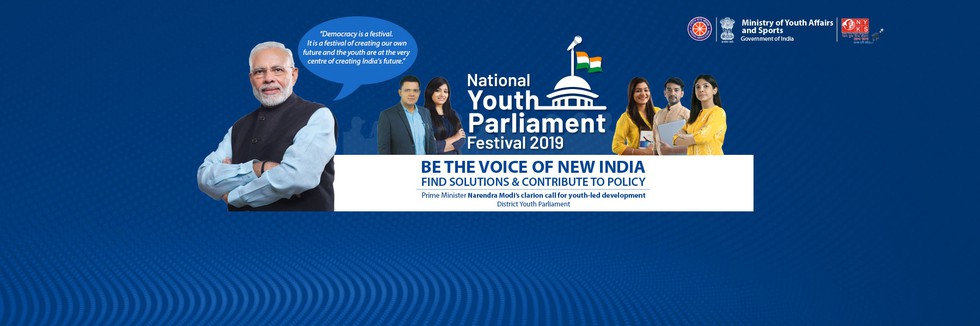
- Background: Prime Minister Shri Narendra Modi, in his Mann Ki Baat address on 31st December 2017, had shared his idea of organizing Youth Parliaments for young people in every district of the country and celebrate it as the “National Youth Parliament Festival”.
- Objective:
- To hear the voice of youth in this age bracket OF 18-25 who are allowed to vote but cannot contest in elections.
- To encourage the youth to engage with public issues, understand the common man’s point of view, form their opinion and express these in an articulate manner.
- To hear the voice of youth in this age bracket OF 18-25 who are allowed to vote but cannot contest in elections.
- Theme: National Youth Parliament Festival 2019 is organised on the theme of “Be the Voice of New India” and “Find solutions and contribute to policy”.
- Levels: It will be conducted at three levels:
- District Youth Parliament (DYP): A maximum of 100 best speakers shortlisted by the Screening Committee in each district, will participate in the DYP. Youth in the age bracket of 18-25 years are eligible to participate.
- State Youth Parliament (SYP): The best three speakers selected by a Jury from each District Youth Parliament will participate at the SYP.
- National Youth Parliament (NYP): Similarly, the two best speakers selected from each State Youth Parliament will participate as speakers in the NYP.
- District Youth Parliament (DYP): A maximum of 100 best speakers shortlisted by the Screening Committee in each district, will participate in the DYP. Youth in the age bracket of 18-25 years are eligible to participate.
- Duration: 12th of January till 24th of February 2019.
- Cash Prize: The best three speakers at the National Youth Parliament will be awarded Rs. 2 Lakhs, Rs. 1.5 Lakhs and Rs. 1 Lakh respectively by the Prime Minister.
Prelims Pointers
Jan. 13, 2019
About:
- Background:
- The Constitution (124th Amendment) Bill, 2019, which envisages giving up to 10% quota to economically weaker section, was passed by the Parliament during the winter session this week. After that the bill was sent to the President for his nod.
- According to a gazette notification, the legislation will be known as the Constitution (103rd Amendment) Act, 2019.
- The Constitution (124th Amendment) Bill, 2019, which envisages giving up to 10% quota to economically weaker section, was passed by the Parliament during the winter session this week. After that the bill was sent to the President for his nod.
- Objective: It aims to provide reservation in public employment and higher education for economically weaker sections. Economic reservation in jobs and education is proposed to be provided by inserting clause (6) in Articles 15 and 16 of the Constitution.
- Article 15(6):
- It enables states to make reservation for any economically weaker section of citizens in any educational institution, including private institutions, whether aided or unaided, except minority educational institutions covered under Article 30(1).
- The upper limit of reservation will be ten percent, which will be in addition to the existing reservations.
- It enables states to make reservation for any economically weaker section of citizens in any educational institution, including private institutions, whether aided or unaided, except minority educational institutions covered under Article 30(1).
- Article 16(6): the proposed Article 16(6) enables State to make provision for reservation in jobs appointments, in addition to the existing reservations, subject to a maximum of ten percent.
Challenged Before Supreme Court:
- An NGO named "Youth for Equality", filed a petition challenging it before the Supreme Court contending that the amendment violates the "basic structure" of the Constitution.
- Referring to the decision of the Supreme Court in Indira Sawhney case (1992), the petition states that reservation cannot be given on the basis of economic criteria.
https://barandbench.com/economic-reservation-president-assent/
Prelims Pointers
Jan. 13, 2019
About:
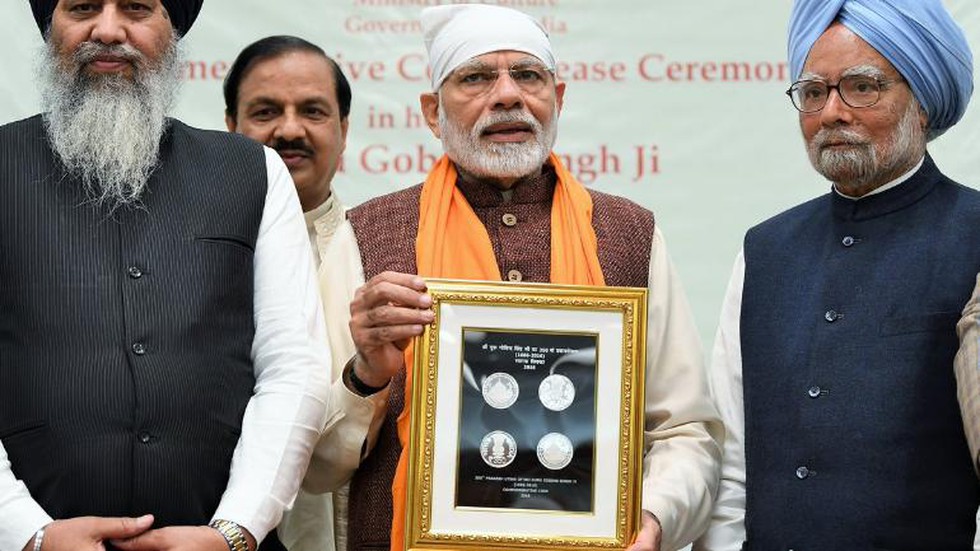
- Guru Gobind Singh (1666 – 1708), was the tenth Sikh Guru, warrior, poet and philosopher.
- He was born as Gobind Rai as the son of Guru Tegh Bahadur.
- Khalsa:
- He founded the Sikh warrior community called Khalsa in 1699.
- He introduced the Five Ks (Kesh, Kangha, Kara, Kirpan and Kacchera), the five articles of faith that Khalsa Sikhs wear at all times.
- He founded the Sikh warrior community called Khalsa in 1699.
- Contribution to Sikh texts:
- Finalized the Guru Granth Sahib in 1706 and declared this text to be the eternal Guru for Sikhs.
- Wrote the Chandi di Var in Punjabi language – a legendary war between the good and the evil, as described in the ancient Sanskrit text Markandeya Purana.
- composed Dasam Granth which includes compositions which are part of the daily prayers/lessons of Sikhs.
- Finalized the Guru Granth Sahib in 1706 and declared this text to be the eternal Guru for Sikhs.
- List of Sikh Takhts associated with him:
|
Name |
Location |
Religious significance |
|
Takht Keshgarh Sahib |
Anandpur Sahib, Punjab |
· It was here that Guru Gobind Singh raised Khalsa, the initiated Sikh warriors, in 1699. |
|
Takht Damdama Sahib |
Talwandi Sabo, Punjab |
· Guru Gobind Singh spent several months in Damdama Sahib. · It was the last one to be recognised as a takht, through a resolution of the SGPC in 1966, after Punjab became a separate state. |
|
Takht Patna Sahib |
Bihar |
· Patna Sahib is the birthplace Guru Gobind Singh. |
|
Takht Hazur Sahib |
Nanded, Maharashtra |
· Guru Gobind Singh spent his final days in Hazur Sahib, where he was cremated in 1708. |
Prelims Pointers
Jan. 13, 2019
About:
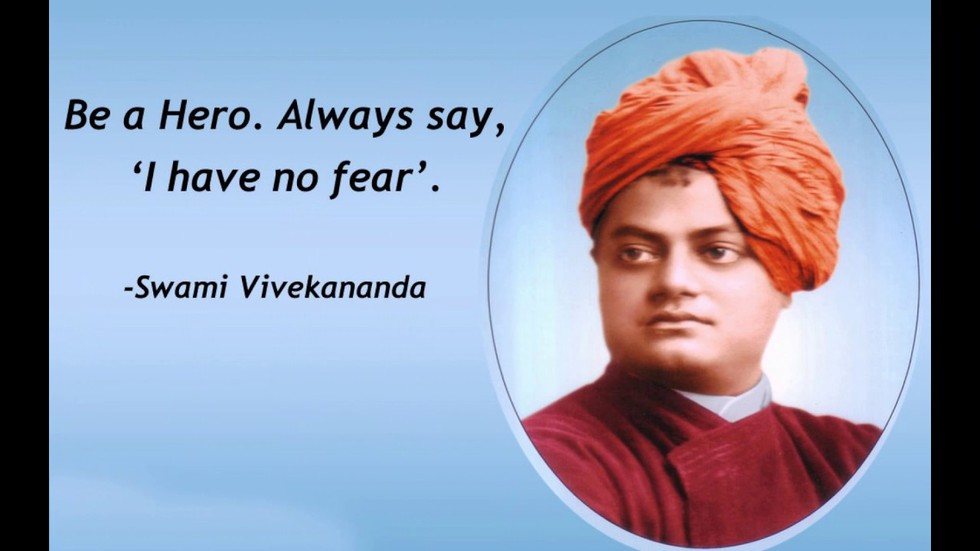
- Swami Vivekananda (1863 – 1902), born Narendranath Datta was an Indian Hindu monk and a chief disciple of the 19th century Indian mystic
- He later travelled to the United States, representing India at the 1893 Parliament of the World Religions in Chicago, where he introduced Hinduism to the world.
- Ramakrishna mission:
- In 1897 he founded the Ramakrishna Math and the Ramakrishna Mission, an Indian socio-religious reform movement.
- It subscribes to the ancient Hindu philosophy of Vedanta and bases its work on the principles of karma yoga, the principle of selfless work done with dedication to God.
- In 1897 he founded the Ramakrishna Math and the Ramakrishna Mission, an Indian socio-religious reform movement.
- He gave a new theory of ethics & morality based on the intrinsic purity and oneness of the Atman.
- In 1984 the Government of India declared that 12 January, the birthday of Swami Vivekananda, will be celebrated as National Youth Day.
Prelims Pointers
Jan. 13, 2019

About:
- Makar Sankranti is a festival day in the Hindu calendar, in reference to deity Surya (sun).
- Date of observance: Makar Sankranti is observed according to solar cycles. It is held normally on the 14th of January, or a day before or after. In certain regions celebrations can go on for even four days and vary a lot in the rituals.
- Significance: It marks the –
- first day of sun's transit into the Makara (Capricorn), marking the end of the month with the winter solstice and the start of longer days.
- end the inauspicious phase of the preceding month that is called Paush.
- beginning of the end of chilling winter.
- occasion to celebrate the hard work of millions of our farmers and people across the country (it is celebrated as a harvest Festival)
- first day of sun's transit into the Makara (Capricorn), marking the end of the month with the winter solstice and the start of longer days.
- Names: It goes by its standard all-India name, ‘Makar Sankranti’ in Odisha, Maharashtra-Goa, Andhra-Telengana, Kerala and most of the north India. It is also called as –
- Paush Parbon in Bengal,
- Pongal in Tamil Nadu,
- Uttarayan in Gujarat,
- Bhogali Bihu in Assam,
- Lohri in Punjab and Jammu,
- Maghi in Haryana and Himachal.
- Makar Sankramana in Karnataka,
- Saen-kraat in Kashmir.
- Sukaraat in Madhya Pradesh,
- Khichdi Parwa in parts of Bihar, Jharkhand and Uttar Pradesh.
- Paush Parbon in Bengal,
Prelims Pointers
Jan. 13, 2019
About:
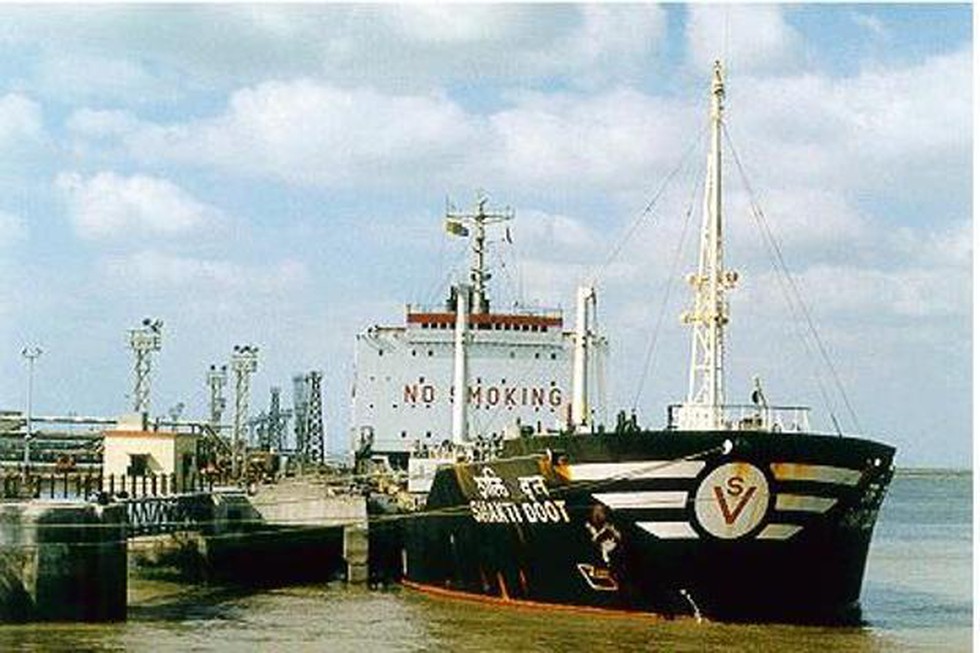
- In 2017, The Ministry of Shipping renamed Kandla Port Trust as Deendayal Port after Pandit Deendayal Upadhyay.
- This was done by the Central Government, in exercise of powers conferred on it under Indian Ports Act, 1908.
- Kandla Port, located on the Gulf of Kutch in Gujarat, is one of the twelve major ports in the country.
Recent findings:
- The major ports in India have recorded a growth of 3.77% and together handled 518.6 Million Tonnes of cargo during the period April to December, 2018 as against 499.7 Million Tonnes handled during the corresponding period of previous year.
- The highest growth was registered by Kamarajar Port (18.38%). It is Located on Coromandel Coast about 24 km north of Chennai Port, Chennai.
- Deendayal (Kandla) Port handled the highest volume of traffic i.e. 84.91 Million tonnes (16.37% share).
Jan. 12, 2019
Prelims Pointers
Jan. 12, 2019
About:
- Objective: The Atal Innovation Mission (AIM) including Self-Employment and Talent Utilisation (SETU) is Government of India's endeavor to promote a culture of innovation and entrepreneurship esp. in technology driven areas.
- Mission HQ: New Delhi.
- Background: In 2016, Union Cabinet approved the establishment of Atal Innovation Mission (AIM) and Self-Employment and Talent Utilisation (SETU) in NITI Aayog.
- It has two core Functions: (1) Entrepreneurship promotion through Self-Employment and Talent Utilisation wherein innovators will be supported to become successful entrepreneurs and (2) Innovation promotion to provide a platform where innovative ideas are generated.
Components:
Following are the three platforms established by AIM to promote entrepreneurship in the country.
- Atal Tinkering Labs (ATLs): ATLs will be established in school across India as a workspace where young minds can give shape to their ideas through hands-on do-it-yourself mode, and learn innovation skills.
- Atal Incubation Centres (AICs): To be established across India to help start-ups expand quicker and enable innovation-entrepreneurship, in core sectors such as manufacturing, transport, energy, education, agriculture, water and sanitation, etc.
- Scale-up support to Established Incubators (EIC): Under it, the start-up ecosystem in the country will be transformed by upgrading the Established Incubation Centres to world-class standards.
Prelims Pointers
Jan. 12, 2019
About:
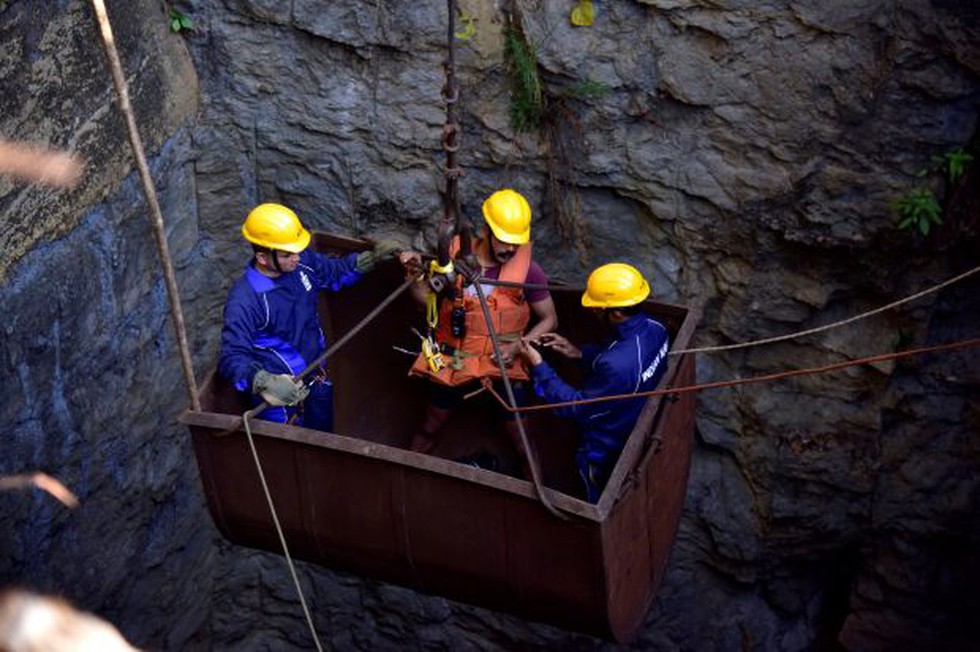
- Meaning: Rat-hole mining involves digging of very small tunnels, usually only 3-4 feet high, which workers (often children) enter and extract coal.
- Types: Rat-hole mining is broadly of two types –
- In side-cutting procedure, narrow tunnels are dug on the hill slopes and workers go inside until they find the coal seam. The coal seam in hills of Meghalaya is very thin, less than 2 m in most cases.
- In box-cutting procedure, a rectangular opening is made, varying from 10 to 100 sq. m, and through that is dug a vertical pit, 100 to 400 feet deep. Once the coal seam is found, rat-hole-sized tunnels are dug horizontally through which workers can extract the coal.
- In side-cutting procedure, narrow tunnels are dug on the hill slopes and workers go inside until they find the coal seam. The coal seam in hills of Meghalaya is very thin, less than 2 m in most cases.
- Criticism:
- The National Green Tribunal (NGT) banned it in 2014 on grounds of it being unscientific and unsafe for workers.
- Ecology: Petitioners from Assam have complained to NGT that rat-hole mining in Meghalaya had caused the water in the Kopili river (it flows through Meghalaya and Assam) to turn acidic.
- Risk to lives: The NGT also observed that there are number of cases where by virtue of rat-hole mining, during the rainy season, water flooded into the mining areas resulting in death of many individuals including employees/workers.
- The National Green Tribunal (NGT) banned it in 2014 on grounds of it being unscientific and unsafe for workers.
Prelims Pointers
Jan. 12, 2019
About:
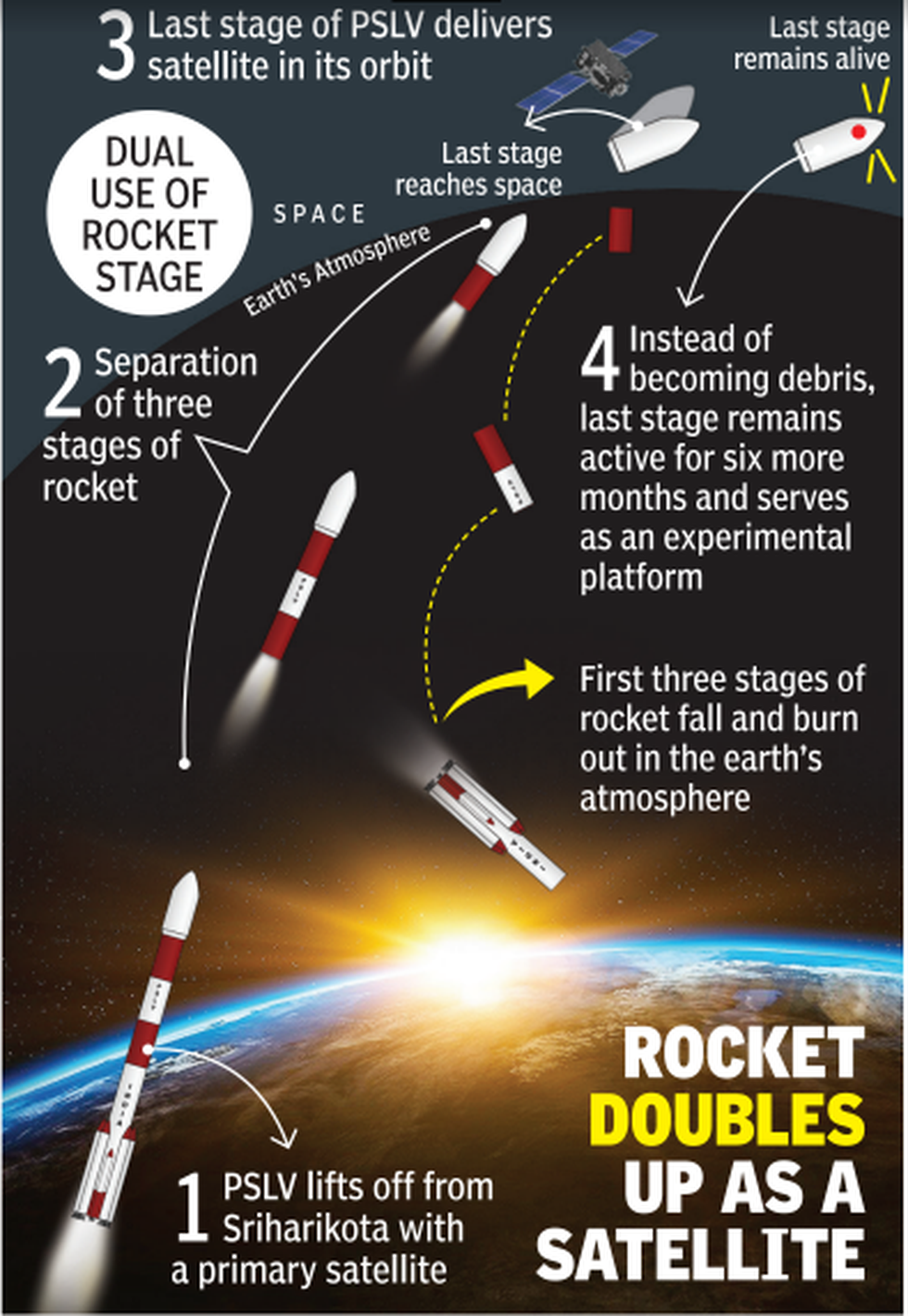
- This variant of the Polar Satellite Launch Vehicle (PSLV), tagged PSLV-DL, will be the first to sport two strap-on boosters for providing added thrust.
- Also, the fourth and final stage of the PSLV — PS4 — will be kept ‘alive’ in space as a useful ‘orbital platform’. For this, it will be equipped with lithium-ion batteries, which are critical to keep the spent stage in orbit.
- In a normal scenario, the initial stages of the rocket, once they detach, drop back into the sea. However, stage four, after releasing the payload, wanders around in space as junk.
- But in the coming mission, the expendable fourth stage will be transformed into a makeshift satellite to reduce space debris. The spent stage will be automatically ‘recycled’ into a valuable platform for space-based experiments.
- In a normal scenario, the initial stages of the rocket, once they detach, drop back into the sea. However, stage four, after releasing the payload, wanders around in space as junk.
Prelims Pointers
Jan. 12, 2019
About:
- Mandate: The Human Space Flight Centre will carry out all activities related to the Gaganyaan Project.
- HQ:
- Administration:
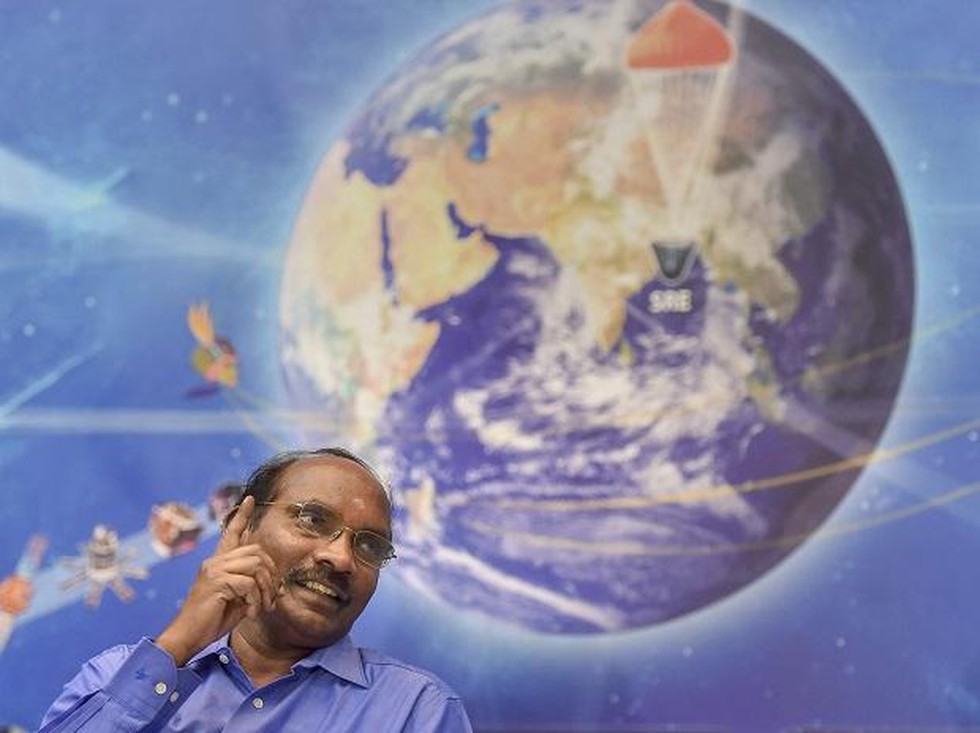
- Unnikrishnan Nair has been appointed as the director of the new centre. Earlier, he led ISRO’s Advanced Space Transportation Programme at the Vikram Sarabhai Space Centre (VSSC).
- Hutton, who helmed the PSLV light lift vehicle programme at the VSSC in Thiruvananthapuram, will be the project director in Dr. Nair’s team and his deputy.
- Unnikrishnan Nair has been appointed as the director of the new centre. Earlier, he led ISRO’s Advanced Space Transportation Programme at the Vikram Sarabhai Space Centre (VSSC).
- Background:
- ISRO’s announcement of the new centre and the naming of its head comes about five months after the government first unveiled plans to send a manned mission to space.
- The nodal Human Space Programme Office set up six months back under V.R. Lalithambika would continue to coordinate mission affairs at the ISRO’s headquarters.
- ISRO’s announcement of the new centre and the naming of its head comes about five months after the government first unveiled plans to send a manned mission to space.
|
Gaganyaan Project is ISRO’s maiden human spaceflight mission under which the astronauts will orbit Earth at a distance of 400 km. The mission is expected to be launched in December 2021 with a 3-member crew abroad the GSLV-MkIII. |
Prelims Pointers
Jan. 12, 2019
About:
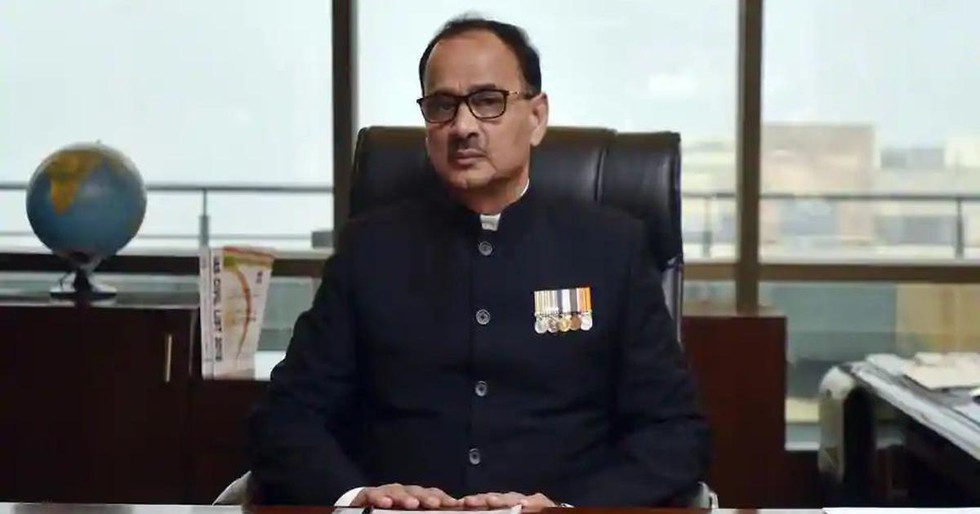
- Alok Verma became an Indian Police Service (IPS) officer of the Arunachal Pradesh-Goa-Mizoram and Union Territories (AGMUT) cadre in 1979.
- Career as an IPS officer:
- He served as the Commissioner of Police.
- He served as the 27th Director of the CBI from 2017 -2019, till he was removed from this post on allegations of corruption.
- He retired as the Director General of Fire Safety, Civil Defence and Home Guards. He resigned one day after his new appointment.
- He served as the Commissioner of Police.
- Awards: Alok Kumar Verma was decorated with the President's Police Medal for Distinguished Service in 2003 and Police Medal for Meritorious Service in 1997.
Corruption scandal:
- Alok Verma was entangled in a bribery scandal along with Rakesh Asthana, Special Director CBI. Both accused each other of bribery.
- Subsequently, on the recommendation of the Central Vigilance Commission (CVC), Government of India asked them to go on leave.
- Verma appealed to the Supreme Court of India and was reinstated as CBI director two months later with the instruction that he not take any major decisions till the Selection Committee decides his fate over the corruption charges.
- The selection committee took cognizance of corruption charges against him and decided to transfer him to the position of Director General of Fire Safety, Civil Defence and Home Guard.
- Verma resigned the next day citing his age being over the retirement age. He also alleged that he was removed on baseless allegations by one person (Asthana) who hates him.
Prelims Pointers
Jan. 12, 2019

About:
- Former Supreme Court judge, H.S. Bedi submitted a report submitted in the Supreme Court in late February 2018. The report looks into the 17 cases of suspected fake police encounters, all of which occurred between 2002 and 2006 when Narendra Modi was Chief Minister.
- Now, a Bench, led by Chief Justice of India Ranjan Gogoi, decided to put the report in the public domain.
Key Highlights of the report:
- Of the 17, Justice Bedi has sought further trial against police officers concerned in only three cases of fake encounters by Gujarat Police.
- These are the cases of killings of Sameer Khan in 2002, “smuggler” Haji Ismail in 2005 and Kasam Jafar of Mumbai.
- The police version was that, Sameer Khan had been sent by the Jaish-e-Mohammad (JeM), to assassinate the then Gujarat Chief Minister, Narendra Modi.
- These are the cases of killings of Sameer Khan in 2002, “smuggler” Haji Ismail in 2005 and Kasam Jafar of Mumbai.
- He said he recommended trial against police officers whose versions tended to be “deeply suspicious” or in the cases in which there was a “reasonable chance of conviction.”
- He has ordered a compensation of ₹10 lakh to ₹14 lakh to the families of the victims.
- Other cases in which he has recommended no further action deal with violent robberies gone fatal and suspects trying to escape police custody but ending up dead in shootouts with the police trying to defend themselves.
- However, there is no adverse finding against Mr. Modi, public servants or senior police officers.
Prelims Pointers
Jan. 12, 2019
About the schemes:
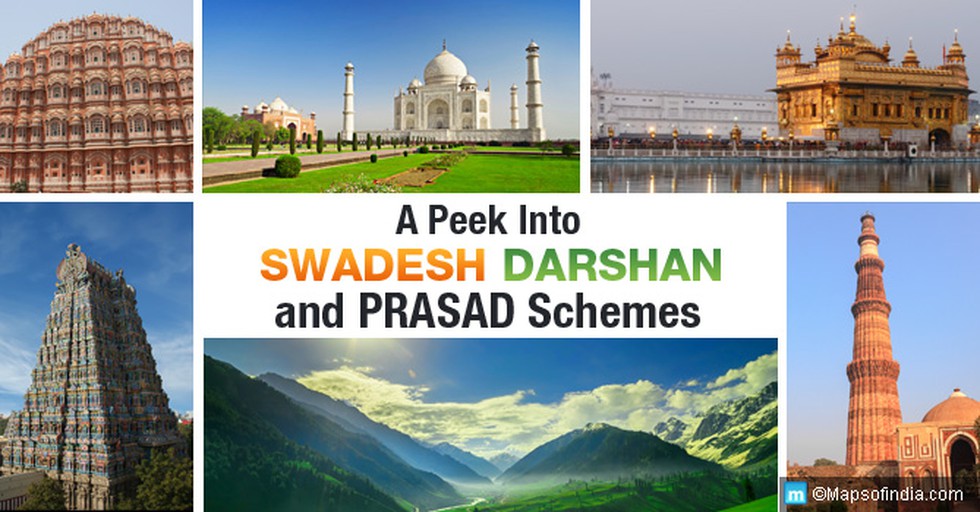
- Background: In 2015, Ministry of tourism launched these two schemes.
- Central Financial Assistance (CFA): Under these schemes, Ministry of Tourism provides Central Financial Assistance (CFA) to State/UT’s for various tourism projects.
|
|
PRASAD National Mission On Pilgrimage Rejuvenation And Spiritual Augmentation Drive |
Swadesh darshan Integrated Development of Theme-Based Tourist Circuits |
|
Objective |
Development and beautification of the identified pilgrimage destinations.
|
Development of particular spiritual circuit consisting of various religious/spiritual destination in a State and Union Territory. |
|
Sites identified under the scheme for development |
Thirteen sites have been identified: Amritsar, Ajmer, Dwaraka, Mathura, Varanasi, Gaya, Puri, Amaravati, Kanchipuram, Vellankanni, Kedarnath, Kamakhya and Patna.
|
Thirteen thematic circuits have been identified: North-East India Circuit, Buddhist Circuit, Himalayan Circuit, Coastal Circuit, Krishna Circuit, Desert Circuit, Tribal Circuit, Eco Circuit, Wildlife Circuit, Rural Circuit, Spiritual Circuit, Ramayana Circuit and Heritage Circuit. |
Following are the four sanctioned projects –
- ‘Development of West Khasi Hills (Nongkhlaw- Krem Tirot - Khudoi & Kohmang Falls – Khri River- Mawthadraishan, Shillong), Jaintia Hills (Krang Suri Falls- Shyrmang- Iooksi), Garo Hills (Nokrek Reserve, Katta Beel, Siju Caves)’ in Meghalaya has been sanctioned under the North East Circuit of Swadesh Darshan Scheme.
- Development of Gorakhnath Temple (Gorakhpur), Devipattan Temple (Balrampur) and Vatvashni Temple (Domariyagunj) has also been sanctioned under Spiritual Circuit of Swadesh Darshan Scheme.
- ‘Development of Govardhan’ in District Mathura in Uttar Pradesh has been sanctioned under the PRASHAD scheme.
- ‘Development of Pilgrimage Amenities at Somnath – Phase II’ has been sanctioned under the PRASHAD scheme.
Prelims Pointers
Jan. 12, 2019
About:
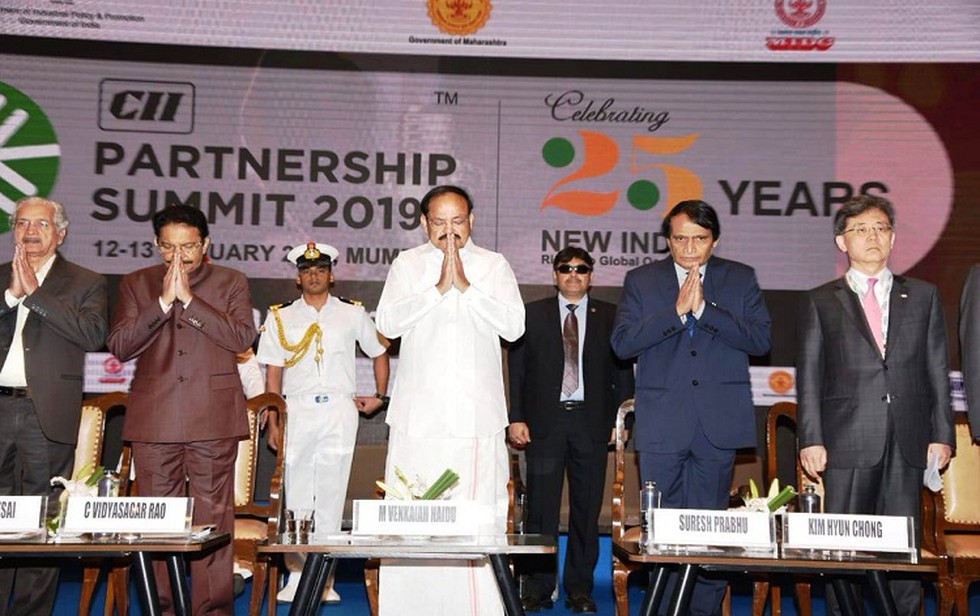
- Partnership Summit is a global platform for dialogue, debate, deliberation and engagement among Indian and global leaders on economic policy and growth trends in India.
- The two-day event is being held on 12th and 13th January 2019.
- The Summit is being organized by the Department of Industrial Policy and Promotion (DIPP), Union Ministry of Commerce & Industry, State Government of Maharashtra and Confederation of Indian Industry (CII).
- The themes of the sessions in the two days of the Summit will cover topics like:
- Partnering with New India
- Reforms and De-regulation – Strategies to Boost Investment
- The Infra Expanse – A Super Imperative for Growth etc.
- Partnering with New India
Prelims Pointers
Jan. 12, 2019
About:
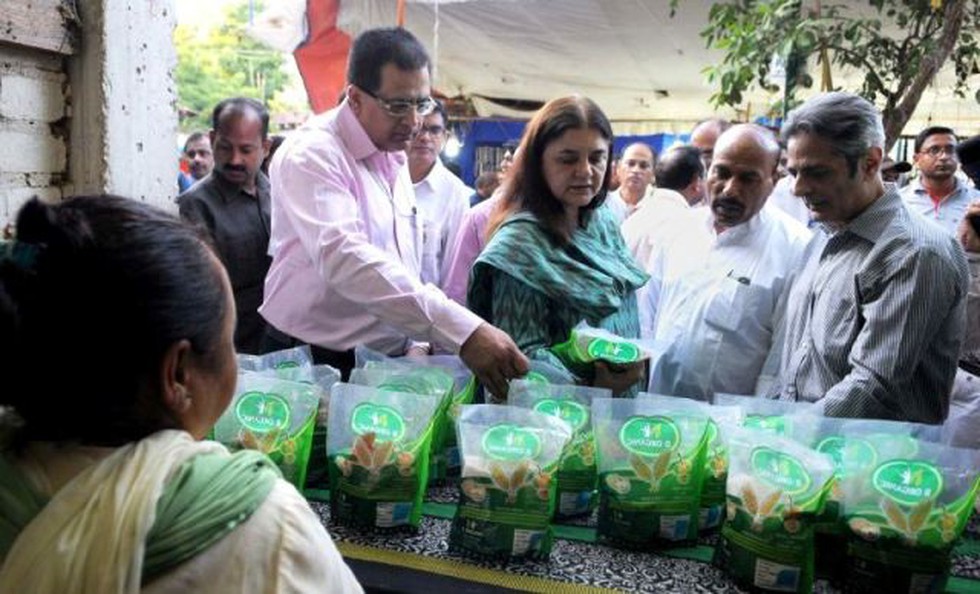
- Objective of the festival is to encourage women farmers and entrepreneurs in the organic sector from the remotest parts of India.
- Features:
- The festival aims to encourage Indian women entrepreneurs and farmers to connect with more buyers and thus, empower them through financial inclusion, while promoting organic culture in India.
- Over 200 women will showcase over 1,000 varied organic products, including fabric, wellness, grains, seeds, jewellery, bakery items and a lot more.
- The festival aims to encourage Indian women entrepreneurs and farmers to connect with more buyers and thus, empower them through financial inclusion, while promoting organic culture in India.
- Venue: The Women of India Organic Festival has been held annually in New Delhi since 2015, and makes its debut in Chandigarh this year.
Prelims Pointers
Jan. 12, 2019
About:
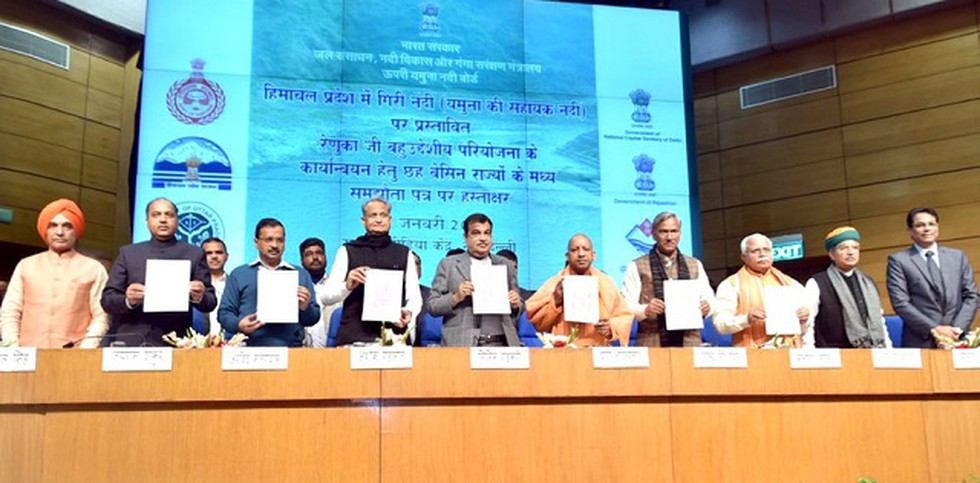
- States covered: The agreement was signed between the Centre and the states/UTs of Uttar Pradesh, Haryana, Himachal Pradesh, Delhi, Rajasthan and Uttarakhand.
- List of projects: Under the agreement three storage projects are proposed to be constructed on the river Yamuna and two of its tributaries - Tons and Giri. These include –
- Lakhwar project on river Yamuna in Uttarakhand,
- Kishau project on river Tons in Uttarakhand and Himachal Pradesh and
- Renukaji project on river Giri in Himachal Pradesh.
- Lakhwar project on river Yamuna in Uttarakhand,
- Benefits: The project will meet the drinking water and irrigation needs of these states. Water dispute between states will also end after the completion of the project.