Feb. 20, 2019
Prelims Pointers
Feb. 20, 2019
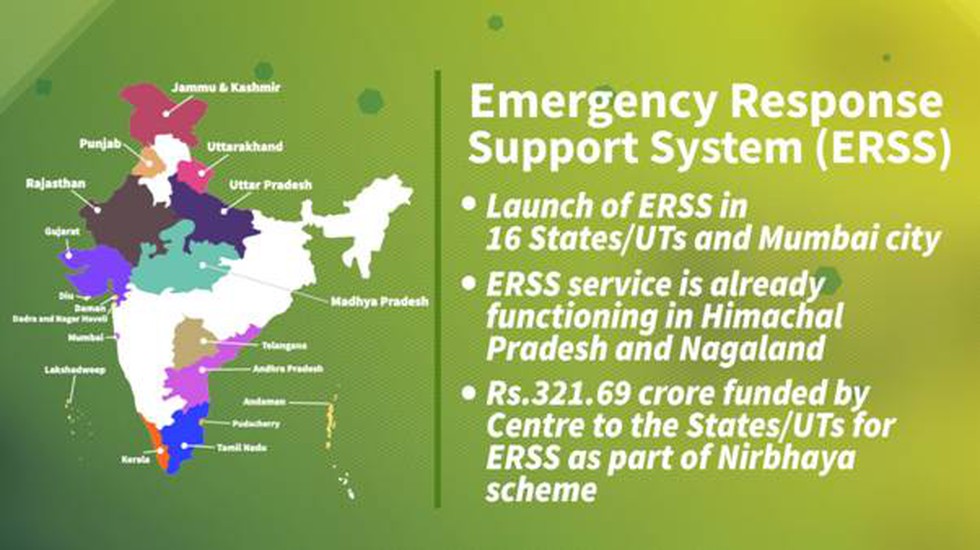
Emergency Response Support System (ERSS):
- The ERSS is a pan-India single number (112) based response system for persons in distress. A citizen may use the following methods to access the emergency services:
- Dial 112 from phone. For Women and children, 112 India App provides a special SHOUT feature which alerts registered volunteers in the vicinity of victim for immediate assistance.
- Press power button on smart phone 3 time quickly to activate panic call to ERC.
- In case of feature phone, long press of “5” or “9” key on the phone will activate the panic call.
- Log onto ERSS website for the State and lodge emergency.
- Email SOS alert to State ERC.
- Use 112 India Mobile App, which is available free on Google Play store and Apple store.
- Dial 112 from phone. For Women and children, 112 India App provides a special SHOUT feature which alerts registered volunteers in the vicinity of victim for immediate assistance.
- Under this system, all the states have to set up a dedicated Emergency Response Centre (ERC) which will be connected to District Command Centres (DCC) and the Emergency Response Vehicles, and assistance/response to victims are facilitated through them.
- The 16 States/UTs where the ERSS has been launched are Andhra Pradesh, Uttarakhand, Punjab, Kerala, Madhya Pradesh, Rajasthan, UP, Telangana, Tamil Nadu, Gujarat, Puducherry, Lakshadweep, Andaman, Dadra & Nagar Haveli, Daman & Diu, J&K. ERSS had already been successfully implemented in the States of Himachal of Pradesh and Nagaland.
Investigation Tracking System for Sexual Offences (ITSSO):
- The ITSSO is meant for Law Enforcement Agencies in the country.
- It is an online module available to law enforcement agencies at all levels- National, State, District and Police Station that allows State to undertake real-time monitoring and management for completion of investigation in rape cases in 2 months.
- It leverages the existing CCTNS data base, which covers nearly 15000 police stations in the country. ITSSO would greatly strengthen States ability for analytics and prognosis for timely investigation and prosecution in rape cases.
Safe City Implementation Monitoring Portal:
- In order to instil sense of security in women in metro cities, Government has identified eight cities for implementation of Safe City projects in first phase at a cost of Rs.2,919 crore.
- The cities are Ahmedabad, Bengaluru, Chennai, Delhi, Hyderabad, Kolkata, Lucknow & Mumbai.
- The projects are funded under Nirbhaya Fund scheme.
- The projects have been prepared jointly by Municipal bodies and City Police and reflect integrated action for safety of women.
- Important features of the Safe City projects include:
- Identification of crime Hot-spots in each city. Saturating such Hot-spots with increased CCTV surveillance. Improving Street Lighting in identified Hot Spot areas.
- Automated Number Plate Reading (ANPR) and drone-based surveillance also being deployed in few cities as per requirement.
- Setting up women police out-posts for facilitating ease of access by any aggrieved woman to report incidence or seek assistance.
- Setting up Women Help Desks in Police Stations with facility for trained Counsellors.
- Implementing Safety measures in buses, including Cameras.
- Identification of crime Hot-spots in each city. Saturating such Hot-spots with increased CCTV surveillance. Improving Street Lighting in identified Hot Spot areas.
Prelims Pointers
Feb. 20, 2019
Tele Law Scheme:
- Background: The moves comes after the Department of Justice earlier implemented the pilot project in UP, Bihar and J&K, where over 50,000 litigants have availed the services.
- Objective of Tele-law: Under this legal aid services will be provided through Common Service Centres (CSC) at the Panchayat level, spread across the country.
- Working:
- Under the scheme, a portal called ‘Tele-Law’ will be launched, which will be available across the Common Service Centre (CSC) network.
- This will connect the citizens to legal service providers. People will be able to seek legal advice from lawyers through video conferencing available at the Centres CSC.
- The National Legal Services Authority (NALSA) will provide a panel of lawyers from State capitals, who will be available through video conferencing to provide legal advice and counselling to the applicants.
- Under the scheme, a portal called ‘Tele-Law’ will be launched, which will be available across the Common Service Centre (CSC) network.
- Role of a Para Legal Volunteer (PLV):
- Every CSC will also engage a PLV, who will be the first point of contact for the rural citizens.
- These PLVs will help the applicant connect with a lawyer through the video conferencing facility at the CSC, will help them in understanding the legal issues and explain the advice given by lawyers.
- Every CSC will also engage a PLV, who will be the first point of contact for the rural citizens.
- Agencies involved: It Is a collaboration between the Ministry of Law and Justice and the Ministry of Electronics and Information Technology (MeitY), which runs the Digital India programme.
Nyaya Bandhu (Pro Bono Legal Services) Mobile Application:
- There are a significant number of lawyers who would be interested to volunteer their time and money in providing their services as a pro bono, but may not be able to perform due to a lack of common platform to serve the unserved.
- Thus, to accelerate and facilitate the practicing advocates to register and connect with the registered eligible beneficiaries, Nyaya Bandhu (Pro Bono Legal Service) mobile application is developed to solidify the pro bono culture in the country.
Pro Bono?
- Pro bono is a Latin phrase for professional work undertaken voluntarily and without payment for those who are unable to afford them.
- The term is more used in legal sector. Pro bono legal counsel may assist an individual or group on a legal case by filing government applications or petitions.
Prelims Pointers
Feb. 20, 2019
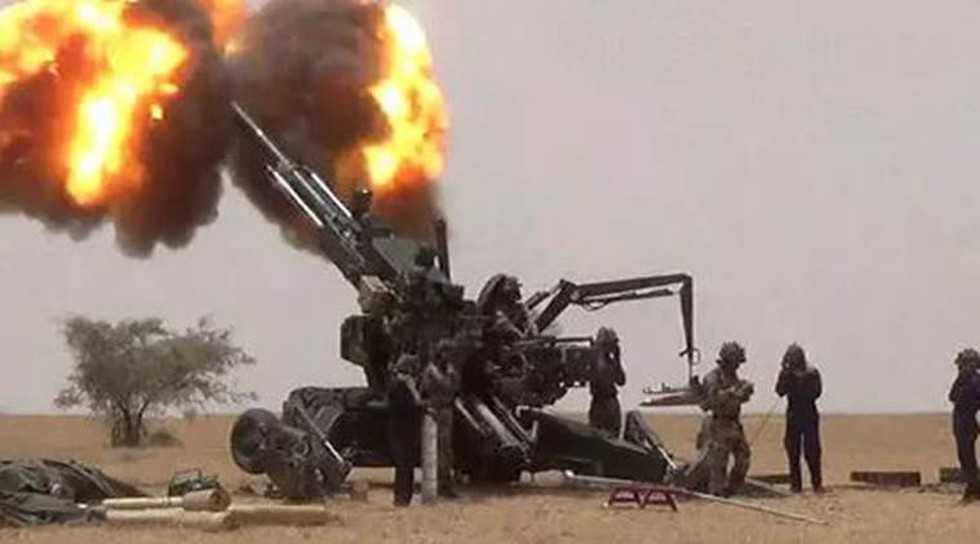
About:
- Dhanush is the first ever indigenous 155mm x 45 calibre artillery guns.
- Features:
- 'Dhanush' has been mechanically upgraded to fire standard NATO 155 mm ammunition and can accommodate both boll bags and the bi-modular charge system (BMCS) which have resulted in increasing the range.
- The gun is equipped with inertial navigation-based sighting system, auto-laying facility, on-board ballistic computation and an advanced day and night direct firing system.
- The guns can travel in all terrains viz desert and high altitude. The self-propulsion unit allows the gun to negotiate and deploy itself in mountainous terrains with ease.
- 'Dhanush' has been mechanically upgraded to fire standard NATO 155 mm ammunition and can accommodate both boll bags and the bi-modular charge system (BMCS) which have resulted in increasing the range.
- Manufactured by:
- 'Dhanush' is the product of joint efforts by the Ordnance Factory Board (OFB) and the Indian Army with contributions from DRDO, DGQA, DPSUs such as BEL, PSUs such as SAIL and several private enterprises.
- The weapon is the first long rang artillery gun to be produced in India and it is a major success story of the 'Make in India' initiative.
- 'Dhanush' is the product of joint efforts by the Ordnance Factory Board (OFB) and the Indian Army with contributions from DRDO, DGQA, DPSUs such as BEL, PSUs such as SAIL and several private enterprises.
Prelims Pointers
Feb. 20, 2019
SWAYATT:
- SWAYATT is an initiative to promote “Start-ups, Women and Youth Advantage Through eTransactions” on Government e Marketplace (GeM).
- This will bring together the key stakeholders within the Indian entrepreneurial ecosystem to Government e-Marketplace the national procurement portal.
GeM Start-up Runway:
- On this occasion, Commerce Minister also dedicated GeM Start-up Runway-an initiative of GeM in association with Start -up India.
- Its objective is to facilitate Start-ups registered with Start -up India to access the public procurement market and sell innovative products and services to government buyers.
- Government e-Marketplace is an online market place for procurement of common use goods and services by government ministries, departments and CPSEs.
- It was setup in 2016 and has 801,956 products and 5,197 services, with 199,654 registered sellers, service providers and 33,536 government buyers.
Prelims Pointers
Feb. 20, 2019
About:
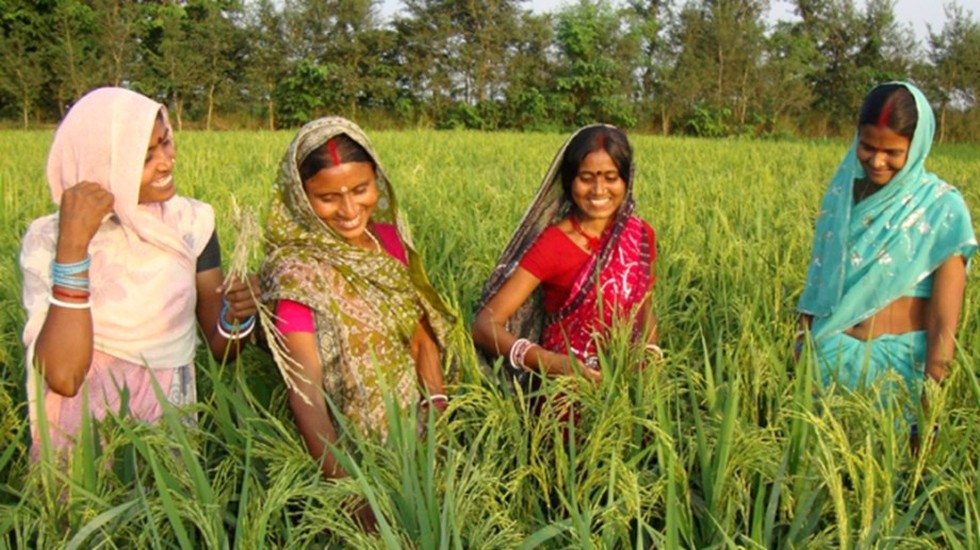
- Parent programme: This project under the Deendayal Antyodaya Yojana - National Rural Livelihoods Mission (DAY-NRLM) will be through loan assistance from the World Bank.
- Strategy: Innovative projects will be undertaken under NRETP to –
- pilot alternate channels of financial inclusion,
- create value chains around rural products,
- introduce innovative models in livelihoods promotion and access to finance and
- scale-up initiatives on digital finance and livelihoods interventions.
- pilot alternate channels of financial inclusion,
- Benefits: The technical assistance provided by NRETP and the higher-level interventions facilitated by the project will enhance the livelihoods promotion and access to finance and scale-up initiatives on digital finance and livelihood interventions.
- Aajeevika - National Rural Livelihoods Mission (NRLM) was launched by the Ministry of Rural Development (MoRD), Government of India in 2011. In 2015, the program was renamed Deendayal Antayodaya Yojana (DAY-NRLM).
- Aided in part through investment support by the World Bank, the Mission aims at creating efficient and effective institutional platforms of the rural poor, enabling them to increase household income through sustainable livelihood enhancements and improved access to financial services.
Prelims Pointers
Feb. 20, 2019
About:
- The National Policy of Electronics 2019 (NPE 2019) replaces the National Policy of Electronics 2012 (NPE 2012).
- Objective: Positioning India as a global hub for Electronics System Design and Manufacturing (ESDM) by encouraging and driving capabilities in the country for developing core components, including chipsets, and creating an enabling environment for the industry to compete globally.
- Targets:
- Promote domestic manufacturing and export in the entire value-chain of ESDM for economic development to achieve a turnover of USD 400 billion by 2025.
- This will include targeted production of 1.0 billion mobile handsets by 2025, valued at USD 190 billion, including 600 million mobile handsets valued at USD 110 billion for export.
- Promote domestic manufacturing and export in the entire value-chain of ESDM for economic development to achieve a turnover of USD 400 billion by 2025.
- Strategy:
- Create eco-system for promoting domestic manufacturing and export in the entire value-chain of ESDM.
- Promote Industry-led R&D and innovation in emerging technology areas such as 5G, loT/ Sensors, Artificial Intelligence (Al), Machine Learning, Virtual Reality (VR), Drones, Robotics, Additive Manufacturing, Photonics, Nano-based devices, etc.
- Special thrust on Fabless Chip Design Industry, Medical Electronic Devices Industry, Automotive Electronics Industry and Power Electronics for Mobility and Strategic Electronics Industry.
- Create Sovereign Patent Fund (SPF) to promote the development and acquisition of IPs in ESDM sector.
- Promote trusted electronics value chain initiatives to improve national cyber security.
- Provide incentives and support for significantly enhancing availability of skilled manpower, including re-skilling.
- Create eco-system for promoting domestic manufacturing and export in the entire value-chain of ESDM.
- Benefits: It will enable flow of investment and technology, leading to higher value addition in the domestically manufactured electronic products, increased electronics hardware manufacturing in the country and their export, while generating employment opportunities.
Prelims Pointers
Feb. 20, 2019
Khadi and Gramodyog Vikas Yojana:
- Recent decision: Union cabinet has approved the following –
- To continue the existing schemes subsumed under 'Khadi and Gramodyog Vikas Yojana' at the total cost of Rs. 2800 crore for the period 2017-18 to 2019-20;
- To bring in a new component of ‘Rozgar Yukta Gaon (RYG)’ under the scheme.
- To continue the existing schemes subsumed under 'Khadi and Gramodyog Vikas Yojana' at the total cost of Rs. 2800 crore for the period 2017-18 to 2019-20;
- Scheme components: As a part of rationalization exercise, 8 different schemes of Khadi & Village Industries are now merged under 2 umbrella heads –
- Khadi Vikas Yojana: Market Promotion & Development Assistance (MPDA), Interest Subsidy Eligibility Certificate (ISEC), Workshed, Strengthening Weak Infra, Aam Aadmi Bima Yojana, Khadi Grant and Khadi & VI S&T.
- Gramodyog Vikas Yojana: Village Industries Grant.
- Khadi Vikas Yojana: Market Promotion & Development Assistance (MPDA), Interest Subsidy Eligibility Certificate (ISEC), Workshed, Strengthening Weak Infra, Aam Aadmi Bima Yojana, Khadi Grant and Khadi & VI S&T.
Rozgar Yukta Gaon (RYG):
- Objective: To introduce enterprise-based operation in the Khadi sector and to create employment opportunities for thousands of new artisans in the current and next financial year (2018-19 and 2019-20).
- Strategy: It involves introducing an 'Enterprise-led Business Model' in place of 'Subsidy-led model' through partnership among 3 stakeholders (1) KRDP-assisted Khadi Institution, (2) Artisans and (3) Business Partner.
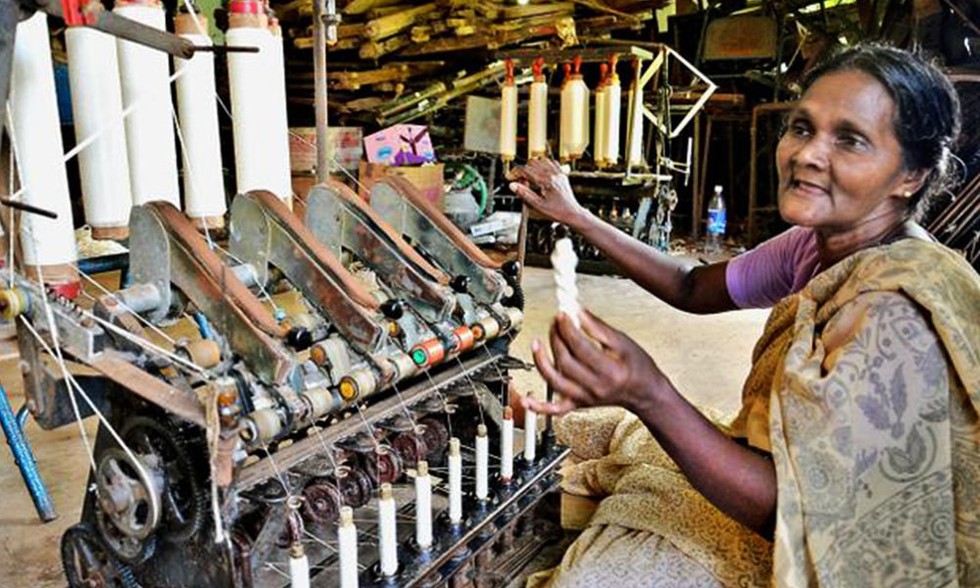
- Coverage: It will be rolled out in 50 Villages by providing 10,000 Charkhas, 2000 looms & 100 warping units to Khadi artisans, and would create direct employment for 250 Artisans per village.
- Financial aspect: The total Capital Investment per village shall be Rs.72 Lakh as subsidy, and Rs.1.64 Crore in terms of Working Capital from the Business Partner.
Prelims Pointers
Feb. 20, 2019
About:
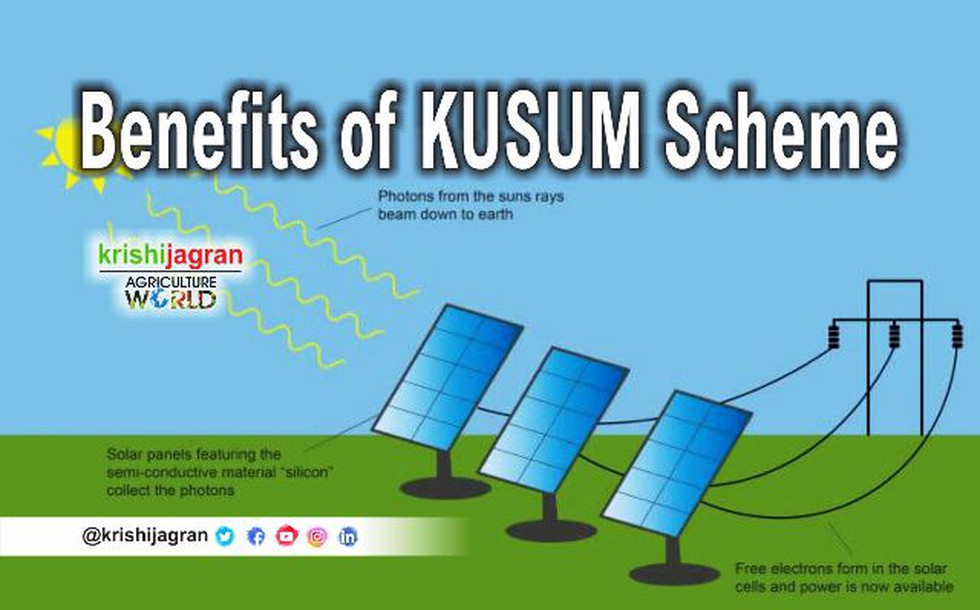
- Scheme objective: Providing financial and water security to farmers.
- Components: The proposed scheme consists of three components –
- Component-A: Installation of 10,000 MW of Decentralized Ground Mounted Grid Connected Renewable Power Plants.
- Component-B: Installation of 17.50 lakh standalone Solar Powered Agriculture Pumps.
- Component-C: Solarisation of 10 Lakh Grid-connected Solar Powered Agriculture Pumps.
- Component-A: Installation of 10,000 MW of Decentralized Ground Mounted Grid Connected Renewable Power Plants.
- Target: All three components combined, the scheme aims to add a solar capacity of 25,750 MW by 2022.
- Budgetary Allocation: The total central financial support provided under the scheme would be Rs. 34,422 crores.
- Benefits:
- All three components are likely to result in saving of about 27 million tonnes of CO2 emission per annum.
- Component-B of the Scheme may result in saving of 1.2 billion litres of diesel per annum and associated savings in the foreign exchange due to reduction of import of crude oil.
- Besides increasing self-employment, the proposal is likely to generate employment opportunity equivalent to 6.31 lakh job years for skilled and unskilled workers.
- All three components are likely to result in saving of about 27 million tonnes of CO2 emission per annum.
Prelims Pointers
Feb. 20, 2019
About:
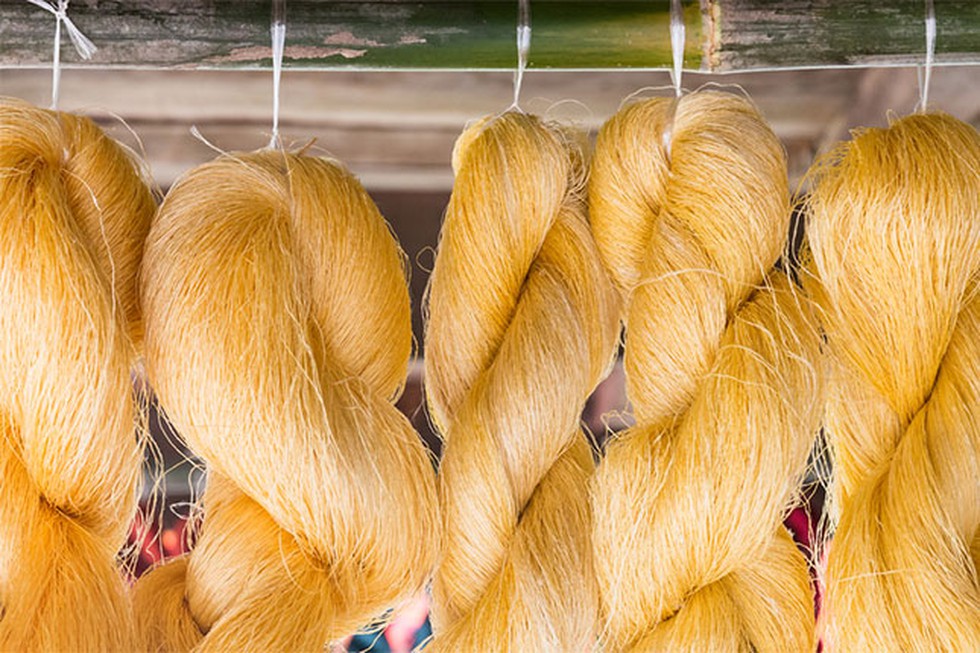
- Muga Silkworm Seed Production Centre (SSPC), Tura, Meghalaya is one of the projects taken up directly by Centre Silk Board (CSB) for implementation under Integrated Sericulture Development Project (ISDP) of NERTPS to make the State self-sufficient for production and supply of Muga silkworm seed.
- Silk Printing & Processing uniting Agartala, Tripura has been setup at a total project cost of Rs.3.71 crore for production, printing and processing of 1.5 lakh meter silk per annum.
- Eri Spun Silk Mill in Sangaipat, Imphal East, Manipur was approved with a total project cost of Rs.21.53 crore. Around 65% of Eri cocoons produced in Manipur are converted into yarn within the State. The project will generate employment to around 1,500 Eri farmers through the backward linkage and around 730 weavers through forward linkage.
- The project for development of sericulture in the aspirational district of Mamit, Mizoram, is for development of Seri culture in Mizoram which will focus on creation of pre-& post cocoon activities linkage from raising of silkworm food plant, rearing house, silkworm rearing activities, spinning, weaving along with capacity building.
Muga silk is a variety of wild silk geographically tagged to the state of Assam in India. The silk is known for its extreme durability and has a natural yellowish-golden tint with a shimmering, glossy texture. Muga silk is the product of the silkworm Antheraea assamensis.
Muga silk was recognized as a protected geographical indication (GI) in 2007, and was granted a GI logo for trademark purposes in 2014. The logo has been registered with the Assam Science Technology and Environment Council.
Prelims Pointers
Feb. 20, 2019
About:
- Full name: PISA is an acronym for Program for International Student Assessment.
- Origin: it is a triennial international survey which was first administered in 2000.
- Coordinated by: The Organization for Economic Cooperation and Development (OECD).
- Objective: It assesses the quality of education systems across the world by evaluating students in science, mathematics and reading.
- What does it measure? PISA is a competency-based assessment which unlike content-based assessment, measures the extent to which students have acquired key competencies that are essential for full participation in modern societies.
- Criteria:
- The two-hour computer-based test focuses on 15-year-old students as they have either completed or are near the end of their compulsory education in most countries.
- PISA requires the examinees to have finished at least six years of formal schooling.
- The two-hour computer-based test focuses on 15-year-old students as they have either completed or are near the end of their compulsory education in most countries.
- Participation in PISA:
- About 5.5 lakh students in 72 countries took the test in 2015.
- However, many non-OECD members including all SAARC nations, Greenland, Argentina and the entire African continent (except Algeria and Tunisia) either don’t regularly participate or haven’t participated at all in PISA.
- Till date, India has participated only once in PISA in 2009.
- About 5.5 lakh students in 72 countries took the test in 2015.
- Benefits of recent agreement:
- Learnings from participation in PISA will help to introduce competency-based examination reforms in the school system and help move away from rote learning.
- The Central Board of Secondary Education (CBSE) and the National Council for Educational Research and Training (NCERT) will be part of the process and activities leading to the actual test.
- Learnings from participation in PISA will help to introduce competency-based examination reforms in the school system and help move away from rote learning.
Feb. 19, 2019
Prelims Pointers
Feb. 19, 2019
About:
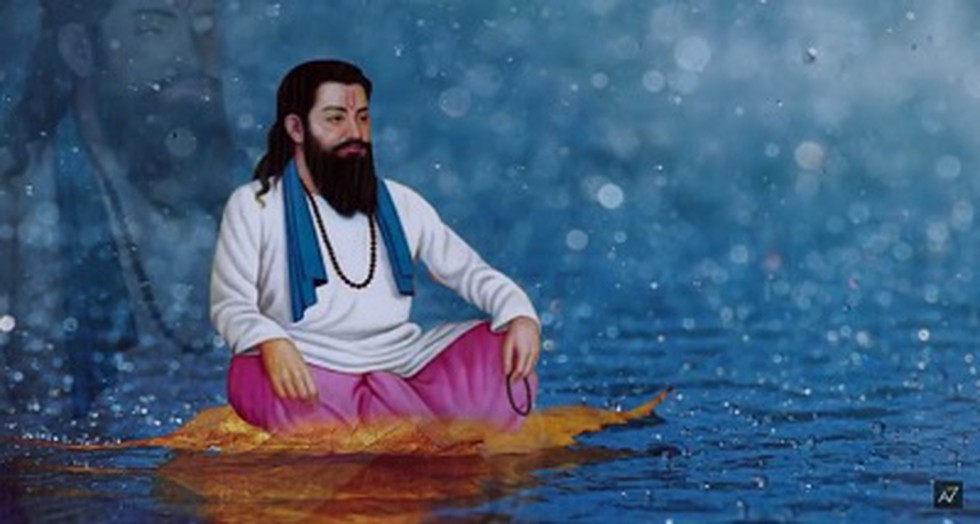
- He was a Dalit-poet saint from the Bhakti movement era in northern India who probably lived during the 14th to 16th .
- He belonged to a community whose profession involved processing dead animals and their skins.
- Key teachings:
- Everybody is equal in all respects, irrespective of caste, color or a belief in any form of God;
- God created man and not man created God;
- Emphasised on universal brotherhood and tolerance.
- He abandoned saguna (with attributes, image) forms of supreme beings, and focussed on the nirguna (without attributes, abstract) form of supreme beings.
- Everybody is equal in all respects, irrespective of caste, color or a belief in any form of God;
- Other Key facts:
- The 41 hymns of Guru Ravidas have been included in the Guru Granth Sahib.
- The famous saint poetess, Mirabai was a disciple of Guru Ravidass.
- The 41 hymns of Guru Ravidas have been included in the Guru Granth Sahib.
Prelims Pointers
Feb. 19, 2019
About:
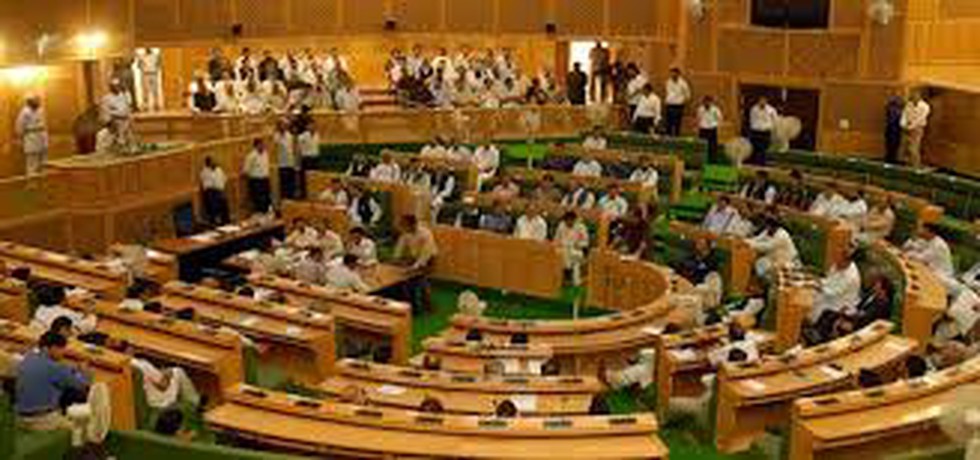
- Constitution of India (Article 168 & 169) provides for bi-cameral legislatures in certain States.
- Status: Legislative Council is the Upper House of State Legislature. Like the Rajya Sabha it is a permanent House i.e. not subject to dissolution.
- Process of establishing it: Union Parliament has the power to create or abolish the Legislative Council on the basis of resolutions adopted by special majority in the Assembly of the concerned State.
- Strength: The maximum strength of the Legislative Council of State is fixed at one-third of strength of the Legislative Assembly of that State and not less than 40.
- Present status: At present there are seven Legislative Councils in the country.
Election of Council Members:
- Elections to the State Legislative Councils are held under the system of proportional representation by means of the single transferable vote (Article 171).
- The Council members are elected by members of Legislative Assembly of respective states, by members of local bodies, by graduates, by teachers of secondary schools and by nomination by Governor.
- Criteria for becoming a member:
- Minimum age limit to be a member of Legislative Council is 30 years.
- Council members are elected from those possessing special knowledge and experience in the field of Art, Science, Literature, Social Science and cooperative movement.
- Minimum age limit to be a member of Legislative Council is 30 years.
- Tenure: Members are elected for a period of 6 years and one third members retire every second year.
Prelims Pointers
Feb. 19, 2019
About:
- The Union Ministry of Social Justice and Empowerment conducted a “National Survey on Extent and Pattern of Substance Use in India” through the NDDTC of AIIMS, New Delhi during 2018 which provides data at the National level as well as at the State level.
- Substance categories studied were: Alcohol, Cannabis, Opioids, Cocaine, Amphetamine Type Stimulants (ATS), Sedatives, Inhalants and Hallucinogens. The key findings are given below.
Alcohol:
- At the national level, about 14.6% of people (among 10-75-year-old) are current users of alcohol, i.e. about 16 Crore people. Prevalence is 17 times higher among men than women.
- Country liquor (‘desi’) (about 30%) and spirits (IMFL – Indian Made Foreign Liquor) (about 30%) are the predominantly consumed alcoholic beverages.
- About 2% of Indians are affected by harmful or dependent alcohol use.
- States with the high prevalence of alcohol use: Chhattisgarh, Tripura, Punjab, Arunachal Pradesh and Goa.
- States with high prevalence (more than 10%) of alcohol use disorders: Tripura, Andhra Pradesh, Punjab, Chhattisgarh, and Arunachal Pradesh.
Cannabis (Bhang and Ganja/Charas):
- About 2.8% of Indians (3.1 Crore individuals) report having used any cannabis product within past 12 months (Bhang – 2% or 2.2 crore people; Ganja/Charas – 1.2% or 1.3 Crore people).
- About 0.66% of Indian need help for their cannabis use problems.
- States with the higher than national prevalence of cannabis use: Uttar Pradesh, Punjab, Sikkim, Chhattisgarh and Delhi.
- In some states (e.g. Sikkim, Punjab) the prevalence of cannabis use disorders is considerably higher (more than thrice) than the national average.
Opioids:
- At the national level, the most common opioid used is Heroin, (current use 1.14%) followed by Pharmaceutical opioids (current use 0.96%) and then Opium (current use 0.52%).
- Prevalence of current use of opioids is 2.06%.
- 55% of Indians need help for their opioid use problems (harmful use and dependence).
- In terms of percentage of population affected, the top states are in the north east (Mizoram, Nagaland, Arunachal Pradesh, Sikkim, Manipur) along with Punjab, Haryana and Delhi.
Sedatives:
- About 1.08% of Indians (approximately 1.18 crore people) are current users of sedatives (non-medical, non-prescription use).
- States with the highest prevalence of current Sedative use are Sikkim, Nagaland, Manipur and Mizoram. However, Uttar Pradesh, Maharashtra, Punjab, Andhra Pradesh and Gujarat are the top five states which house the largest populations of people using sedatives.
Inhalants:
- Inhalants are the only category of substances for which the prevalence of current use among children and adolescents is higher (1.17%) than adults (0.58%).
- At the national level, an estimated 4.6 lakh children and 18 lakh adults need help for their inhalant use (harmful use / dependence).
- In terms of absolute numbers, states with high population of children needing help for inhalant use are: Uttar Pradesh, Madhya Pradesh, Maharashtra, Delhi and Haryana.
Others:
- Cocaine (0.10%) Amphetamine Type Stimulants (0.18%) and Hallucinogens (0.12%) are the categories with lowest prevalence of current use in India.
- Nationally, it is estimated that there are about 8.5 Lakh People Who Inject Drugs (PWID). High numbers of PWID are estimated in Uttar Pradesh, Punjab, Delhi, Andhra Pradesh, Telangana, Haryana, Karnataka, Maharashtra, Manipur and Nagaland.
- Opioid group of drugs are predominantly injected by PWID (heroin – 46% and pharmaceutical opioids – 46%). A substantial proportion of PWID report risky injecting practices.
Access to treatment Services:
- Access to treatment services for people affected by substance use disorders is inadequate.
- Just about one in 38 people with alcohol dependence report getting any treatment.
- Among people suffering from dependence on illicit drugs, one among 20 people has ever received inpatient treatment/ hospitalization for help with drug problems.
Prelims Pointers
Feb. 19, 2019
About:
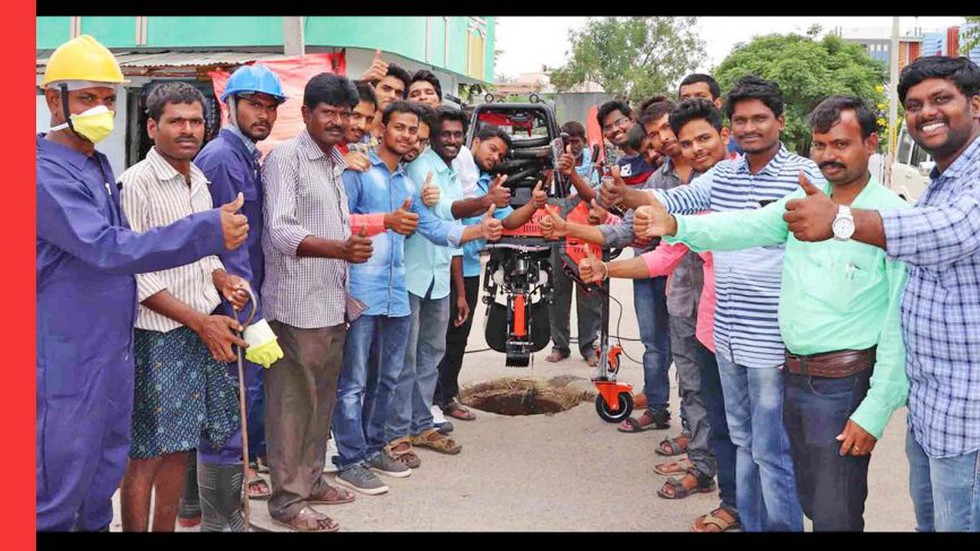
- According to officials, the robot named Bandicoot has been introduced at a cost of 18 lakh ruppes. Tamil Nadu Minister Kadambur Raju inaugurated the operation of the robot which would end deaths of workers engaged in sewer cleaning.
- Bandicoot, with its motto ‘changing manhole to robohole’, is a human controlled robot. It’s the brainchild of Genrobotics, a Thiruvananthapuram-based start-up which was founded in 2015.
- As opposed to the sewer suction machines that only suck the liquid waste from the sewer, Bandicoot has the ability to reach deep down the drainage and remove the solid waste, hence unblocking the sewage.
- It has a shovel and a jet pipe attached to it which makes it better equipped to clean the sewage, along with a camera that can aid in inspecting the manhole for any blockages.
- Bandicoot can finish the work of five people in lesser time with better efficiency and is available in both automatic and semi-automatic modes.
Prelims Pointers
Feb. 19, 2019
Dalit:
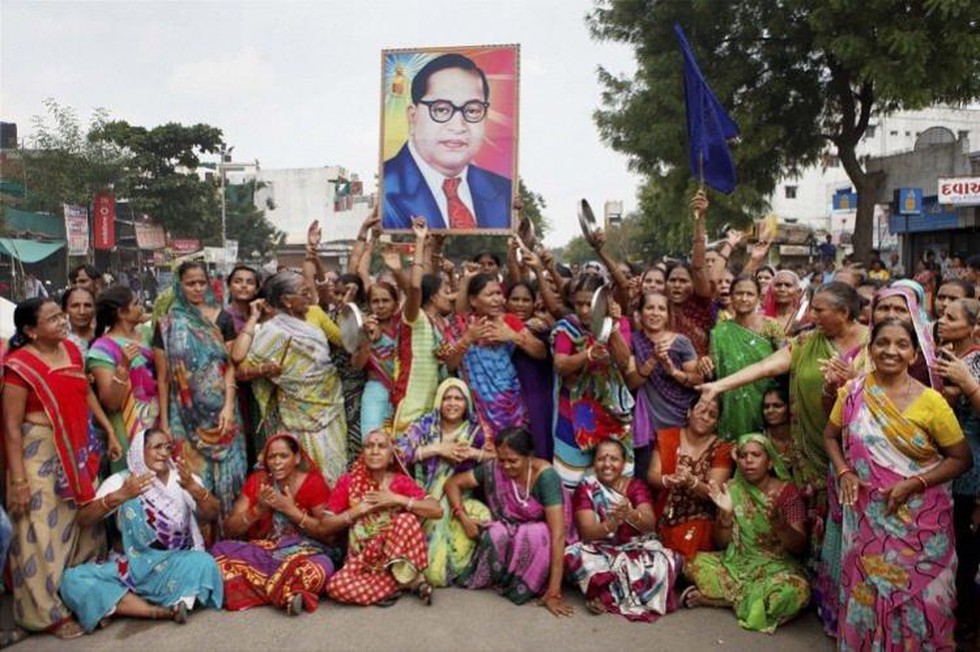
- The word ‘Dalit’, which in classical Sanskrit means ‘broken’, has for years been used to identify those who fall outside the four-fold caste system in the Brahmanical social order, and have been subjected to untouchability.
- In the past few decades, however, the term has acquired a political connotation, being associated with the radical movement of the depressed classes.
Schedule Castes: Constitutional Provisions
- Article 366(24): Scheduled Caste means such cases, races or tribes or parts of or groups within such castes, races or tribes as are deemed under Article 341 to be Scheduled Castes for the purposes of this Constitution;
- Article 341:
- (1) The President may with respect to any State or Union territory, by public notification, specify the castes, races or tribes for the purposes of this Constitution as Scheduled Castes in relation to that State or Union territory.
- (2) Parliament may by law include in or exclude from the list of Scheduled Castes specified in a notification issued under clause (1) any caste, race or tribe or part.
- (1) The President may with respect to any State or Union territory, by public notification, specify the castes, races or tribes for the purposes of this Constitution as Scheduled Castes in relation to that State or Union territory.
Timeline:
- March 2018: The Union ministry of Social Justice and Empowerment issued a circular to all ministries, departments, states/UTs asking them to avoid using the terms “Dalit” and “Harijan” when referring to members of Scheduled Caste communities and instead use the words “Scheduled Caste”.
- June 2018: The Nagpur branch of the Bombay High Court passed a directive asked the government to advise the media to use the term “Scheduled Caste” as suggested by the circular issued by the Ministry in March 2018.
- August 2018: The Ministry of Information and Broadcasting advised media publications to refrain from using the term and to use the constitutional term “Scheduled Caste” in English and appropriate translations in other languages instead.
- Petition against decision:
- Subsequently a petition was filed against the decision by advocate Sriram Parakkat who represented a group of individuals and organisations working for Dalit rights.
- The plea said the word “Dalit” is a self-chosen name, used as a “positive self-identifier and as a political identity”. The name represented the people who have been affected by the caste system and the practice of untouchability.
- It also referred to the decision by Press Council of India in November 2018, in which it ratified a decision against a blanket ban on the use of the word Dalit as such a restriction is “neither feasible nor advisable”.
- Subsequently a petition was filed against the decision by advocate Sriram Parakkat who represented a group of individuals and organisations working for Dalit rights.
- Recent Supreme Court Verdict:
- The Supreme Court rejected a plea challenging the Centre’s circular advising the media against using the word “Dalit” to refer to members of the Scheduled Caste.
- It said that the petitioners could approach the “appropriate authorities”.
- The Supreme Court rejected a plea challenging the Centre’s circular advising the media against using the word “Dalit” to refer to members of the Scheduled Caste.
Prelims Pointers
Feb. 19, 2019
Recent decision:
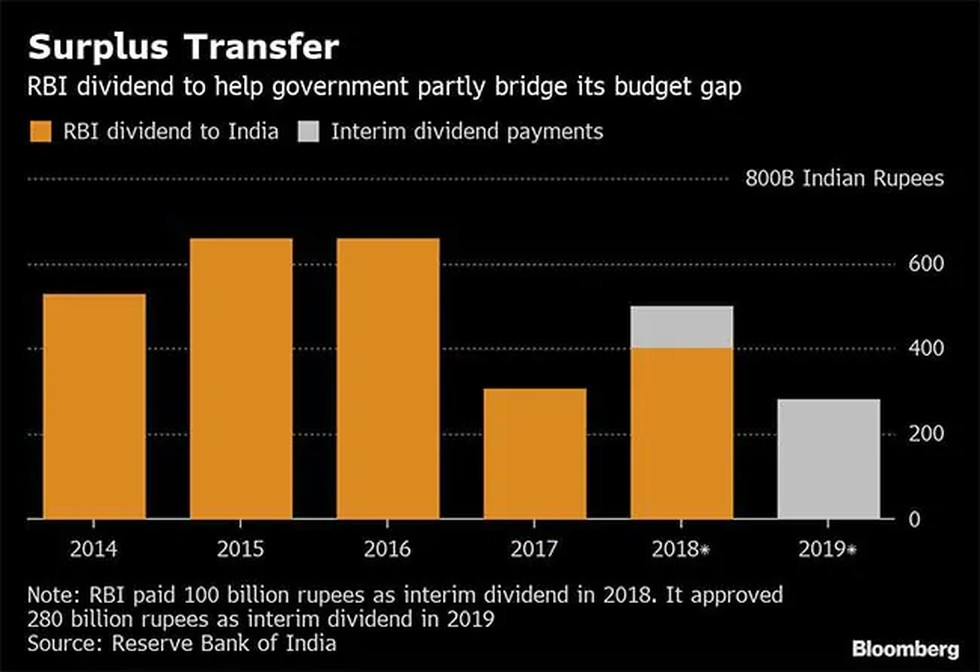
- The Reserve Bank of India (RBI) has decided to transfer an additional ₹28,000 crore as dividend to the Union government for the half-year ended 31 December 2018.
- The move could help the government meet its revised fiscal deficit target of 3.4% of GDP in 2018-19 amid a shortfall in revenue collections.
- This is beyond the ₹40,000 crore it has already paid during the year as surplus from its 2017-18 operations. This is the second successive year that the Reserve Bank will be transferring an interim surplus.
What is interim dividend?
- The interim dividend is the future income that the RBI has prepaid. This will have to be adjusted from its dividend payment due next year.
- RBI transfers its surplus amount to the government after making provisions for bad and doubtful debts, depreciation in assets, and contribution to staff and superannuation fund. The central bank follows a July-June financial year, while the central government follows an April-March year.
Comment:
- Transfers of dividends have become a bone of contention between the government and the central bank. Urjit Patel resigned from the post of RBI governor in December 2018 after alleged differences with the government on the issue.
- RBI set up an expert committee in December headed by former governor Bimal Jalan to review the economic capital framework of the bank. It will suggest how the central bank should handle its reserves and whether it can transfer its surpluses to the government. It is to submit its report by March-end.
Prelims Pointers
Feb. 19, 2019
Vision Zero Concept:
- Vision Zero is based on the belief that all accidents, diseases and harm at work are preventable.
- Objective: The concept of ‘Vision Zero’ is fast gaining acceptance across the countries to improve the occupational safety and health situation.
- Principles: The concept of Vision Zero is based on four fundamental principles viz.
- life is non-negotiable,
- humans are fallible,
- tolerable limits are defined by human physical resistance, and
- people are entitled to safe transport and safe workplaces.
- life is non-negotiable,
- The Vision is based on principles of Controlling Risks, Ensuring Safety and Health in Machines, Equipment and Workplaces and Skill Upgradation of Workforce.
International Vision Zero Conference:
- The Conference has been organized by Directorate General Factory Advice and Labour Institutes (DGFASLI), an attached office of the Ministry of Labour and Employment, German Social Accident Insurance (DGUV), Germany in association with Indian Institute of Technology, Bombay and International Social Security Association (ISSA).
- The conference provides a forum for promoting safety and health at work by exchanging knowledge, practices and experience.
The International Social Security Association (ISSA) is the world’s leading international organization for social security institutions, government departments and agencies. The ISSA was founded in 1927 under the auspices of the International Labour Organization (ILO). It is headquartered in Geneva.
Prelims Pointers
Feb. 19, 2019
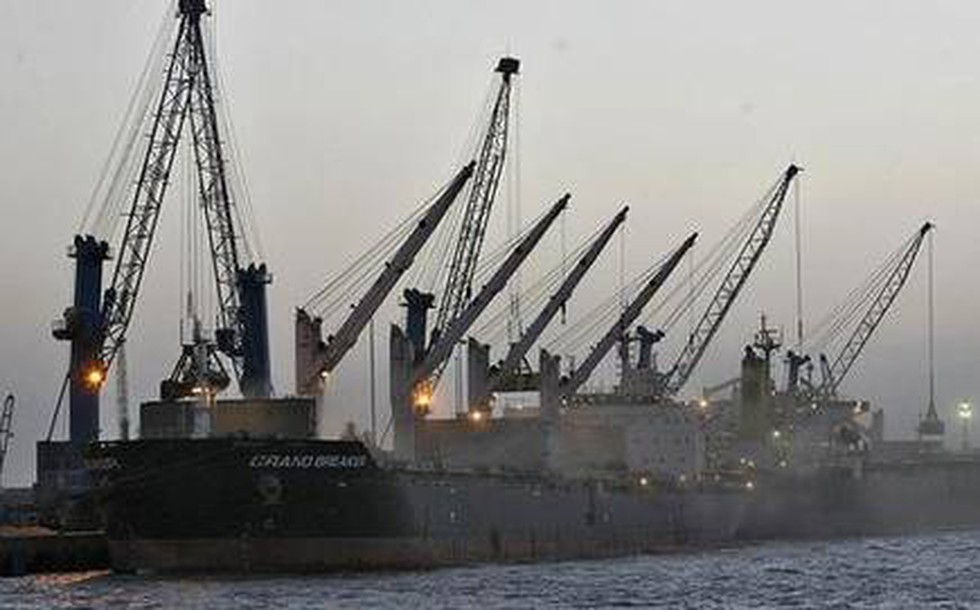
About:
- Background: Prior to the revision of the guidelines, the RoFR was reserved for Indian flag vessels as per the relevant provisions of Merchant Shipping Act, 1958.
- Revised Guidelines:
- But from now on, whenever a tendering process is undertaken to charter a vessel, a bidder offering a ship built in India will be given the first priority to match the lowest bidder (L1) quote.
- The RoFR would be exercised only in case the vessel being offered for charter by the lowest bidder (L1) has been built outside India. For any bidder to exercise RoFR, his bid should be within the Margin of Purchase Preference, which will be 20% of L1.
- But from now on, whenever a tendering process is undertaken to charter a vessel, a bidder offering a ship built in India will be given the first priority to match the lowest bidder (L1) quote.
- Significance:
- It is expected that this priority given to ships built in India will raise the demand for such vessels, providing them with additional market access and business support.
- The review is in line with the need to give a long-term strategic boost to the domestic shipbuilding industry.
- It is expected that this priority given to ships built in India will raise the demand for such vessels, providing them with additional market access and business support.
- Way ahead: A policy in this regard will be unveiled by Union Minister for Shipping in Mumbai on February 19, 2019 during the inauguration of the two-day Regional Maritime Safety Conference.
- The Regional Maritime Safety Conference being held in Mumbai is being organized by India for the first time.
- The inaugural edition is being organised by the National Maritime Foundation (NMF) in coordination with the Ministry of Shipping and the Ministry of External Affairs.
- The objective of the conference is to deliberate on issues related to assuring maritime safety in the India-ASEAN sub region, safeguarding our shores and promoting trade along the sea routes.
Prelims Pointers
Feb. 19, 2019
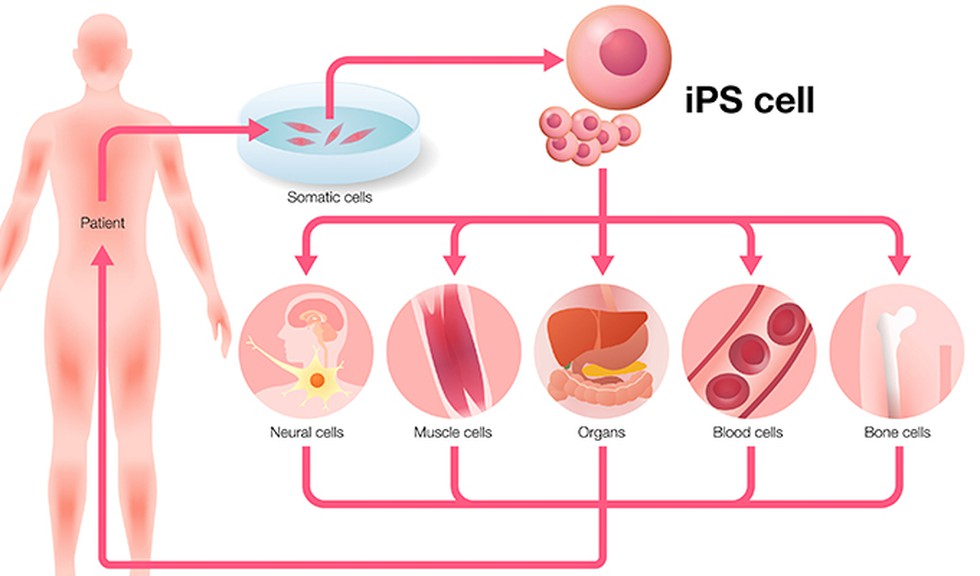
About:
- Induced pluripotent stem cells (iPSCs) are adult cells that have been genetically reprogrammed to an embryonic stem cell–like state by being forced to express genes and factors important for maintaining the defining properties of embryonic stem cells.
- Although these cells meet the defining criteria for pluripotent stem cells, it is not known if iPSCs and embryonic stem cells differ in clinically significant ways.
- Methods: Viruses are currently used to introduce the reprogramming factors into adult cells. Researchers are currently investigating non-viral delivery strategies.
- Timeline: Mouse iPSCs were first reported in 2006, and human iPSCs were first reported in late 2007.
- Significance/Application:
- Although additional research is needed, iPSCs are already useful tools for drug development and modelling of diseases, and scientists hope to use them in transplantation medicine.
- In any case, this breakthrough discovery has created a powerful new way to "de-differentiate" cells whose developmental fates had been previously assumed to be determined.
- Although additional research is needed, iPSCs are already useful tools for drug development and modelling of diseases, and scientists hope to use them in transplantation medicine.
Recent Development in Japan:
- The team will transplant two million iPS cells into the spines of the patients, who will be monitored for a year.
- The trial, expected to begin later this year, will initially focus on four patients who suffered their injuries just 14 to 28 days beforehand.
- The announcement comes after researchers in Kyoto said in November, they had transplanted iPS cells into the brain of a patient in a bid to cure Parkinson’s disease (a chronic, degenerative neurological disorder that affects the body’s motor system, often causing shaking and other difficulties in movement).
In cell biology, pluripotency refers to a stem cell that has the potential to differentiate into any of the three germ layers: endoderm, mesoderm or ectoderm.
Prelims Pointers
Feb. 19, 2019
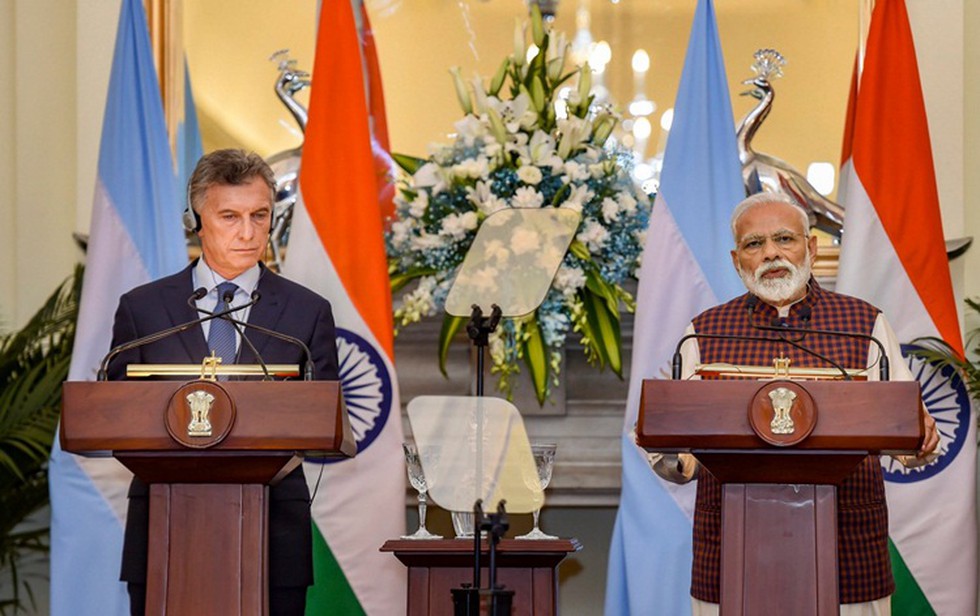
Key Highlights of the visit:
- India, Argentina decided to elevate their multi-faceted cooperation to strategic partnership.
- India and Argentina signed ten MoUs in several areas, including Defence, Civil nuclear, Tourism, pharmaceuticals and agriculture.
- The two sides decided to further explore avenues of space collaboration, including in such areas as satellite building and launch.
- A MoU on Antarctic Co-operation was also inked between the Ministry of Foreign Affairs (Argentina) and the Ministry of Earth Sciences (India).
- An Agreement for the establishment of India-Argentina Centre of Excellence for Information and Technology was also signed.
Feb. 18, 2019
Prelims Pointers
Feb. 18, 2019
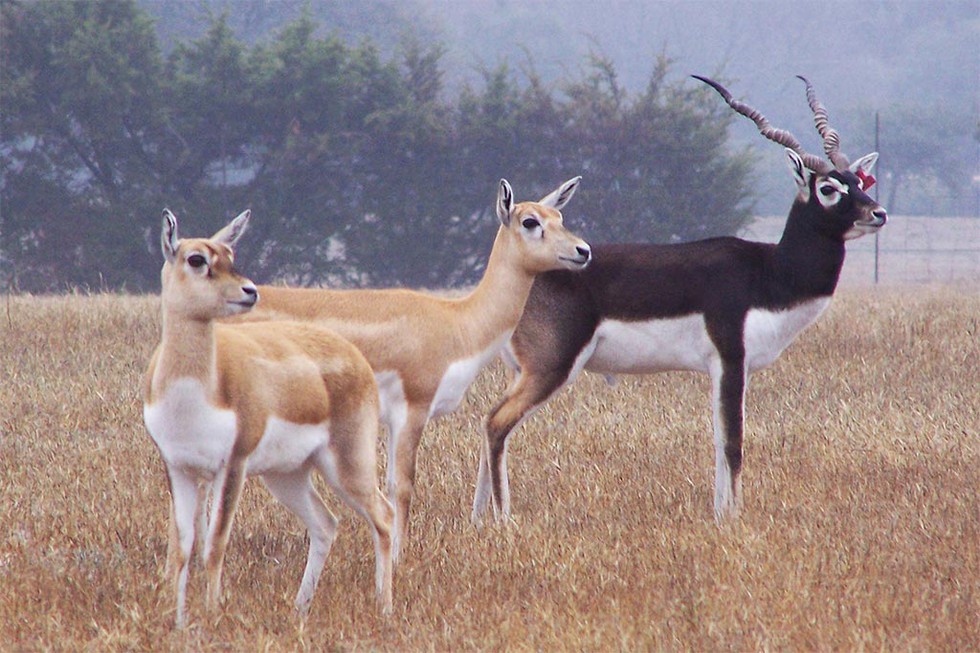
About:
- Common name: Indian antelope.
- Scientific name: Antelope cervicapra.
- Genus: The blackbuck is the sole extant member of the genus Antilope found in India.
- Description:
- It is a small gazelle, with a shoulder height of 70 - 80 centimetres.
- The long, ringed horns are generally present only on males, though females may develop horns as well.
- The coat of males shows two-tone colouration: while the upper parts and outsides of the legs are dark brown to black, the underparts and the insides of the legs are all white. On the other hand, females and juveniles are yellowish fawn to tan.
- It is a small gazelle, with a shoulder height of 70 - 80 centimetres.
- Habitat: It lives mainly in open grasslands or dry deciduous forests. Due to their regular need of water, they prefer areas where water is perennially available.
- Distribution: The antelope is native to and found mainly in India (with small population in Nepal and Pakistan), while it is extinct in Bangladesh.
- IUCN status: Least Concern.
- Threats:
- During the 20th century, blackbuck numbers declined sharply due to excessive hunting, deforestation and habitat degradation. Nevertheless, populations in India have increased from 24,000 in the late 1970s to 50,000 in 2001.
- In 2018, Bollywood actor Salman Khan, in a high-profile case, was sentenced to five years imprisonment for poaching a blackbuck in 1998.
- During the 20th century, blackbuck numbers declined sharply due to excessive hunting, deforestation and habitat degradation. Nevertheless, populations in India have increased from 24,000 in the late 1970s to 50,000 in 2001.
- Conservation:
- The blackbuck is listed under Appendix III of CITES.
- In India, hunting of blackbuck is prohibited under Schedule I of the Wildlife Protection Act of 1972.
- Blackbuck has been declared as the state animal by the governments of Punjab, Haryana and Andhra Pradesh.
- Tribes such as the Bishnois revere and care for most animals including the blackbuck.
- The blackbuck is listed under Appendix III of CITES.
Prelims Pointers
Feb. 18, 2019
About:
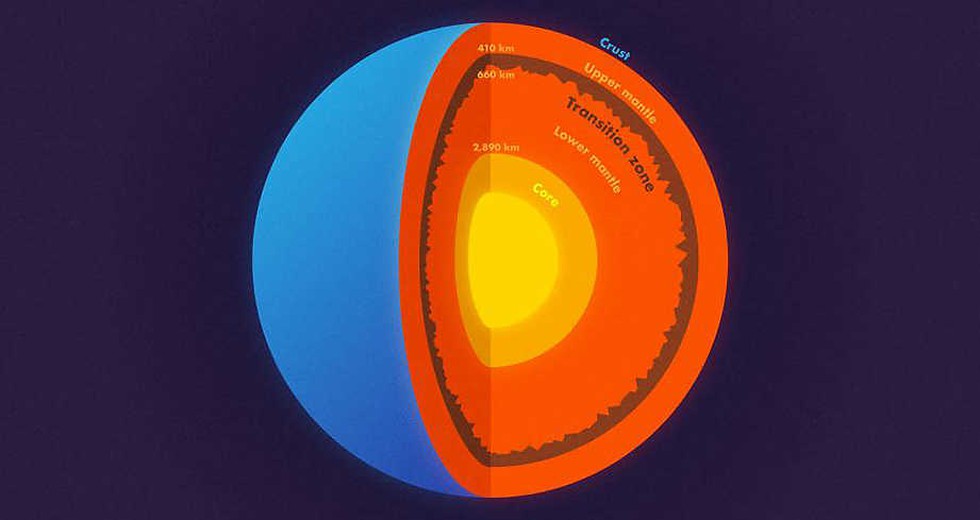
- In a study published in the journal Science, scientists used data from an enormous earthquake in Bolivia to find mountains and other topography on a layer located 660 km straight down, which separates the upper and lower mantle.
- Lacking a formal name for this layer, the researchers simply call it “the 660-km boundary.”
- The presence of roughness on the 660-km boundary has significant implications for understanding how our planet formed and evolved. Till now, it was believed that the Earth has three layers: a crust, mantle and core, which is subdivided into an inner and outer core.
Methodology:
- To look deep into the Earth, scientists from the Princeton University in the U.S. and the Institute of Geodesy and Geophysics in China, used data from a magnitude 8.2 earthquake — the second-largest deep earthquake ever recorded — that shook Bolivia in 1994.
- Data from earthquakes that are magnitude 7.0 or higher send out shockwaves in all directions that can travel through the core to the other side of the planet — and back again.
- Just as light waves can bounce (reflect) off a mirror or bend (refract) when passing through a prism, earthquake waves travel straight through homogenous rocks but reflect or refract when they encounter any boundary or roughness.
Prelims Pointers
Feb. 18, 2019
About:
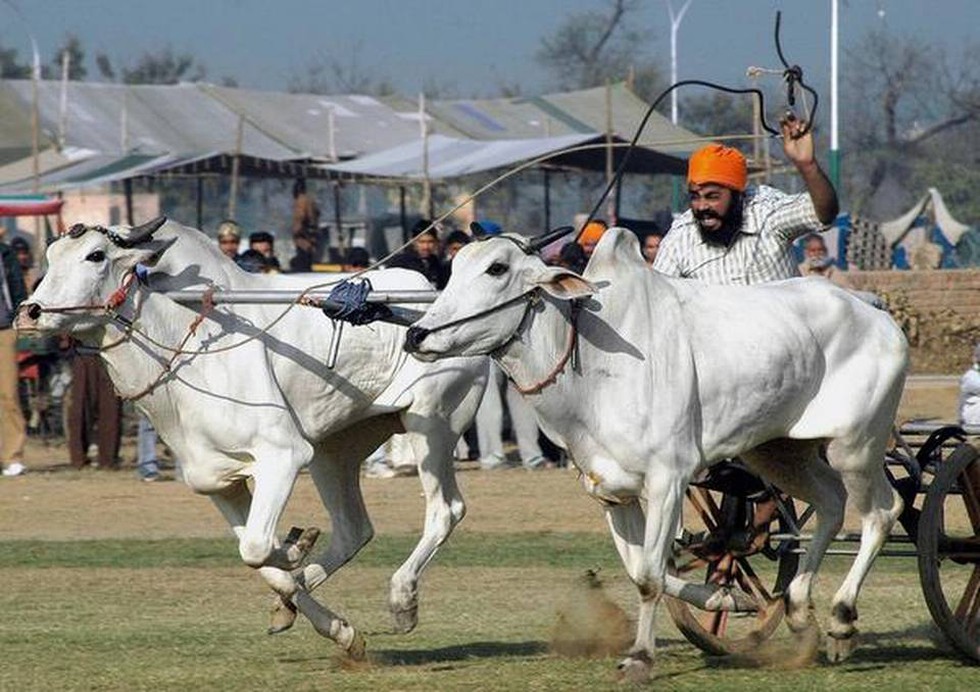
- Kila Raipur Sports Festival is popularly known as the Rural Olympics.
- Venue: Kila Raipur (near Ludhiana), in Punjab.
- When Held: It is annually held in the month of February.
- Key Highlights: Three types of competitions are held during rural meets, Purely rural games: Kabaddi, Wrestling, Weight-lifting etc. Modern sports like athletics, hockey, football, volleyball, cycling, handball etc. Performing sports like acrobatics.
- Background: In 1933, Philanthropist Inder Singh Grewal visualised an annual recreational meet where farmers from areas surrounding Kila Raipur could get together and test their corporal endurance. The idea gave birth to Kila Raipur Sports.
Recent Decision by Punjab Cabinet:
- The bullock cart races were prohibited by the Supreme Court in 2014.
- The Prevention of Cruelty to Animals Act, 1960 (Central Act 59 of 1960) was enacted to prevent infliction of unnecessary cruelty and suffering on animals. The Act also recognises the need to exempt the application of its provisions in certain circumstances.
- Now the State government has decided to exempt bullock-cart racing in Kila Raipur rural sports event from the provisions of the said Central Act 59 of 1960, in view of the significant role played by the traditional rural sports event and fair.
Prelims Pointers
Feb. 18, 2019
The salient features of the Act are:
- Disability has been defined based on an evolving and dynamic concept.
- The types of disabilities have been increased from existing 7 to 21 and the Central Government will have the power to add more types of disabilities.
- Speech and Language Disability and Specific Learning Disability have been added for the first time.
- Acid Attack Victims have been included.
- Dwarfism, muscular dystrophy has been indicated as separate class of specified disability.
- The New categories of disabilities also included three blood disorders, Thalassemia, Hemophilia and Sickle Cell disease.
- Speech and Language Disability and Specific Learning Disability have been added for the first time.
- Additional benefits such as reservation in higher education, government jobs, reservation in allocation of land, poverty alleviation schemes etc. have been provided for persons with benchmark disabilities and those with high support needs.
- Every child with benchmark disability between the age group of 6 and 18 years shall have the right to free education.
- For strengthening the Accessible India Campaign, stress has been given to ensure accessibility in public buildings (both Government and private) in a prescribed time-frame.
- The Act provides for grant of guardianship by District Court under which there will be joint decision – making between the guardian and the persons with disabilities.
- The Bill provides for penalties for offences committed against persons with disabilities and also violation of the provisions of the new law. Special Courts will be designated in each district to handle cases concerning violation of rights of PwDs.
- Bodies:
- Broad based Central & State Advisory Boards on Disability are to be set up to serve as apex policy making bodies at the Central and State level.
- Office of Chief Commissioner of Persons with Disabilities has been strengthened.
- National and State Fund will be created to provide financial support to the persons with disabilities. The existing National Fund for Persons with Disabilities and the Trust Fund for Empowerment of Persons with Disabilities will be subsumed with the National Fund.
- Broad based Central & State Advisory Boards on Disability are to be set up to serve as apex policy making bodies at the Central and State level.
- Background: The Union Government notified the Act in January, 2017. All States were given 6 months to frame rules and notify them.
- Significance:
- The New Act brought India’s law in line with the United National Convention on the Rights of Persons with Disabilities (UNCRPD), to which India is a signatory.
- It will not only enhance the Rights and Entitlements of Divyangjan but also provide effective mechanism for ensuring their empowerment.
Prelims Pointers
Feb. 18, 2019
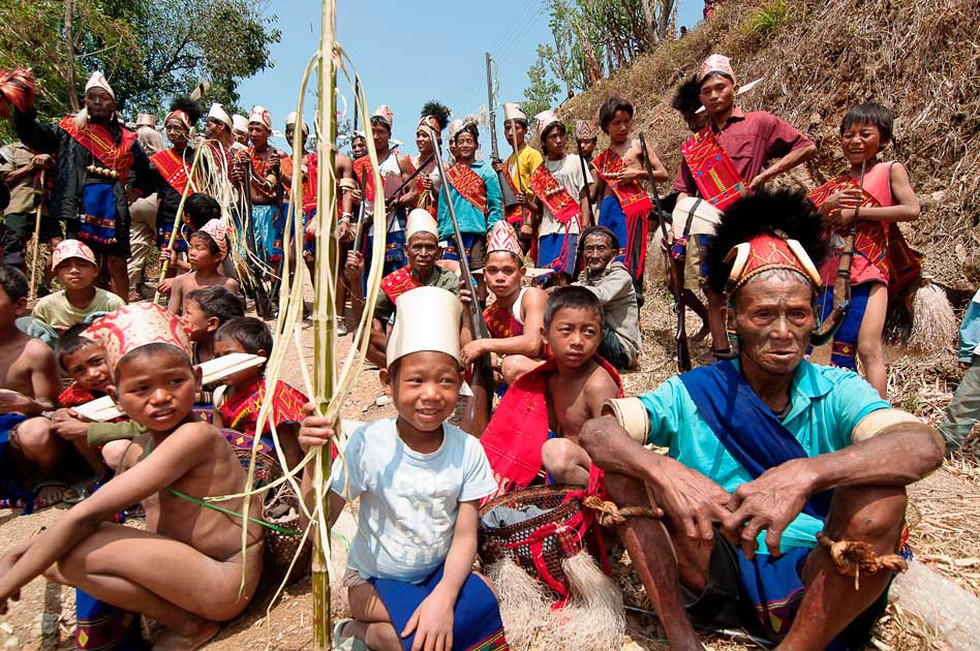
About:
- Established in: 2004.
- Constitutional Provisions:
- It was established by amending Article 338 and inserting a new Article 338A in the Constitution through the Constitution (89th Amendment) Act, 2003.
- By this amendment, the erstwhile National Commission for Scheduled Castes and Scheduled Tribes was replaced by two separate Commissions namely- (i) the National Commission for Scheduled Castes (NCSC), and (ii) the NCST w.e.f. 19 February, 2004.
- It was established by amending Article 338 and inserting a new Article 338A in the Constitution through the Constitution (89th Amendment) Act, 2003.
- Composition:
- The term of office of Chairperson, Vice-Chairperson and each member is three years from the date of assumption of charge.
- The Chairperson has been given the rank of Union Cabinet Minister, and the Vice-Chairperson that of a Minister of State and other Members have the ranks of a Secretary to the Government of India.
- The term of office of Chairperson, Vice-Chairperson and each member is three years from the date of assumption of charge.
- Functions of the Commission (Under Clause (5) of Art. 338A):
- To Monitor safeguards provided for STs under the Constitution or under other laws;
- To inquire into specific complaints relating to Rights & Safeguards of STs;
- To advise in the Planning Process relating to Socio-economic development of STs;
- To submit report to the President annually and other times on welfare Measures required related to Socio-economic development of STs;
- To discharge such other functions in relation to STs as the President may by rule specify;
- To Monitor safeguards provided for STs under the Constitution or under other laws;
NCST Leadership Award:
- On this occasion, the National Commission for Scheduled Tribes has also decided to institute a national award named as “NCST Leadership Award”.
- Objective: The award will be conferred for significant and exemplary services towards Scheduled Tribes in the country.
- Categories: The awards will be given in 3 categories –
- Educational Institutions/ Universities,
- Public Sector Undertakings/Banks and
- Public Service rendered by an Individual, NGO or Civil Society.
Prelims Pointers
Feb. 18, 2019
About:
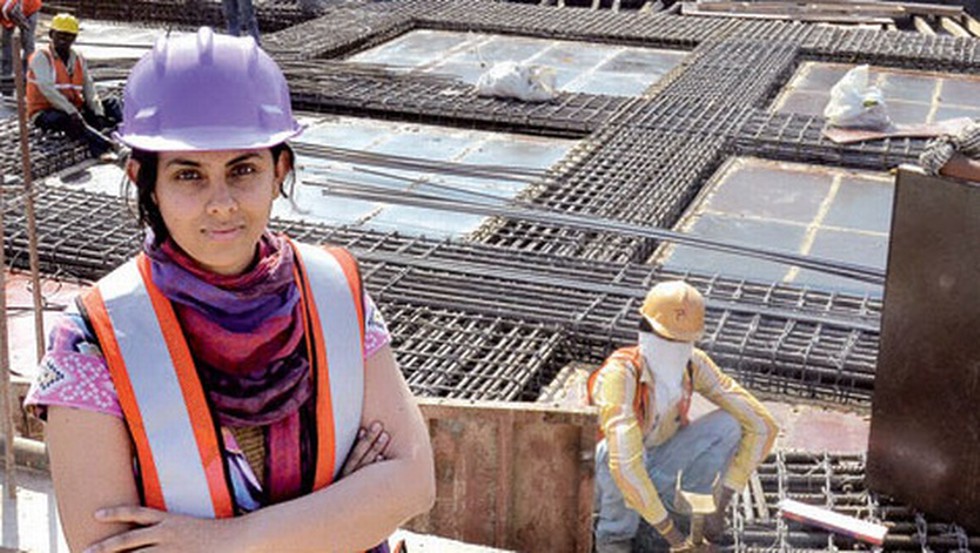
- It is the first such college in Eastern India and only third in entire India where only women will study engineering.
- He also laid the foundation Stone for the Centre for Tribal Studies, Acharya Vinoba Bhave University, Hazaribagh, Jharkhand. The institute will help in garnering and spreading the knowledge on tribal ways and culture.
- Many policymakers have noted that the fields of Science, Technology, Engineering and Mathematics (STEM) have remained predominantly male with historically low participation among women.
- Engineering as a stream has been a popular option for Indian students after senior secondary education. In 2017, almost 11 lakhs applied for the JEE Main exam, out of which 72% applicants were boys.
- The glaring difference is also reflected in the enrolment ratio of boys and girls in engineering and technology programs. This is inspite of increasing enrolment ratio of girls in higher education.
Prelims Pointers
Feb. 18, 2019
About:
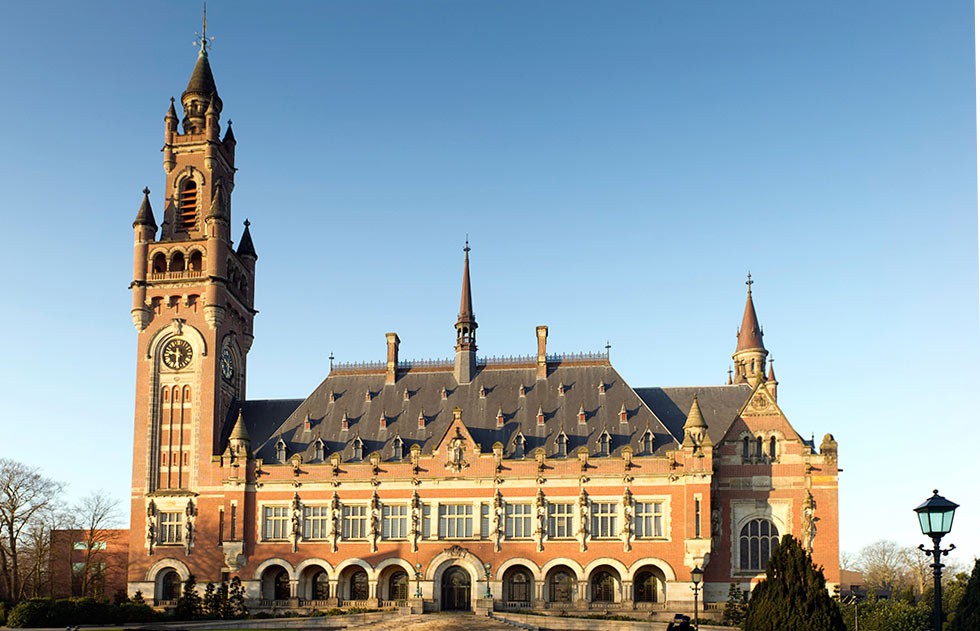
- The International Court of Justice (ICJ) is the principal judicial organ of the United Nations (UN).
- Origin: It was established in June 1945 by the Charter of the United Nations and began work in April 1946.
- HQ: The seat of the Court is at the Peace Palace in The Hague (Netherlands). Of the six principal organs of the United Nations, it is the only one not located in New York (United States of America).
- Members: All UN members are its members.
- Judges: The Court is composed of 15 judges, who are elected for terms of office of nine years by the United Nations General Assembly and the Security Council.
- Official languages: Its official languages are English and French.
- Function:
- The Court’s role is to settle, in accordance with international law, legal disputes submitted to it by States and to give advisory opinions on legal questions referred to it by authorized United Nations organs and specialized agencies.
- The Court can only hear a dispute when requested to do so by one or more States. It cannot deal with a dispute on its own initiative.
- The Court’s role is to settle, in accordance with international law, legal disputes submitted to it by States and to give advisory opinions on legal questions referred to it by authorized United Nations organs and specialized agencies.
- Subject matter: Sovereignty, boundary disputes, maritime disputes, trade, natural resources, human rights, treaty violations, treaty interpretations and more.
- Parties to dispute:
- Only States are eligible to appear before the Court in contentious cases.
- The Court has no jurisdiction to deal with applications from individuals, non-governmental organizations, corporations or any other private entity.
- However, a State may take up the case of one of its nationals and invoke against another State. The dispute then becomes one between States.
- Only States are eligible to appear before the Court in contentious cases.
- Are decisions of the Court binding?
- Article 94 of the United Nations Charter provides that Judgments delivered by the Court in disputes between States are binding upon the parties concerned.
- Judgments are final and without appeal.
- Article 94 of the United Nations Charter provides that Judgments delivered by the Court in disputes between States are binding upon the parties concerned.
Kulbhushan Jadhav is an Indian national. Pakistani government alleges that he was arrested in Balochistan on charges of spying for India's Research and Analysis Wing. However, India argues that he was kidnapped from Iran and his subsequent presence in Pakistan has never been explained credibly".
In 2017, Jadhav was sentenced to death by a Field General Court Martial in Pakistan. Subsequently, the ICJ stayed the execution pending the final judgement on the case.
Prelims Pointers
Feb. 18, 2019
About:
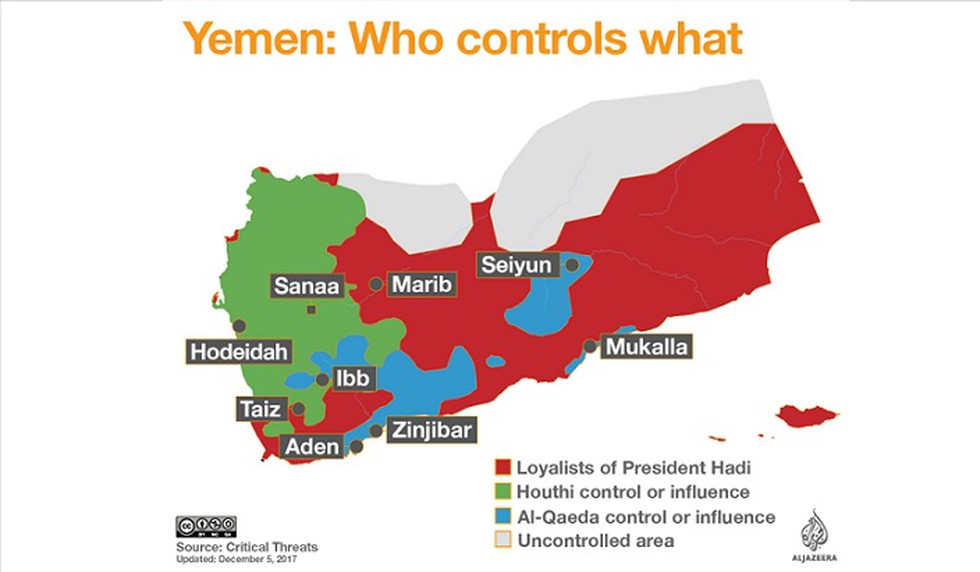
- Religion: The Houthis are Zaydi Shiites, or Zaydiyyah. Shiite Muslims are the minority community in the Islamic world and Zaydis are a minority of Shiites, significantly different in doctrine and beliefs from the Shiites who dominate in Iran, Iraq, and elsewhere.
- Background: The Houthi movement was founded in the 1990s by Hussein Badreddin al-Houthi, a member of Yemen’s Zaidi Shia minority. Hussein was killed by Yemeni soldiers in 2004, and the group is now led by his brother Abdul Malik.
- Goals: The Houthis’ slogan, known as the sarkha, or scream, is “God is great, death to America, death to Israel, curse on the Jews, victory to Islam.” Apart from the resistance narrative, the Houthis have no stated political or governance goals for Yemen.
- Recent conflict:
- The Houthis and the Yemeni government have battled on and off since 2004, but much of the fighting was confined to the Houthis' stronghold, northern Yemen's impoverished Saada province.
- In September 2014, the Houthis took control of Yemen's capital, Sanaa, and proceeded to push southwards towards the country's second-biggest city, Aden.
- In response to the Houthis' advances, a coalition of Arab states launched a military campaign in 2015 to defeat the Houthis and restore Yemen's government.
- The Houthis and the Yemeni government have battled on and off since 2004, but much of the fighting was confined to the Houthis' stronghold, northern Yemen's impoverished Saada province.
Prelims Pointers
Feb. 18, 2019
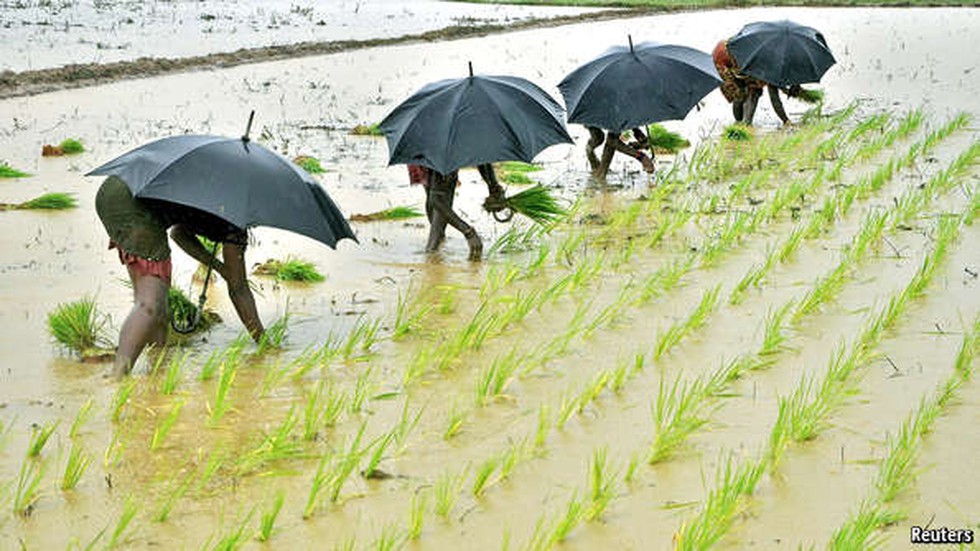
About:
- The latest rainfed agriculture atlas not only maps the agro biodiversity and socio-economic conditions prevailing in such areas, but also attempts to document the policy biases that are making farming unviable for many in these areas.
- Key findings:
- Three out of five farmers in India grow their crops using rainwater, instead of irrigation.
- However, per hectare government investment into their lands may be 20 times lower.
- Government procurement of their crops (Coarse cereals) is a fraction of major irrigated land crops (Wheat and Rice).
- Farmers in rainfed areas are receiving 40% less of their income from agriculture in comparison to those in irrigated areas.
- Flagship government schemes, such as seed and fertiliser subsidies and soil health cards, are designed for irrigated areas and simply extended to rainfed farmers without taking their needs into consideration.
- Three out of five farmers in India grow their crops using rainwater, instead of irrigation.
- Recommendations:
- A more balanced approach was needed, to give rainfed farmers the same research and technology focus, and production support that their counterparts in irrigation areas have received over the last few decades.
- In the long run, cash incentives and income support like the PM-KISAN scheme announced in the budget earlier this month were better than extensive procurement.
- A more balanced approach was needed, to give rainfed farmers the same research and technology focus, and production support that their counterparts in irrigation areas have received over the last few decades.
National Rainfed Area Authority (NRRA), under Union Ministry of Agriculture was constituted in 2006 to give focused attention to the problems of rainfed areas.
Prelims Pointers
Feb. 18, 2019
About:
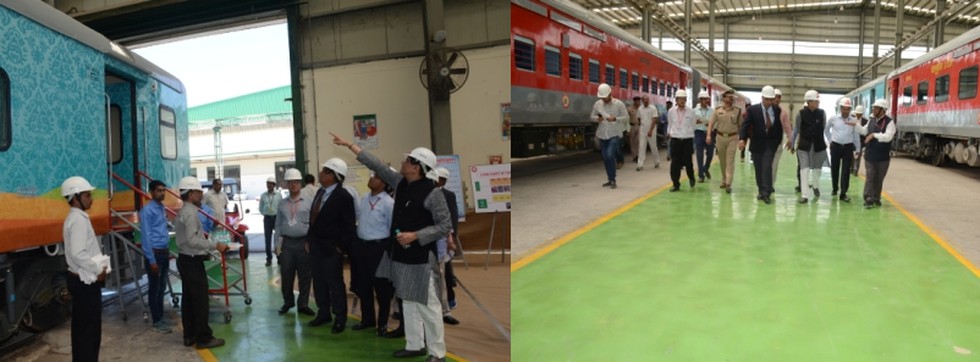
- Modern Coach Factory, Raebareli is a rail coach manufacturing unit of the Indian Railways at Lalganj near Raebareli in Uttar Pradesh.
- The factory is the third facility in India that produces railway compartments besides the Integral Coach Factory at Perambur in Tamil Nadu and the Rail Coach Factory at Kapurthala in Punjab.
- Foundation Stone of Modern Coach Factory (MCF), Raebareli was laid in 2007. In July 2014, MCF was declared a Production Unit of Indian Railways.
- It is also planned to manufacture Aluminium coaches at MCF, the first such manufacturing in India. MCF will become 1st Rail factory to meet Zero-Energy Mega Factory standards by 2020-21.
Feb. 17, 2019
Prelims Pointers
Feb. 17, 2019
Constitutional provisions related to Regional Languages:
- Article 345. Official language or languages of a State –
- The legislature of a State may by law adopt any one or more of the languages in use in the State or Hindi as the Language or Languages to be used for all or any of the official purposes of that State.
- Provided that, until the Legislature of the State otherwise provides by law, the English language shall continue to be used for those official purposes within the State.
- The legislature of a State may by law adopt any one or more of the languages in use in the State or Hindi as the Language or Languages to be used for all or any of the official purposes of that State.
- Article 346. Official languages for Communication between one State and another or between a State and the Union –
- The language for the time being authorised for use in the Union for official purposes shall be the official language for communication between one State and another State and between a State and the Union.
- Provided that if two or more States agree that the Hindi language should be the official language for communication between such States, that language may be used for such communication.
- The language for the time being authorised for use in the Union for official purposes shall be the official language for communication between one State and another State and between a State and the Union.
- Article 347. Special provision relating to language spoken by a section of the population of a State –
- If the President is satisfied that a substantial proportion of the population of a State desire the use of any language spoken by them to be recognised by that state, he/she may direct that such language shall also be officially recognised throughout that State or any part as he may specify.
- If the President is satisfied that a substantial proportion of the population of a State desire the use of any language spoken by them to be recognised by that state, he/she may direct that such language shall also be officially recognised throughout that State or any part as he may specify.
Official status of Sanskrit:
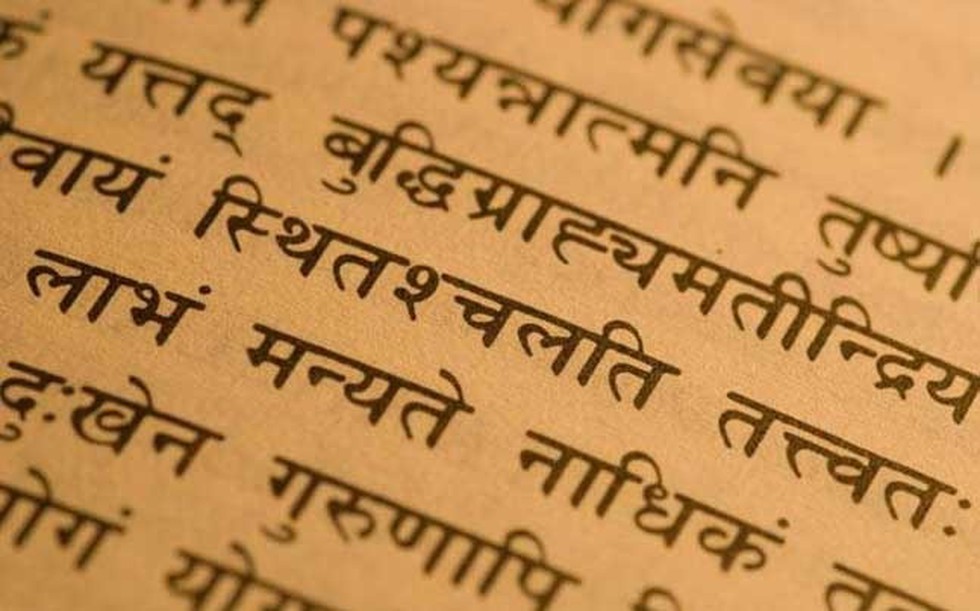
- In India, Sanskrit is among the 22 official languages of India in the Eighth Schedule to the Constitution.
- Apart from Himachal Pradesh, the state of Uttarakhand in India also lists Sanskrit as its second official language.
Do you know?
According to the Census 2011 data, 24,821 people have registered Sanskrit as their mother tongue, in comparison to 14,135 people who had said Sanskrit was their mother tongue in 2001.
Prelims Pointers
Feb. 17, 2019
About:
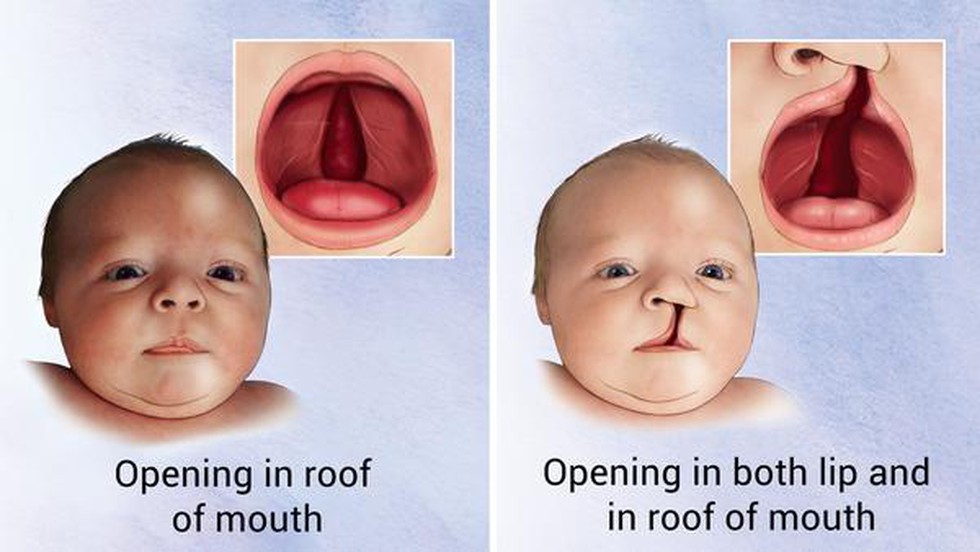
- The Indicleft tool is the first-of-its-kind portal that provides facility to researchers’ data and findings to upload cleft anomaly from any site. Project is to establish strategies for prevention and treatment of this deformity
- The tool includes all aspects of the cleft anomaly from the time of conception, birth and till adulthood.
- The tool has been developed in collaboration with National Informatics Centre (NIC), under the aegis of a task force multi-speciality project funded by the ICMR in collaboration with the Centre for Dental Education and Research, AIIMS, New Delhi.
A cleft lip contains an opening in the upper lip that may extend into the nose. A cleft palate is when the roof of the mouth contains an opening into the nose. The conditions of Cleft lip and cleft palate are together known as orofacial cleft.
Prelims Pointers
Feb. 17, 2019
About:
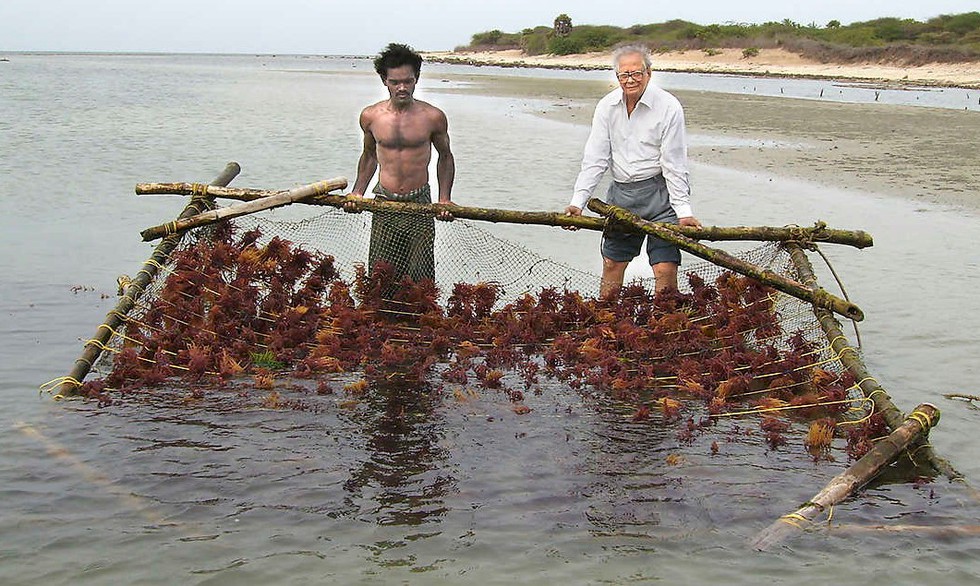
- Mariculture is the farming of aquatic plants and animals in salt water, either in the natural marine environment, or in land- or sea-based enclosures, such as cages, ponds, or raceways.
- Thus, mariculture represents a subset of the larger field of aquaculture, which involves the farming of both fresh-water and marine organisms.
- The major categories of mariculture species are: seaweeds, mollusks, crustaceans, and finfish.
- Advantages:
- Mariculture offers possibilities for sustainable protein-rich food production and for economic development of local communities.
- It does not require pesticides, fertilizers and water for irrigation, which is an added advantage.
- Mariculture offers possibilities for sustainable protein-rich food production and for economic development of local communities.
- Threats: However, mariculture on an industrial scale may pose several threats to marine and coastal biological diversity due to, for example, wide-scale destruction and degradation of natural habitats, nutrients and antibiotics in mariculture wastes etc.
Indian Scenario:
- The government of India has decided to promote 'marine culture fisheries' and included the sub-components of ‘Mariculture' under 'Blue Revolution' Scheme.
- The Department of Animal Husbandry, Dairying & Fisheries (DADF) has formulated a document on Mission Mariculture-2022 to promote mariculture including open sea cage culture activity in all maritime States and UTs on priority basis.
Prelims Pointers
Feb. 17, 2019
National Security Act (NSA):
- The National Security Act (NSA), 1980 empowers the Centre or a State government to detain a person to prevent him from
- acting in any manner prejudicial to national security.
- disrupting public order or for maintenance of supplies and services essential to the community.
- acting in any manner prejudicial to national security.
- The maximum period for which one may be detained is 12 months. But the term can be extended if the government finds fresh evidence.
- The act extends to the whole of India except the State of Jammu and Kashmir.
Preventive detention in India: A Timeline
- Preventive detention laws in India date back to the colonial era when the Bengal Regulation III of 1818 was enacted to empower the government to arrest anyone for defence or maintenance of public order without giving the person recourse to judicial proceedings.
- A century later, the British government enacted the Rowlatt Acts of 1919 that allowed confinement of a suspect without trial.
- In Post-independence India, the government of Prime Minister Jawaharlal Nehru enacted the Preventive Detention Act of 1950. The NSA is a close iteration of the 1950 Act.
- After the Preventive Detention Act expired in 1969, the then Prime Minister, Indira Gandhi, brought in the Maintenance of Internal Security Act (MISA) in 1971.
- Though the MISA was repealed in 1977 after the Janata Party came to power, the successive government, led by Mrs. Gandhi, brought in the NSA.
Rights against preventive detention:
- In the normal course, if a person is arrested, he or she is guaranteed certain basic rights. These include the right to be informed of the reason for the arrest.
- Section 50 of the Criminal Procedure Code (Cr.PC) mandates that the person arrested has to be informed of the grounds of arrest, and the right to bail. Sections 56 and 76 of the Cr. PC also provides that a person has to be produced before a court within 24 hours of arrest.
- Additionally, Article 22(1) of the Constitution says an arrested person cannot be denied the right to consult, and to be defended by, a legal practitioner of his choice.
- But none of these rights are available to a person detained under the NSA.
- A person could not be informed about the reasons for his arrest for up to five days, and in exceptional circumstances not later than 10 days.
- The arrested person is also not entitled to the aid of any legal practitioner in any matter connected with the proceedings before an advisory board, which is constituted by the government for dealing with NSA cases.
- A person could not be informed about the reasons for his arrest for up to five days, and in exceptional circumstances not later than 10 days.
Recent cases of Arrest under NSA:
- The National Crime Records Bureau (NCRB) does not include cases under the NSA in its data as no FIRs are registered. Hence, no exact figures are available for detentions under the NSA.
- In January, the Uttar Pradesh government arrested three persons under the NSA in connection with an alleged cow-slaughter incident in Bulandshahr.
- In December last year, a Manipur journalist, who had posted an alleged offensive Facebook post on the Chief Minister, was detained for 12 months under the NSA.
- Experts say these cases shows that governments sometimes use it as an extra-judicial power.
Prelims Pointers
Feb. 17, 2019
About:
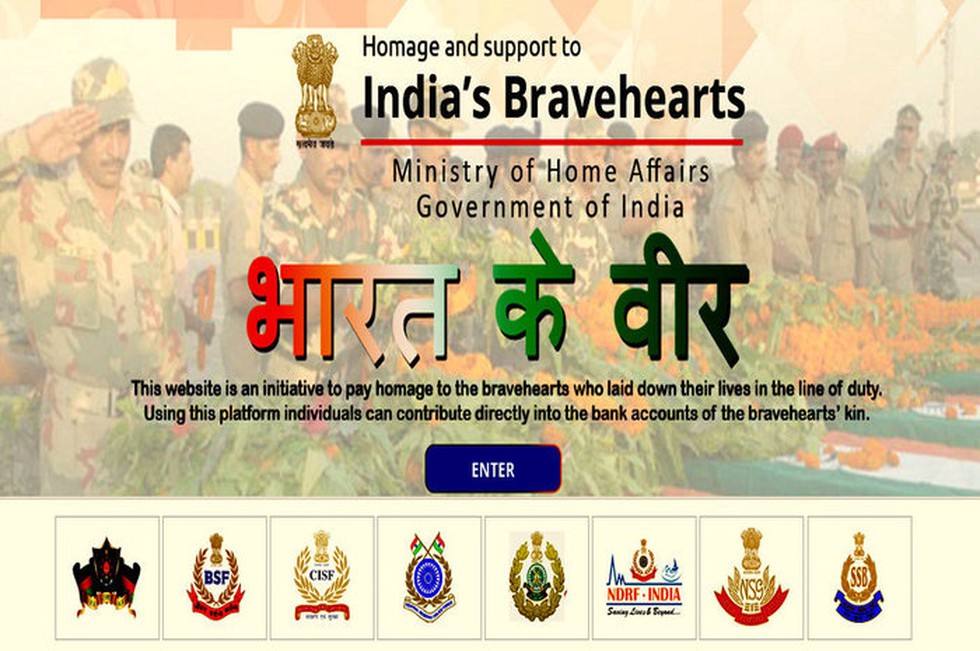
- Objective: Bharat Ke Veer is a trust into which public can contribute voluntarily to support families of martyrs of Central Armed Paramilitary Forces (CAPFs) – BSF, CRPF, CISF, ITBP, NDRF, NSG, SSB and Assam Rifles – who have sacrificed their lives for the country in line of duty from January 1, 2016.
- Background: It was launched by the Union Home Ministry in 2017.
- Administration: This fund is managed by a committee comprising of Director Generals of Central Armed Police Forces (CAPFs) under aegis of the Ministry of Home Affairs.
- Salient Features:
- To ensure maximum coverage, a cap of 15 lakh rupees is imposed, so that they can choose to divert part of the donation to another Braveheart account or to the “Bharat Ke Veer” corpus.
- Now, Union Government has been granted the status of a registered trust to ‘Bharat ke Veer’ by making it exempt from income tax under form 80 (g).
- To ensure maximum coverage, a cap of 15 lakh rupees is imposed, so that they can choose to divert part of the donation to another Braveheart account or to the “Bharat Ke Veer” corpus.
Prelims Pointers
Feb. 17, 2019
About:
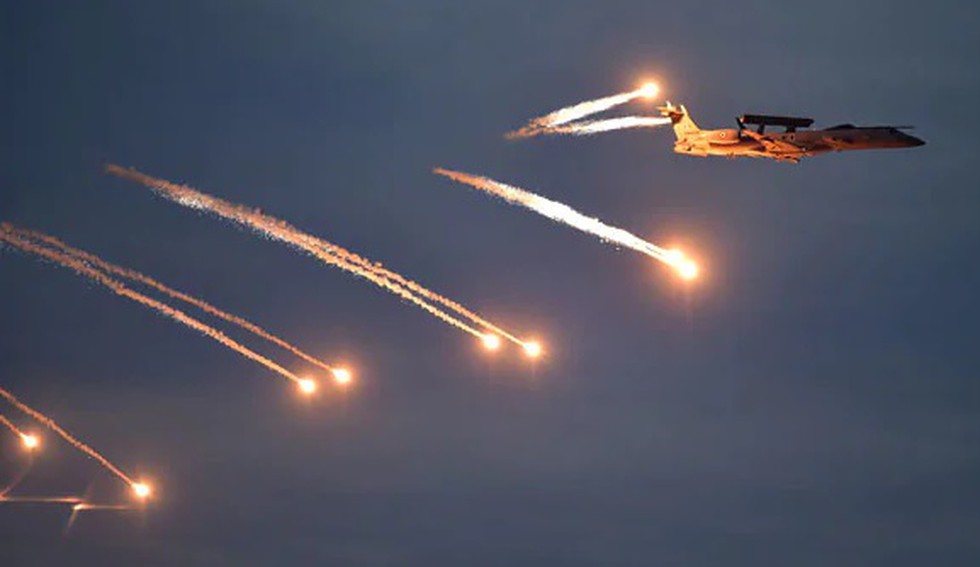
- In the Vayu Shakti exercise, the IAF showcased firepower capability of indigenously-developed platforms like Light Combat Aircraft (LCA) Tejas, Advanced Light Helicopter (ALH) and efficacy of Akash surface-to-air missile and Astra air-to-air missile. It was for the first time, the ALH and the Akash were deployed in a military exercise.
- The drill was a demonstration of the force's capability to hit targets with "pinpoint accuracy" and carry out missions at short notice. Fighter jets and helicopters hit targets during day and night.
Pulwama attack:
- The firepower demonstration close to the border with Pakistan comes two days after the Pulwama attack.
- 40 CRPF personnel were killed in a suicide attack in Kashmir's Pulwama district by Pakistan-based terror group Jaish-e-Mohammed.
- Prime Minister Narendra Modi said security forces have been given full freedom to retaliate against the attack. India has also said it will ensure "complete isolation" of Pakistan internationally for its support to terror groups.
Prelims Pointers
Feb. 17, 2019
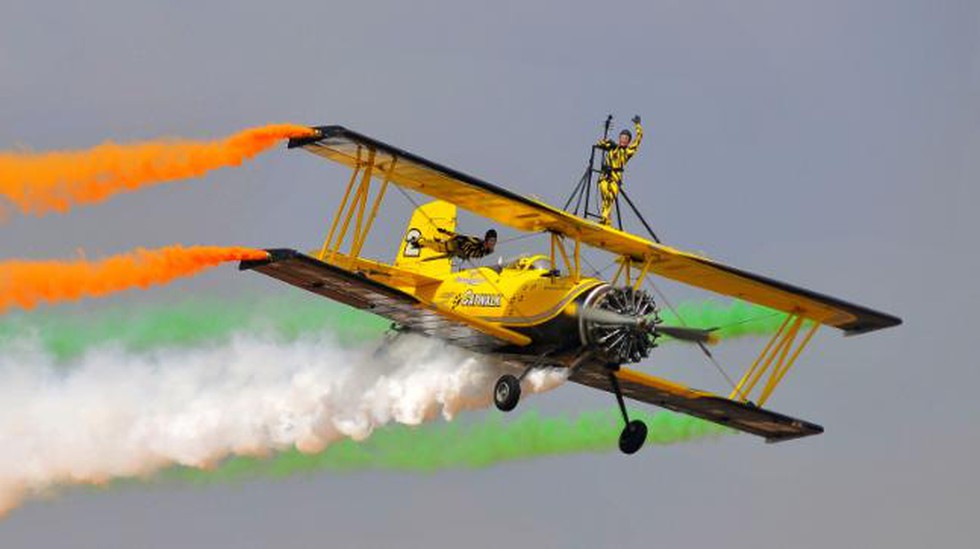
About:
- Background: Aero India is a biennial air show and aviation exhibition which began in 1996, and has emerged as the largest aerospace exhibition in Asia.
- Venue: It is held in Bengaluru, India at the Yelahanka Air Force Station.
- Organised by: The Defence Exhibition Organisation, Ministry of Defence.
- Theme of Aero India 2019: “Runway for a billion opportunities.”
- Objective:
- This five-day event will be a major trade exhibition for the aerospace and defence industries with public air shows. It attracts all major aerospace manufacturers around the globe given India’s armed forces looking at huge imports.
- Besides giving fillip to the domestic aviation industry it would further the cause of Make in India.
- This five-day event will be a major trade exhibition for the aerospace and defence industries with public air shows. It attracts all major aerospace manufacturers around the globe given India’s armed forces looking at huge imports.
- Civil Aviation Exhibition:
- So far, Aero India has been defence-oriented while a separate civil aviation exhibition is held in Hyderabad.
- But for the first time, the country’s ‘Civil Aviation Exhibition’ will be subsumed into the upcoming edition of ‘Aero India’ to be held from February 20 to 24, 2019.
- So far, Aero India has been defence-oriented while a separate civil aviation exhibition is held in Hyderabad.
Prelims Pointers
Feb. 17, 2019
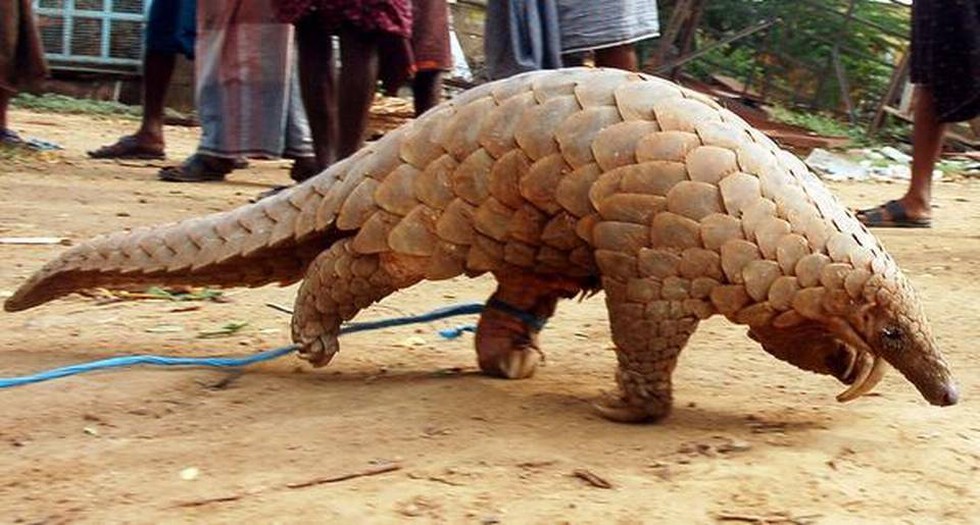
Pangolins:
- Pangolins or scaly anteaters are mammals of the order Pholidota.
- The eight species: There are a total of eight pangolin species across Africa and Asia.
- Asian species: Sunda Pangolin, Philippine Pangolin, Chinese Pangolin and ‘Indian Pangolin’.
- African species: Long-tailed Pangolin, Tree Pangolin, Giant Pangolin and the Ground Pangolin.
- Asian species: Sunda Pangolin, Philippine Pangolin, Chinese Pangolin and ‘Indian Pangolin’.
- Characterstics:
- They have large, protective keratin scales covering their skin, and they are the only known mammals with this feature.
- They roll into a ball when threatened which can make them easy pickings for poachers.
- Their diet consists of mainly ants and termites which they capture using their long tongues (A pangolin’s tongue is longer than its body). It can consume 70 million ants a year.
- Pangolins have no teeth; they chew with gravel and keratinous spines inside the stomach.
- They have large, protective keratin scales covering their skin, and they are the only known mammals with this feature.
- Threat:
- According to the latest report released by TRAFFIC in March 2018, Pangolin is the most trafficked mammal in the world.
- Though hunted for its meat across the northeastern States and in central India, the demand for its scales in China has made it the most critically endangered animal in less than a decade.
- According to the latest report released by TRAFFIC in March 2018, Pangolin is the most trafficked mammal in the world.
World Pangolin Day:
- The third Saturday of February is observed as the World Pangolin Day.
- On World Pangolin Day, wildlife experts mourned the “possible extinction” of the Chinese Pangolin in the northeast and the likelihood of the Indian Pangolin – found elsewhere in India – of being wiped out in a decade or so.
- The Chinese Pangolin was officially categorised as critically endangered in 2014, but it is believed to be extinct today. The Indian Pangolin, marked endangered that year, is now critically endangered and disappearing fast.
Prelims Pointers
Feb. 17, 2019
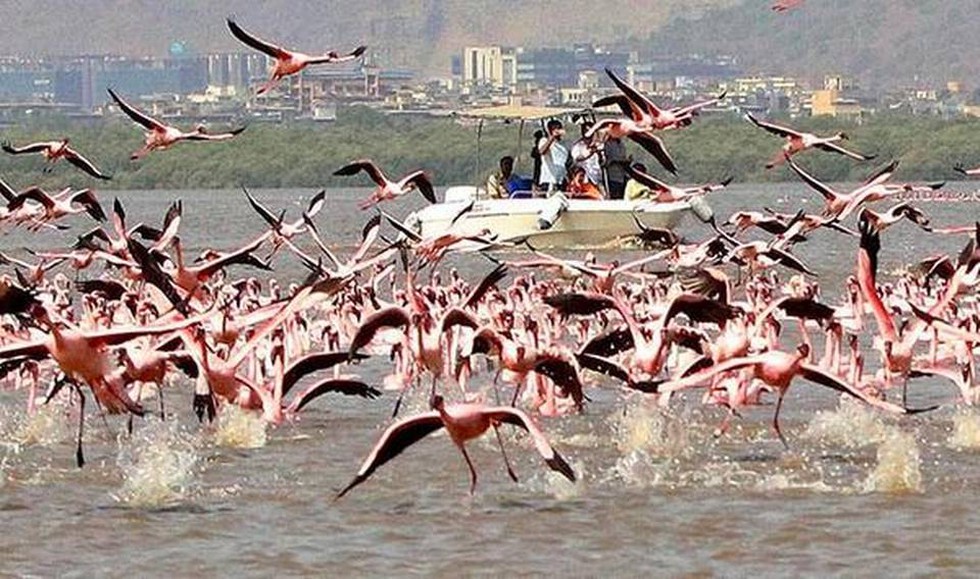
About:
- The Thane Creek Flamingo Sanctuary (TCFS) is on the western bank of the creek, between the Airoli and the Vashi bridges connecting Mumbai and Navi Mumbai.
- It consists of 896 hectares of mangrove forests and 794 hectares of waterbodies.
- It came into being in 2015 and is Maharashtra’s second marine sanctuary, after Malvan.
- The TCFS has been attracting flamingos in large numbers since 1994. By November every year, over 30,000 flamingos occupy the mudflats and the bordering mangroves. They stay till May, after which most of them migrate to Bhuj in Gujarat for breeding.
- Besides supporting a large congregation of flamingos, the area is a refuge for many resident and migratory birds. In all, 200 species have been reported here, even globally threatened species such as the greater spotted eagle and others such as osprey.
Recent Proposal:
- Standing committee of National Board for Wildlife, chaired by Union Environment Minister has accorded wildlife clearance to the Bullet Train project which will encroach upon the TCFS and the Sanjay Gandhi National Park, home to leopards, in Mumbai.
- The ‘bullet train project’ was inaugurated by Prime Minister Narendra Modi and his Japanese counterpart in September, 2017. It is expected to be ready by 2022.
- The drilling of underground tunnels will lead to sound pollution which will disturb the tranquillity of the sanctuary. The project will entail cutting down several mangrove trees, a natural flood barrier.
Prelims Pointers
Feb. 17, 2019
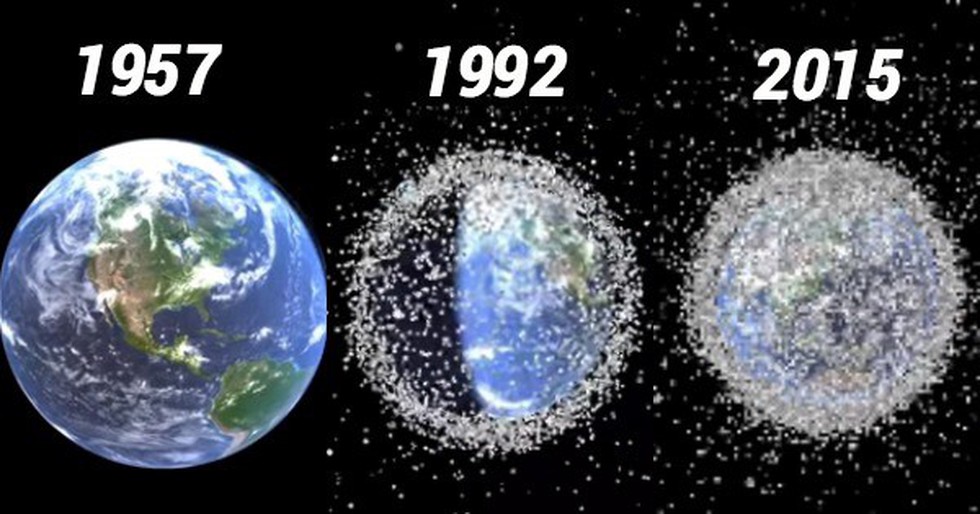
About:
- Space debris encompasses both natural (meteoroid) and artificial (man-made) particles
- Artificial debris (also referred as orbital debris) includes non-functional spacecraft, abandoned launch vehicle stages, mission-related debris and fragmentation debris.
Status of Orbital Debris:
- According to ESA’s Space Debris Office, in almost 60 years of space activities, more than 5200 launches have placed some 7500 satellites into orbit, of which about 4300 remain in space; only a small fraction − about 1200 − are still operational today (data as on January 2017).
- This amounts to 7,500 tonnes of defunct, artificially created objects currently in space.
- Space junk will further increase due to -
- Launching of CubeSats (inexpensive, tiny satellites) are going to add space junk in coming years,
- Entry of private players like SpaceX in the space domain and
- Kessler syndrome.
- Launching of CubeSats (inexpensive, tiny satellites) are going to add space junk in coming years,
Recent development: RemoveDEBRIS spacecraft
- RemoveDEBRIS is a satellite research project intending to demonstrate various space debris removal technologies.
- The satellite's platform was manufactured by Surrey Satellite Technology Ltd (SSTL).
- It was launched aboard the SpaceX Dragon refill spacecraft in April 2018 as part of the CRS-14 mission.
- In September 2018, it demonstrated its ability to use net to capture a deployed simulated target.
- Recently, scientists using the RemoveDEBRIS spacecraft fired the harpoon at a speed of 20 metres per second to hit the planted satellite panel, demonstrating the potential for collecting the rubbish just beyond our atmosphere.
- RemoveDEBRIS is also fitted with cameras and scanners to analyse chunks of debris and the speed at which they whizz past the spacecraft.
Kessler Syndrome?
- The Kessler syndrome is also called as collisional cascading or ablation cascade.
- It was proposed by the NASA scientist Donald J. Kessler in 1978.
- It is a scenario in in which the amount of space debris in in low earth orbit (LEO) is large enough to cause space collisions to happen often.
- The collision of debris creates more debris creating a runaway chain reaction of collisions and more debris. This would make space mostly unusable for years.