March 14, 2019
Prelims Pointers
March 14, 2019

About:
- The Director General of Police (DGP) is a three-star rank and the highest-ranking police officer in States. The DGP is the head of the state police force.
- All DGPs are Indian Police Service (IPS) officers.
2006 guidelines:
- In its 2006 judgment in Prakash Singh vs Union of India, the SC laid down guidelines for appointment and removal of the DGP.
- Selection: DGP of the State shall be selected by the State Government from amongst the three senior most officers of the department who have been recommended by UPSC.
- Tenure: Once selected for the job, he should have a minimum tenure of at least 2 years irrespective of his date of superannuation.
- Removal: The DGP can be removed by the State government in consultation with the State Security Commission consequent upon any action taken against him under the All India Services (Discipline and Appeal) Rules or following his conviction in a court of law in a criminal offence or in a case of corruption, or if he is otherwise incapacitated from discharging his duties”.
2018 guidelines:
- In July 2018, the SC laid down further guidelines for the appointment of a DGP by the States.
- It declared that no state government can appoint their favourite police officer suiting their political choice as the acting DGP. The concept of an acting DGP was not considered in the 2006 judgement on police reforms.
- To prevent this, the court directed all the states to send their proposals to the UPSC at least three months prior to the date of retirement of the DGP.
- It also said that that an endeavour has to be made to ensure that the person appointed as DGP continues despite his date of superannuation but not beyond a reasonable period.
Recent supreme court verdict:
- A bench headed by Chief Justice of India Ranjan Gogoi said the recommendation for post of DGP by the Union Public Service Commission (UPSC) and preparation of the panel should be purely on the basis of merit.
- It said that officers having a minimum of 6 months tenure left in service can be considered for the post of Director General of Police (DGP).
- The apex court passed the verdict on a modification plea filed by former Uttar Pradesh DGP Prakash Singh. Singh had alleged that the July 3, 2018, directive was being misused by state governments who were ignoring competent senior officers for appointment as DGPs.
Prelims Pointers
March 14, 2019
Recent decision:
- The RBI would conduct dollar-rupee buy/sell swap auction of $5 billion for a three-year tenor on March 26.
- The swap will be a simple buy/sell trade in which banks can place bids to sell their excess dollars to the RBI in and simultaneously agree to buy the same amount at the end of the swap period.
- Banks would be required to park dollar funds with RBI with a deal to buy it back from the RBI after three years.
- Benefits:
- This has been done in order to meet the durable liquidity needs of the system and to inject rupee liquidity for longer duration.
- The U.S. dollar amount mobilised through this auction would also reflect in RBI’s foreign exchange reserves for the tenor of the swap while also reflecting in RBI’s forward liabilities.
- This has been done in order to meet the durable liquidity needs of the system and to inject rupee liquidity for longer duration.
- Comment:
- RBI has been an active participant in the dollar/rupee swap market but this is the first time the central bank has announced an auction.
- The move is seen to lower the dependence on open market operations (OMOs) which have been a significant amount of the overall borrowing.
- RBI has been an active participant in the dollar/rupee swap market but this is the first time the central bank has announced an auction.
Forex swap?
- An Forex swap agreement is a contract in which one party borrows one currency from, and simultaneously lends another to, the second party.
- Each party uses the repayment obligation to its counterparty as collateral and the amount of repayment is fixed at the Forex forward rate as of the start of the contract.
- Application:
- Forex swaps have been employed to raise foreign currencies, both for financial institutions and their customers, including exporters and importers, as well as institutional investors who wish to hedge their positions.
- They are also frequently used for speculative trading, typically by combining two offsetting positions with different original maturities.
Prelims Pointers
March 14, 2019

India and TIR:
- India had joined the TIR Convention in 2017.
- Recently, the first shipment under the TIR convention arrived in India (at port of Nhava Sheva, Mumbai and Mundra) from Afghanistan through Iran’s Chabahar Port.
- It will help boost trade between India, Central Asia, Europe and Russia. It will act as a strong catalyst for moving goods using the multi-modal transportation route like Chabahar and International North-South Transport (INSTC) Corridor.
- Federation of Indian Chambers of Commerce & Industry (FICCI) has been appointed as National Issuing & Guaranteeing Association.
TRANSPORTS INTERNATIONAUX ROUTIERS’ (TIR) CONVENTION
- Official name of TIR Convention: The United Nations Customs Convention on International Transport of Goods under cover of TIR Carnets.
- Salient features:
- The convention allows goods to be outlined in a TIR carnet and sealed in load compartments.
- Customs officials verify the carnet and check the seals, with no need for physical checking of the contents, enabling shipments to pass through countries without being opened at borders.
- Reciprocal recognition of customs controls is key feature of the Convention. This enables a facilitative and non-intrusive environment for multi-modal transport of goods through several countries.
- Bodies involved: The system is managed worldwide by the International Road Transport Union (IRU), Geneva and overseen by the United Nations Economic Commission for Europe (UNECE).
- Background: A Review Conference convened in November 1975 under the auspices of the UNECE produced the TIR Convention of 1975 that came into force in 1978.
- Members: As of December 2018, there are 76 parties to the Convention, including 75 states and the European Union.
- Global scenario: More than 34,000 operators are authorised to use the TIR system and in 2017, around 1.2 million TIR Carnets were issued worldwide.
- Significance: The TIR convention helps in fast and easy movement of goods across multiple countries under a common customs document and guarantee.
Prelims Pointers
March 14, 2019
Environment pollution and health emergencies:
- Poor environmental conditions “cause approximately 25% of global disease and mortality” -- around 9 million deaths in 2015 alone.
- Air pollution causes 6-7 million early deaths annually.
- Chemicals pumped into the seas cause “potentially multi-generational” adverse health effects.
- Due to Lack of access to clean drinking supplies,4 million people die each year from preventable diseases such as diarrhoea and parasites.
- Land degradation through mega-farming and deforestation occurs in areas of Earth home to 3.2 billion people.
- Deadly emissions, chemicals polluting drinking water, and the accelerating destruction of ecosystems crucial to the livelihoods of billions of people are driving a worldwide epidemic that hampers the global economy.
- Rampant overconsumption, pollution and food waste in the developed world leads to hunger, poverty and disease elsewhere.
- India could save at least $3 trillion (₹210 trillion approx.) in healthcare costs if it implemented policy initiatives consistent with ensuring that the globe didn’t heat up beyond 1.5 degrees Celsius by the turn of the century
Recommendations:
- The report called for a root-and-branch detoxifying of human behaviour. It calls for immediate changes in the way the world eats, gets its energy and handles its waste.
- Food waste for instance, which accounts for 9% of global greenhouse gas emissions, could be slashed. The world currently throws away a third of all food produced. In richer nations, 56% goes to waste.
- It also called for a rapid drawdown in greenhouse gas emissions and pesticide use to improve air and water quality.
The Global Environment Outlook (GEO) is often referred to as UN Environment’s flagship environmental assessment. The first publication was in 1997. The recent GEO — a report six years in the making has been compiled by 250 scientists from 70 nations.
Prelims Pointers
March 14, 2019
United Nations Security Council Resolution 1267:
- UN Security Council Resolution 1267, prescribes a sanctions regime against designated terrorists and terrorist groups.
- In 1999, the U.N. had set up an al-Qaeda/Taliban sanctions committee (UNSCR 1267) to impose strictures on anyone dealing with the Taliban and Osama bin Laden.
- It took two years and the 9/11 attacks for the JeM to be designated a terror group by the UNSC 1267 sanctions committee in 2001.
- In 2015, the UNSC renamed it as the “ISIL (Da’esh) and al-Qaeda Sanctions Committee” (UNSCR/2253).
India’s proposal:
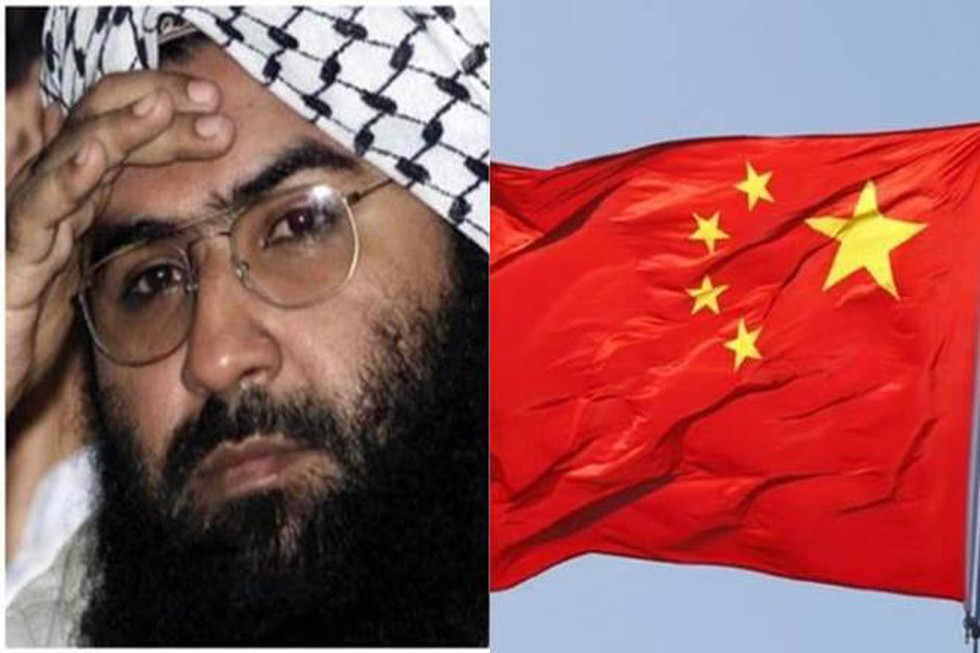
- In February 2016 after the Pathankot attack, India put forward a proposal to designate Maulana Masood Azhar – the head of the Jaish-e-Mohammed, which was already a banned entity – as a global terrorist under the 1267 regime.
- Censuring Azhar would result in freezing his financial assets and cutting off supply of funds to his terror organisation.
- However, India’s proposal has been blocked four times by China, most recently in January 2017.
- Jaish-e-Mohammad – which has carried out multiple attacks on India over the last nearly two decades – has claimed responsibility for killing the 40 CRPF personnel in J&K on February 14. But its leader, Maulana Masood Azhar, eludes international sanctions.
Probable Reasons for China’s move:
- To protect Pakistan, its “all weather” ally in South Asia. Infact, Chinese foreign ministry also argues that it supports Pakistan because it’s also a victim of terrorism.
- Good relations with Pakistan, and international protection for ISI proxies like Jaish provide China with insurance against terrorist attacks on CPEC infrastructure and the thousands of Chinese working on them.
- Such tactics are also intended to send out a message to the US, which seeks to build a relationship with India to contain China in the Indo-Pacific. India’s ties to US have fuelled Chinese suspicions and using Azhar could be one way to bait India.
Prelims Pointers
March 14, 2019

About:
- When observed: This Day is observed annually on the second Thursday in March. It was first observed in 2006.
- Bodies involved: WKD is a joint initiative of the International Society of Nephrology (ISN) and the International Federation of Kidney Foundations (IFKF).
- Objective: To create awareness on the importance of the kidneys and reducing the frequency and impact of kidney disease.
- Theme: The theme this year is Kidney Health for Everyone Everywhere, which calls for universal health coverage for prevention and early treatment of kidney disease.
The International Society of Nephrology (ISN)?
- It is an international body representing specialists in nephrology (kidney diseases).
- HQ: Brussels, Belgium.
- Established in: 1960.
Prelims Pointers
March 14, 2019
Principles includes in the National Guidelines on Responsible Business Conduct (NGRBC):
Businesses should –
- conduct and govern themselves with integrity in a manner that is Ethical, Transparent and Accountable.
- provide goods and services in a manner that is sustainable and safe
- respect and promote the well-being of all employees, including those in their value chains.
- respect the interests of and be responsive to all their stakeholders.
- respect and promote human rights.
- respect and make efforts to protect and restore the environment.
- when engaging in influencing public and regulatory policy, do so in a manner that is responsible and transparent.
- promote inclusive growth and equitable development.
- engage with and provide value to their consumers in a responsible manner.
Initiatives by the Ministry of Corporate Affairs for ensuring responsible business conduct by companies:
- As a first step towards this, the 'Voluntary Guidelines on Corporate Social Responsibility’ were issued in 2009.
- These guidelines were subsequently revised as 'National Voluntary Guidelines on Social, Environmental and Economic Responsibilities of Business, 2011 (NVGS)’.
- The SEBI through its ‘Listing Regulations’ in 2012 mandated the top 100 listed entities by market capitalisation to file Business Responsibility Reports (BRRs) from an environmental, social and governance perspective.
- The Ministry of Corporate Affairs has constituted the Committee on Business Responsibility Reporting (BRR) to develop BRR formats for listed and unlisted companies.
- The Ministry of Corporate Affairs is also in the process of developing India’s National Action Plan on Business & Human Rights (NAP) in consultation with various Ministries and State Governments by 2020.
- A Zero Draft of India’s NAP demonstrating implementation of the three pillars of UNGPs has also been released and uploaded on the website of the Ministry.
Prelims Pointers
March 14, 2019
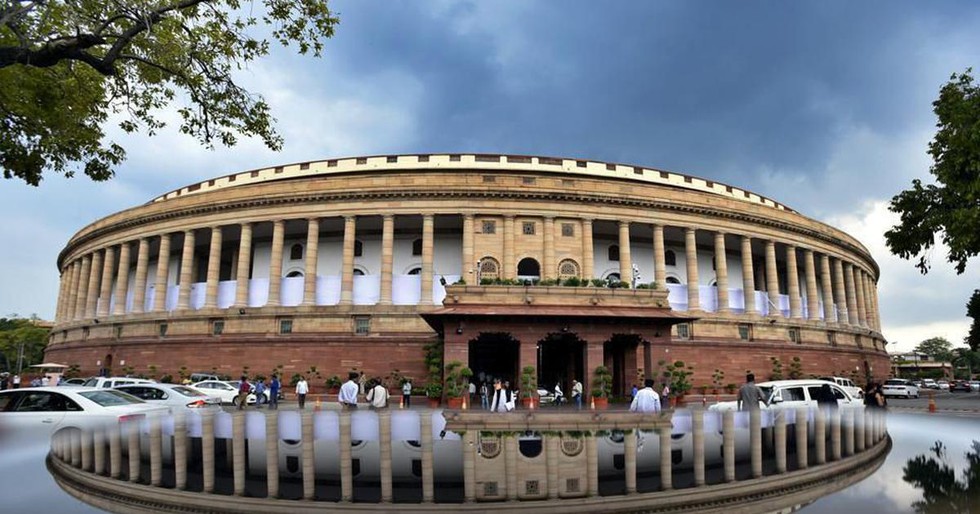
Key provisions of Section 14 of the RPA, 1951:
- A general election shall be held for the purpose of constituting a new House of the People on the expiration of the duration of the existing House or on its dissolution.
- For the said purpose the President shall issue notifications on such date as recommended by the Election Commission.
- Where a general election is held otherwise than on the dissolution of the existing House of the People, no such notification shall be issued at any time earlier than six months prior to the date on which the duration of that House would expire under the provisions of clause (2) of article 83.
Prelims Pointers
March 14, 2019
Benefits of decision:
- The move will bring uniformity in Judicial Service.
- It will overcome the difficulties being faced by the litigants in travelling to Mumbai for filing appeals due to existing limited pecuniary jurisdiction.
- Enhanced pecuniary jurisdiction will accelerate the justice delivery system, besides making access easier for litigants without having to travel outside the Union Territory.
Article 240:
- According to Article 240, the President of India has the power to make regulations for certain UTs.
- UTs covered: (1) the Andaman and Nicobar Islands; (2) Lakshadweep; (3) Dadra and Nagar Haveli; (4) Daman and Diu and (5) Pondicherry.
- Since Pondicherry has a Legislature in place, the President shall not have the authority to make any regulation in it.
- However, if the legislature is dissolved, or its functioning remains suspended, the President can immediately take over and make regulations for that UT.
- Purpose of regulations: The regulations could be for peace, progress and good government of the UT.
- Status of regulations:
- The regulation made by the President may “repeal or amend any Act made by Parliament or any other law which is for the time being applicable to the UT.”
- When the regulation is announced by the President, it has the same effect as an Act of Parliament.
Prelims Pointers
March 14, 2019

About:
- List of agreements: Union Cabinet has approved proposal for accession of India to:
- The Nice Agreement on the International classification of goods and services for the purposes of registration of marks.
- The Vienna Agreement for setting up an International classification of the figurative elements of marks.
- The Locarno Agreement for establishing an International classification for industrial designs.
- The Nice Agreement on the International classification of goods and services for the purposes of registration of marks.
- Benefits of accession: Accession to the Agreements will –
- help the Intellectual Property Office (IPO) in India to harmonise the classification systems for examinational of trademark and design applications, in line with the classification systems followed globally.
- give an opportunity to include Indian designs, figurative elements and goods in the international classification systems.
- instill confidence in foreign investors in relation to protection of IPs in India.
- facilitate in exercising rights in decision making processes regarding review and revision of the classifications under the agreement.
- help the Intellectual Property Office (IPO) in India to harmonise the classification systems for examinational of trademark and design applications, in line with the classification systems followed globally.
March 13, 2019
Prelims Pointers
March 13, 2019
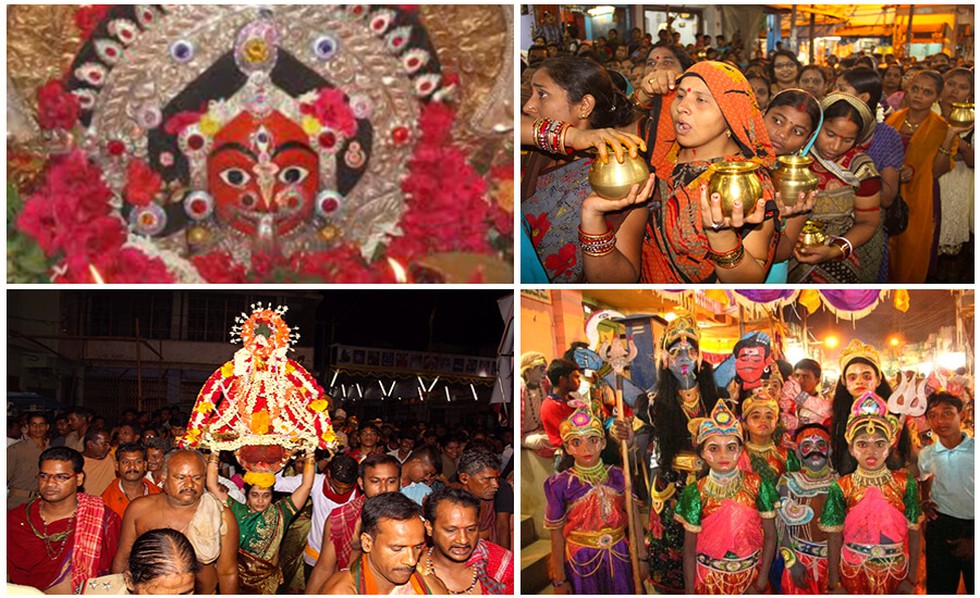
About:
- Venue: Berhampur, Odisha.
- When held: The Month-long festival is held once in two years.
- Dedicated to: Goddess Budhi Thakurani. The Mother Goddess is worshipped in the Maa Budhi Thakurani Temple in Berhampur town in Odisha.
- Ghata Parikrama: It is the most important ritual of the festival, which begins on the third day. In this the garland dedicated to Goddess Budhi Thakurani is put inside a decorated earthen pot, called Ghata.
Bagha Nacha?
- It is a traditional folk dance of Odisha (Performed mainly in Ganjam and Kandhamal districts).
- It is a tiger dance in which artists get their whole body painted like a tiger as a homage to Goddess Budhi Thakurani.
- Bhagaban Sahu had codified this tribal folk dance.
- It is showcased at the biennial Thakurani Jatra festival of Berhampur.
Prelims Pointers
March 13, 2019
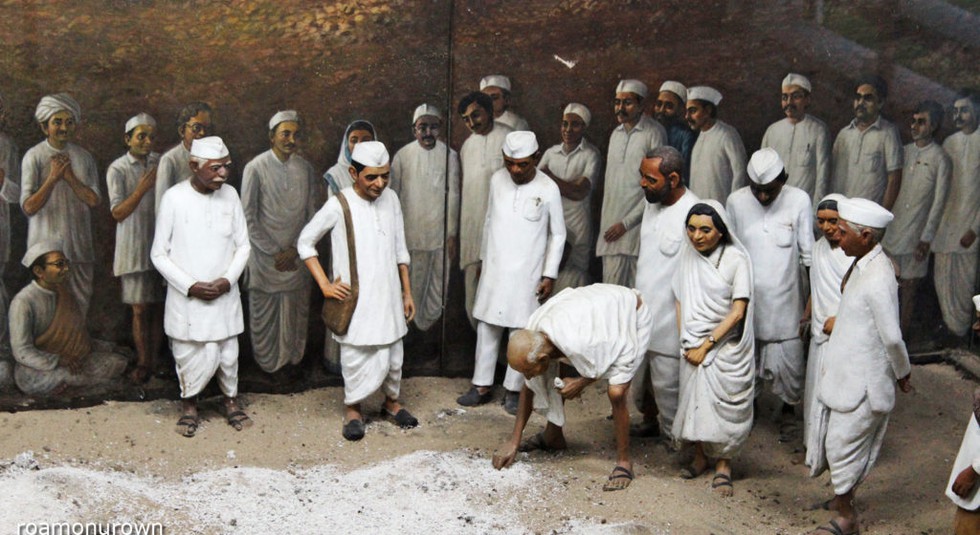
About:
- Names: The Salt March is also known as the Dandi March and the Dandi Satyagraha.
- People involved: It was an act of nonviolent civil disobedience in colonial India led by Mahatma Gandhi. He started this march with around 80 volunteers. Many people joining him on the way.
- Duration: The 24-day march lasted from 12 March 1930 to 6 April 1930.
- Journey: Gandhi led the Dandi March from Sabarmati Ashram, 240 miles to the coastal village of Dandi, which was at a small town called Navsari (in Gujarat).
- Objective:
- It was a direct-action campaign of tax resistance and nonviolent protest against the British salt monopoly under the 1882 British Salt Act.
- Objective was to produce salt from the seawater in the coastal village of Dandi, as was the practice of the local populace until British officials introduced taxation on salt production and deemed their sea-salt reclamation activities illegal.
- It was a direct-action campaign of tax resistance and nonviolent protest against the British salt monopoly under the 1882 British Salt Act.
- Significance:
- The march directly followed the Poorna Swaraj declaration of sovereignty and self-rule by the Indian National Congress on 26 January 1930.
- It started the nationwide Civil Disobedience Movement. When Gandhi broke the salt laws on 6 April 1930, it sparked large scale acts of civil disobedience against the British Raj salt laws by millions of Indians.
- The march directly followed the Poorna Swaraj declaration of sovereignty and self-rule by the Indian National Congress on 26 January 1930.
Prelims Pointers
March 13, 2019
About:
- Status: The BCCI is registered as a society under the Tamil Nadu Societies Registration Act, 1975.
- Background: It was established in 1928 as the central governing body regulating cricket in India.
- Structure: It is a consortium of state cricket associations and the state associations select their representatives who in turn elect the BCCI Chief.
- Headquarters: Wankhede Stadium, Mumbai.
- Committee of Administrators (CoA):
- In 2017, the Supreme Court nominated a four-member panel Committee of Administrators to look after the administration of the BCCI in order to implement Lodha committee reforms.
- Vinod Rai, ex-CAG of India heads the four members panel.
- In 2017, the Supreme Court nominated a four-member panel Committee of Administrators to look after the administration of the BCCI in order to implement Lodha committee reforms.
Recommendations of Lodha Committee (2016)?
- Bring BCCI under the purview of the RTI Act.
- The tenure of an office bearer of BCCI shall not be of more than 3 years.
- An office bearer can have a maximum of three terms in all. Also, no office bearer shall have consecutive terms. There shall be a cooling-off period at the end of each term.
- There should be a separate governing body for the IPL.
- Players and BCCI officials should disclose their assets to the Board as a measure to ensure they do not bet.
- In the interest of democratic representations of states, it proposed ‘One State – One Member – One Vote’. Also, no proxy voting of individuals should be permitted.
- No BCCI office-bearer should be Minister or government servant.
Prelims Pointers
March 13, 2019
About:
- Peace requires agreement on four issues: counter-terrorism assurances, troop withdrawal, intra-Afghan dialogue and a comprehensive ceasefire.
- They agreed in the draft on counter-terrorism assurances and troop withdrawal.
- US peace envoy for Afghanistan, Zalmay Khalilzad, said the talks have improved the conditions for peace in the country. Afghan President Ashraf Ghani's spokesperson said his government, is pleased with the progress made.
Taliban?
- Timeline:
- The Hardliner Islamic Taliban movement swept to power in Afghanistan in 1996 after the civil war which followed the Soviet-Afghan war.
- They were ousted by the US-led invasion five years later in 2001. Since then they have fought a bloody insurgency which continues today.
- Violence has soared since international combat troops left Afghanistan four years ago.
- Human rights violation:
- When in power, they imposed a brutal version of Sharia law, such as public executions and amputations, and banned women from public life.
- Men had to compulsorily grow beards and women to wear the all-covering burka; television, music and cinema were banned.
- They sheltered al-Qaeda leaders before and after being ousted.
BBC Study on Taliban Presence:
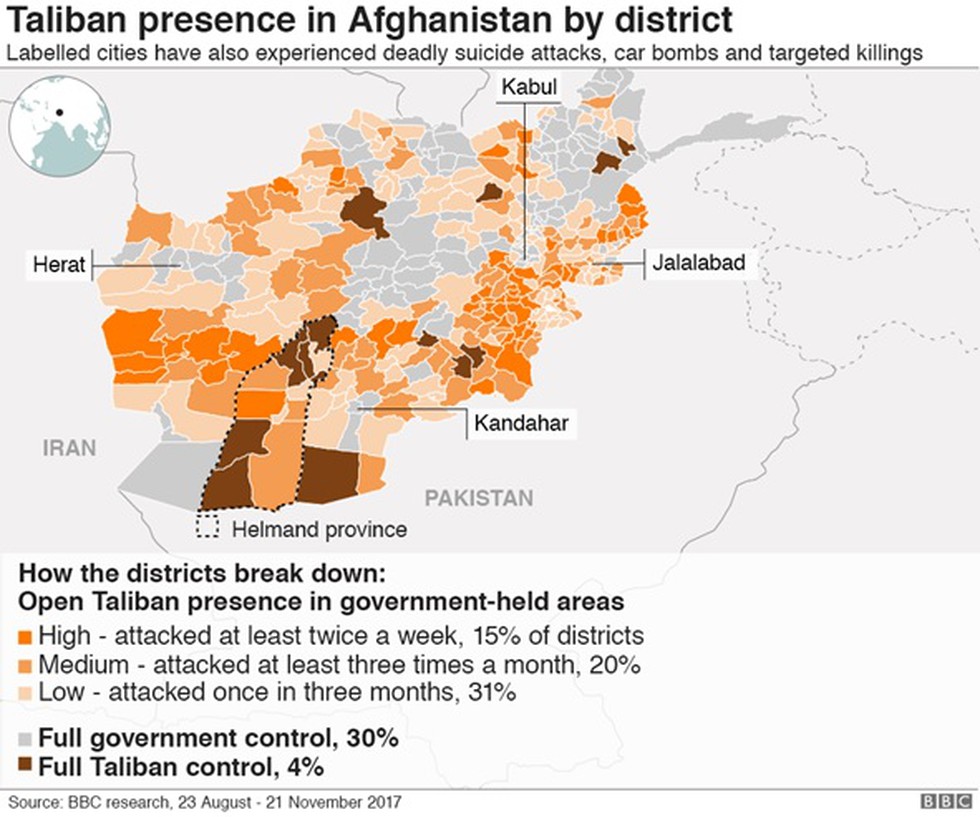
- According to BBC Study conducted from August 12 – November 21, 2017, Taliban are now in full control of 14 districts (that's 4% of the country) and have an active and open physical presence in a further 263 (66%).
- Thus, Taliban now control or threaten much more territory than when foreign combat troops left in 2014. In the areas defined as having an active and open Taliban presence, the militants conduct frequent attacks against Afghan government positions.
- The extent to which the Taliban have pushed beyond their traditional southern stronghold into eastern, western and northern parts of the country is clearly visible from the BBC study.
Prelims Pointers
March 13, 2019

About Enemy Property:
- When nations go to war, they often seize the properties in their countries of the citizens and corporations of the enemy country.
- For example, during the First and the Second World Wars both the United States and the United Kingdom seized properties of German corporations and citizens.
- Properties seized under these circumstances are referred to as ‘alien properties’ or ‘enemy properties.
- Justification: The idea behind seizing these properties is that an enemy country should not be allowed to take advantage of its assets in the other country during war.
- Enemy Property Act, 1968:
- The Enemy Property Act, 1968 provides for continued vesting of enemy property vested in the CEPI under the Defence of India Rules, 1962 and the Defence of India Rules, 1971, (w.e.f. 27.09.1997).
- In 2017, through an amendment to this Act, vide Section 8A, the Custodian of Enemy Property of India (CEPI) has been empowered for sale of enemy property.
- The Enemy Property Act, 1968 provides for continued vesting of enemy property vested in the CEPI under the Defence of India Rules, 1962 and the Defence of India Rules, 1971, (w.e.f. 27.09.1997).
Prelims Pointers
March 13, 2019
About:
- Open Market Operations (OMO) are the market operations conducted by the RBI. In this it conducts sale/purchase of Government securities (G-secs) to/from the market.
- Objective behind conducting It is to adjust the rupee liquidity conditions in the market on a durable basis.
- When the RBI feels there is excess liquidity in the market, it resorts to sale of securities thereby sucking out the rupee liquidity.
- Similarly, when the liquidity conditions are tight, the RBI will buy securities from the market, thereby releasing liquidity into the market.
- When the RBI feels there is excess liquidity in the market, it resorts to sale of securities thereby sucking out the rupee liquidity.
- The RBI uses OMO along with other monetary policy tools such as repo rate, cash reserve ratio and statutory liquidity ratio to adjust the quantum and price of money in the system.
Prelims Pointers
March 13, 2019
About:
- NRC 1951: It is a register which covers person enumerated during the 1951 Census. It includes houses or holdings in serial order and also contains the names and number of people staying in these.
- Objective behind updating and publishing the 1951 NRC:
- To compile a list of the names of genuine Indian citizens residing in Assam and
- In the process, detect foreigners (esp. Bangladeshis) who may have illegally entered the state after March 24, 1971.
- To compile a list of the names of genuine Indian citizens residing in Assam and
- Criteria: NRC is being updated to include persons or their descendants whose names were in
- The National Register of Citizenship 1951
- In any of the Electoral Rolls up to the midnight of 24th March 1971
- In any other admissible documents issued up to the midnight of 24th March 1971.
- The National Register of Citizenship 1951
- For a person’s name to be included in the updated NRC list of 2018, he/ she will have to furnish:
- Existence of name in the legacy data: The legacy data is the collective list of the NRC data of 1951 and the electoral rolls up to midnight of 24 March 1971.
- Proving linkage with the person whose name appears in the legacy data.
- Existence of name in the legacy data: The legacy data is the collective list of the NRC data of 1951 and the electoral rolls up to midnight of 24 March 1971.
- On 30 July 2018, the Complete Draft NRC was released. The total number of persons included in the Complete Draft NRC is 2,89,83,677 leaving a total of 40,70,707 as ineligible for inclusion.
- The persons whose names do not appear in the Draft NRC, may file claim application within a stipulated period at the NRC Seva Kendras (NSKs) where the Application Form was submitted.
Do you know?
- The Citizenship Act, 1955 provides for compulsorily registration of every citizen of India and issuance of National Identity Card to him.
- The recent updation of National Register of Citizens (NRC) in Assam is being held under special provisions of the Citizenship Rules, 2003 framed under the Citizenship Act, 1955.
Prelims Pointers
March 13, 2019

About:
- Nomenclature: The team named the new species the starry dwarf frog Astrobatrachus kurichiyana (genus Astrobatrachus after its starry spots and kurichiyana in honour of the Kurichiya tribal community who live in the Kerala’s Wayanad area).
- Habitat and Distribution: It lives under leaf litter on a mountaintop in Kerala’s Wayanad.
- Features:
- It is a starry dwarf frog. It is just 2 cm long and sports pale blue spots and brilliant orange thighs. It is a nocturnal amphibian.
- Its closest relatives are the Nycibatrachinae group of frogs that dwell in the streams of Western Ghats, and the Lankanectinae frogs of Sri Lanka.
- It is not only a new species but different enough to be assigned to a new ‘subfamily’.
- It is a starry dwarf frog. It is just 2 cm long and sports pale blue spots and brilliant orange thighs. It is a nocturnal amphibian.
- Evolution: Genetic analysis reveal that the species is at least 60 million years old.
Prelims Pointers
March 13, 2019
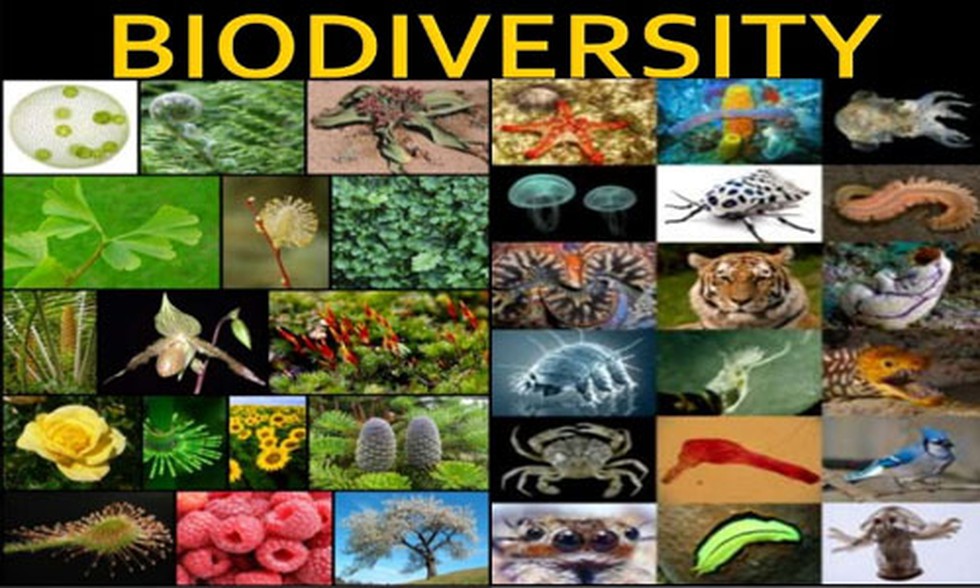
A team of scientists mapped the distribution of eight human activities — including hunting and conversion of natural habitats for agriculture — in areas occupied by 5,457 threatened birds, mammals and amphibians worldwide.
Hot spots:
- Human impacts on species occur across 84% of the earth’s surface.
- 1,237 species are impacted by threats in more than 90% of their habitat; 395 species are affected by threats across their entire range.
- While the impact of roads is highest (affecting 72% of terrestrial areas), crop lands affect the highest number of threatened species: 3,834.
- Southeast Asian tropical forests — including those in India’s Western Ghats, Himalaya and north-east — are among the ‘hotspots’ of threatened species.
- Malaysia ranks first among the countries with the highest number of impacted species (125).
- India ranks 16th in such human impacts, with 35 species impacted on average.
Cool spots:
- Roads and croplands are extensive in India and conversion of habitat for such activities could be a main threat.
- However, these very areas are also ‘cool-spots’ (the world’s last refuges where high numbers of threatened species still persist).
- Cool-spots could be the result of protection or because of intact habitat that has not been cleared yet.
- India still has crucial refuges that need protecting. For instance, agricultural crops such as pulses have supported the conservation of the critically endangered great Indian bustard.
Prelims Pointers
March 13, 2019

About:
- Nomenclature: Its etymology was not explained on first usage, but probably derives from xylon, the Greek noun for wood (the substance, not an assemblage of trees), perhaps because of this snake’s woody colour.
- Habitat and Distribution: The species is endemic to the Meghamalai forests and Periyar Tiger Reserve area.
- Last finding:
- The local population of wood snakes was last spotted and recorded by British military officer and naturalist Colonel Richard Henry Beddome in 1878, who went on to describe it as a new species, Xylophis indicus.
- The specimens he collected was labelled as being from “the dense heavy evergreen forests on the mountains at the south of the Cumbum valley, Madura.” This locality (alternative spelling: Kambam) is now probably within the Teni District of Tamil Nadu, close to the state border with Kerala.
- The local population of wood snakes was last spotted and recorded by British military officer and naturalist Colonel Richard Henry Beddome in 1878, who went on to describe it as a new species, Xylophis indicus.
- Recent rediscovery:
- The species, endemic to the Meghamalai forests and the Periyar Tiger Reserve landscape, was recently rediscovered by R. Chaitanya, a herpetologist, and Varad Giri, director, Foundation for Biodiversity Conservation.
- The findings of the surveys, conducted over two years (2014-2016), were published in the Journal of the Bombay Natural History Society last month.
- The snake he discovered was 235 mm long and uniformly dark brown.
- The species, endemic to the Meghamalai forests and the Periyar Tiger Reserve landscape, was recently rediscovered by R. Chaitanya, a herpetologist, and Varad Giri, director, Foundation for Biodiversity Conservation.
- Way ahead:
- Their rediscovery of Xylophis indicus needs to be validated by both morphological and genetic data.
- While the morphological aspect has been done, the genetic data is pending. The process of capturing the specimen for genetic data would require several permits.
- Their rediscovery of Xylophis indicus needs to be validated by both morphological and genetic data.
March 12, 2019
Prelims Pointers
March 12, 2019
About Seasonal Influenza:
- What is it? Seasonal influenza is an acute respiratory infection caused by influenza viruses which circulate in all parts of the world.
- Cause: There are 4 types of seasonal influenza viruses, types A, B, C and D. Influenza A and B viruses circulate and cause seasonal epidemics of disease.
- Signs and symptoms: Seasonal influenza is characterized by a sudden onset of fever, cough (usually dry), headache, muscle and joint pain, severe malaise (feeling unwell), sore throat and a runny nose. But influenza can cause severe illness or death especially in people at high risk (see below).
- Timing of epidemics:
- In temperate climates, seasonal epidemics occur mainly during winter.
- In tropical regions, influenza may occur throughout the year, causing outbreaks more irregularly.
- In temperate climates, seasonal epidemics occur mainly during winter.
- Global scenario: WHO describes Influenza epidemics as one of the world’s greatest public health challenges. Influenza epidemics, largely seasonal, affect around one billion people and kill hundreds of thousands annually.
- List of influenza pandemics: A pandemic can arise when a new influenza virus that hasn't affected humans before emerges, spreads and causes illness in humans.
- The world has suffered through a number of devastating influenzas pandemics, including the Spanish Flu, which in 1918 killed tens of millions of people globally.
- Three pandemics have occurred since—in 1957, 1968 and in 2009—when the H1N1 swine flu pandemic claimed around 18,500 lives in 214 countries.
- According to WHO’s recent report, another influenza pandemic is inevitable, the question is when?
- The world has suffered through a number of devastating influenzas pandemics, including the Spanish Flu, which in 1918 killed tens of millions of people globally.
- In 2018, the world observed the centenary of the start of the 1918–1919 influenza pandemic.
Global influenza strategy for 2019-2030:
- The Global Influenza Strategy for 2019-2030 aims to prevent seasonal influenza, control the virus’s spread from animals to humans and prepare for the next pandemic.
- To achieve this, the strategy places a large focus on the following:
- The development of better global tools, such as vaccines, antivirals and treatments, that would benefit all countries and instil public confidence and uptake.
- Stronger country capacities that are integrated within national health security planning and universal health coverage efforts.
- The new strategy called for every country to strengthen routine health programmes and to develop tailor-made influenza programmes that strengthen disease surveillance, response, prevention, control, and preparedness.
- WHO recommends annual flu vaccines as the most effective way to prevent the spread of the disease, especially for healthcare workers and people at higher risk of influenza complications.
Prelims Pointers
March 12, 2019
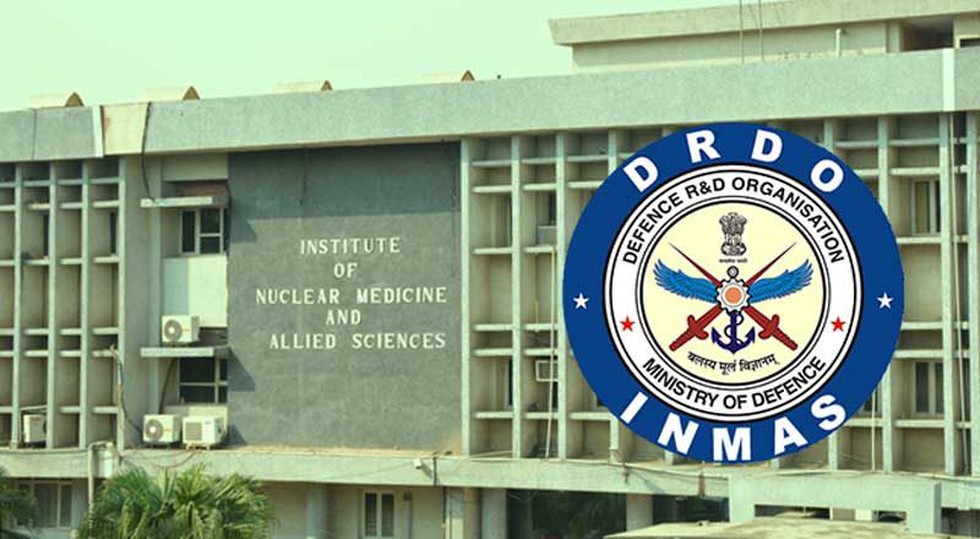
Institute of Nuclear Medicine & Allied Sciences (INMAS)?
- Parent Body: INMAS is a laboratory of the Defence Research and Development Organisation (DRDO).
- Established in: 1961.
- Location: New Delhi.
- Mandate:
- This multidisciplinary laboratory is engaged in R&D activities in the field of Radiation, Imaging Sciences, CBRN technologies, Nuclear medicine research and responding to nuclear accidents and explosions.
- Since 1960s it offers a two-year diploma in radiation medicine, making it the first formal training program in nuclear medicine in the world.
- A major development in the recent past has been the establishment of NMR, PET-Cyclotron facility that has contributed towards development of technologies for enhancing combat efficiency besides providing clinical research to the Armed forces.
- This multidisciplinary laboratory is engaged in R&D activities in the field of Radiation, Imaging Sciences, CBRN technologies, Nuclear medicine research and responding to nuclear accidents and explosions.
Combat Casualty Drugs:
- These 'combat casualty drugs' includes bleeding wound sealants, super absorptive dressings and glycerinated salines, all of which can save lives in the event of warfare in the jungle and high-altitude areas as well as in terror attacks.
- According to developers of the drugs, chances of survival and minimum disability are highest when effective first aid care is given within the golden hour.
- These medicines could have brought down the death toll during the recent terror attack in Pulwama.
- The main battlefield emergencies are excess bleeding, sepsis, shock, hypovolemia (decreased blood volume) and pain.
Prelims Pointers
March 12, 2019

About:
- DOLPHIN is an optical imaging system which could be deployed to find tiny tumours, as small as a couple of hundred cells, deep within the body.
- It relies on near-infrared light, to track a 0.1-millimetre fluorescent probe through the digestive tract of a living mouse. Researchers also showed that they can detect a signal to a tissue depth of eight centimetres, far deeper than any existing biomedical optical imaging technique.
- The researchers hope to adapt their imaging technology for early diagnosis of ovarian and other cancers that are currently difficult to detect until late stages.
- Existing methods for imaging tumours all have limitations that prevent them from being useful.
- Most have a trade-off between resolution and depth of imaging, and none of the optical imaging techniques can image deeper than about three centimetres into tissue.
- Commonly used scans such as X-ray computed tomography (CT) and magnetic resonance imaging (MRI) can image through the whole body. However, they cannot reliably identify tumours until they reach about one centimetre in size.
- Most have a trade-off between resolution and depth of imaging, and none of the optical imaging techniques can image deeper than about three centimetres into tissue.
Near-infrared light, which has wavelengths from 900 to 1700 nanometres, is well-suited to tissue imaging because light with longer wavelengths does not scatter as much as when it strikes objects, which allows the light to penetrate deeper into the tissue.
Prelims Pointers
March 12, 2019
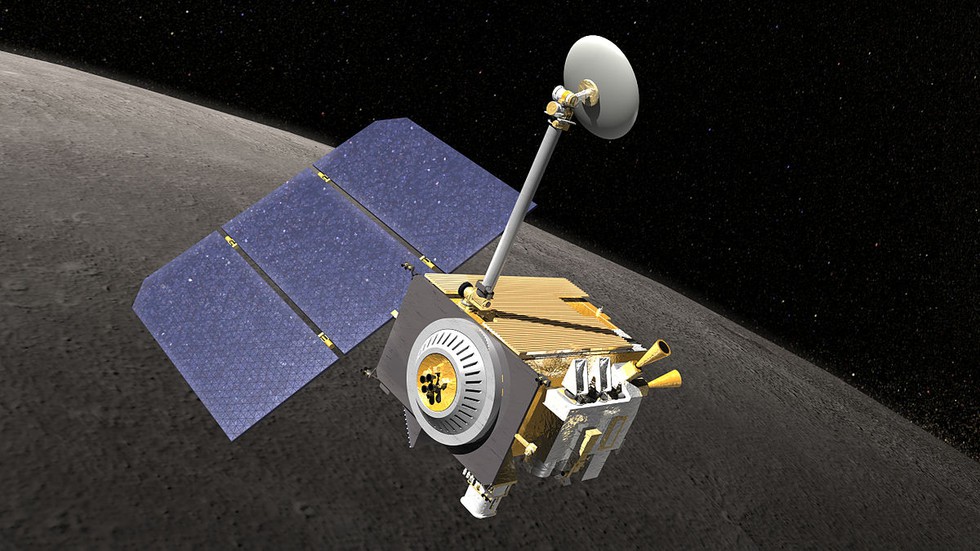
About:
- Measurements from the Lyman Alpha Mapping Project (LAMP) instrument aboard the LRO of the sparse layer of molecules temporarily stuck to the surface helped characterise lunar hydration changes over the course of a day.
- Up until the last decade, scientists thought the Moon was arid, with any water existing mainly as pockets of ice in permanently shaded craters near the poles.
- The latest research revealed the amount of energy needed to remove water molecules from lunar materials, helping scientists understand how water is bound to surface materials.
- Significance:
- These results aid in understanding the lunar water cycle and will ultimately help us learn about accessibility of water that can be used by humans in future missions to the Moon.
- Lunar water can potentially be used by humans to make fuel or to use for radiation shielding or thermal management; if these materials do not need to be launched from Earth, that makes these future missions more affordable.
- These results aid in understanding the lunar water cycle and will ultimately help us learn about accessibility of water that can be used by humans in future missions to the Moon.
- The Lunar Reconnaissance Orbiter (LRO) is a NASA robotic spacecraft currently orbiting the Moon in an eccentric polar mapping orbit.
- Its detailed mapping program is identifying safe landing sites, locating potential resources on the Moon, characterizing the radiation environment, and demonstrating new technologies.
- It was launched in 2009 as part of the United States’ Vision for Space Exploration program.
- The Lyman Alpha Mapping Project (LAMP) is a far-ultraviolet (FUV) imaging spectrograph on NASA’s Lunar Reconnaissance Orbiter (LRO) mission. Its main objectives are to –
- identify and localize exposed water frost in permanently shadowed regions (PSRs),
- characterize landforms and albedos in PSRs,
- demonstrate the feasibility of using natural starlight and sky-glow illumination for future lunar surface mission applications, and
- characterize the lunar atmosphere and its variability.
Prelims Pointers
March 12, 2019
About:
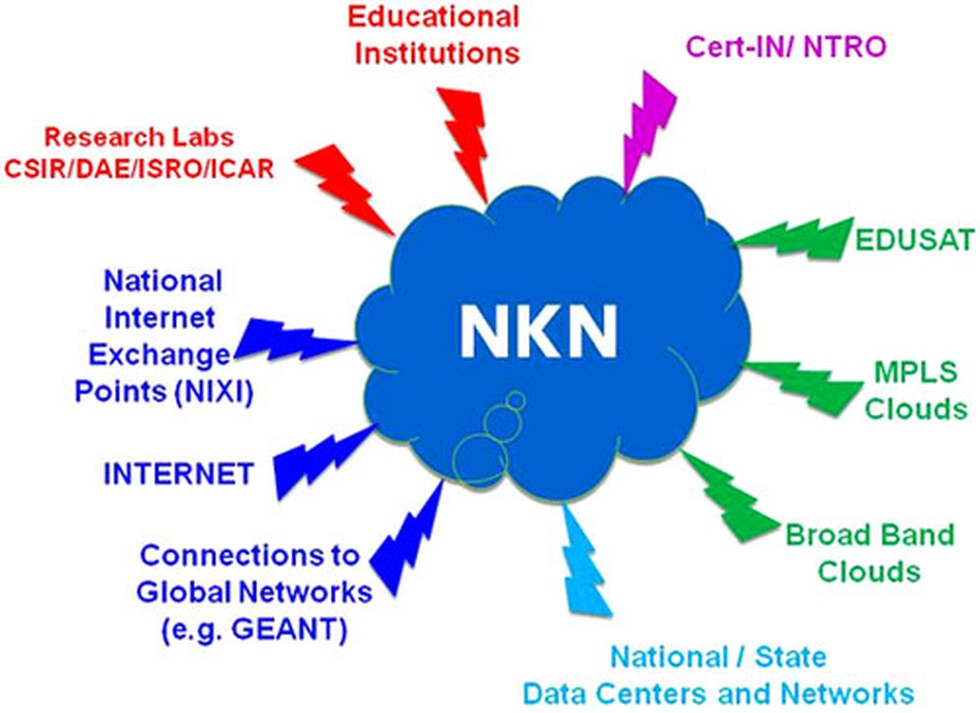
- Background: In 2010, the Cabinet Committee on Infrastructure (CCI) approved the establishment of the National Knowledge Network (NKN).
- Implementing agency: It is being implemented by National Informatics Centre (NIC) over a period of 10 years.
- Objective: NKN is intended to connect all the knowledge and research institutions in the country using high bandwidth / low latency network. NKN has been established keeping the following features in mind:
- Establishing a high-speed backbone connectivity which will enable knowledge and information sharing.
- Facilitating advanced distance education in specialized fields such as engineering, science, medicine etc.
- Facilitating an ultra-high-speed backbone for e-Governance.
- Facilitating integration of different sectoral networks in the field of research, education, health, commerce and governance.
- Link to Global Networks to collaborate with the research communities across the globe.
- Establishing a high-speed backbone connectivity which will enable knowledge and information sharing.
Prelims Pointers
March 12, 2019
About:
- Features:
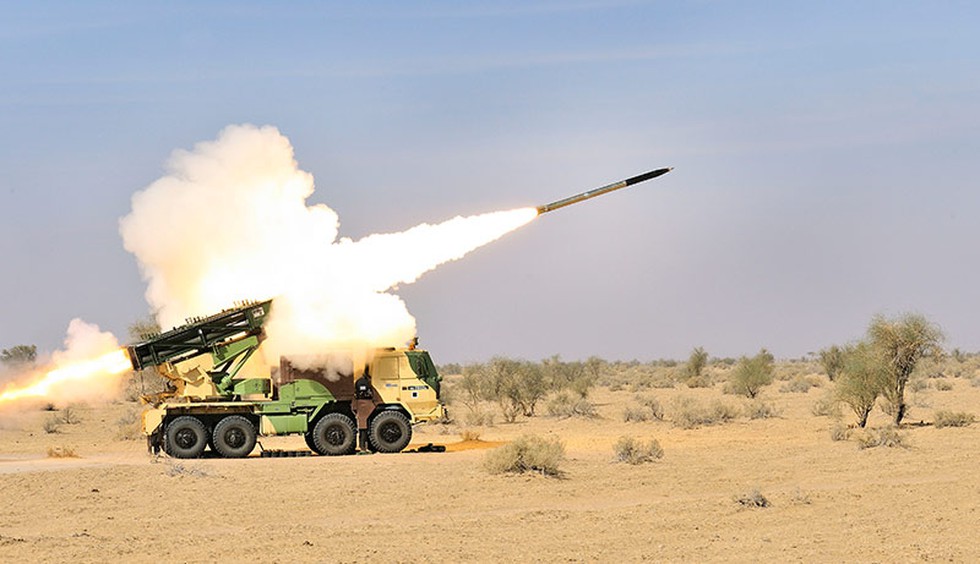
- Pinaka is a Multi-Barrel Rocket System to supplement the existing artillery gun at ranges beyond 30 kilometres to make precision hits.
- The guided weapon system is equipped with state-of-the-art guidance kit comprising of an advanced navigation and control system.
- The system is mounted on a Tatra truck for mobility.
- Pinaka is a Multi-Barrel Rocket System to supplement the existing artillery gun at ranges beyond 30 kilometres to make precision hits.
- Developed by: DRDO.
Prelims Pointers
March 12, 2019
About:
- Cultivation region: Sirsi Supari is cultivated in Yellapura, Siddapura and Sirsi taluks in Uttara Kannada.
- Registered proprietor of the GI: Totgars’ Cooperative Sale Society Ltd., Sirsi, is the registered proprietor of the GI. The Registrar of Geographical Indications, under the Union government, Chennai issued the certificate to the society on March 4, 2019. Its GI number is 464.
- Features:
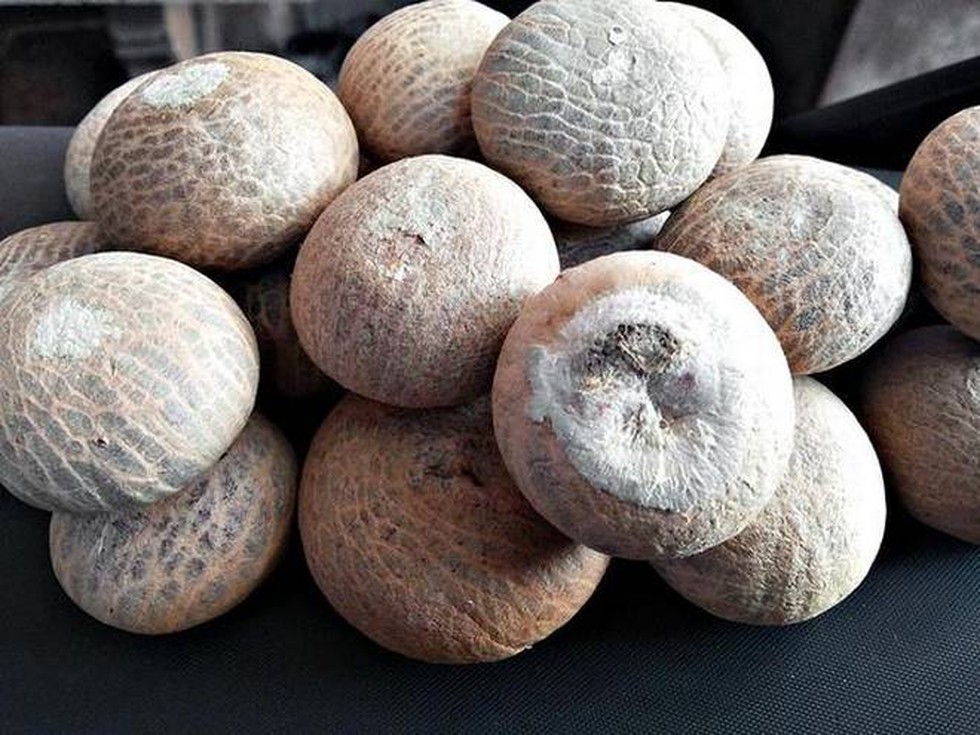
- This particular arecanut is medium in size, round and flattened coin shape, ash coloured, and has a hard seed. These features are not seen in arecanut grown in any other regions.
- This variety has a unique taste due to differences in chemical composition. The total average flavonoids content in it is around 90 whereas in others it is around 80.
- This particular arecanut is medium in size, round and flattened coin shape, ash coloured, and has a hard seed. These features are not seen in arecanut grown in any other regions.
- Usage: ‘Sirsi Supari’ is used both as ‘chali’ (white arecanut) and red arecanut.
- The ‘chali’ variety is made by peeling the ripened nuts and sun drying them later.
- The red arecanut is produced by harvesting the tender nuts, then boiling and colouring them, then making them into different grades and finally sun drying them.
- The ‘chali’ variety is made by peeling the ripened nuts and sun drying them later.
Arecanut?
- The arecanut palm is the source of common chewing nut, popularly known as betel nut or Supari.
- According to FAO, India is the largest producer of arecanut and at the same time largest consumer also.
- Major state cultivating this crop are Karnataka followed by Kerala and Assam. In Karnataka, in the Uttara Kannada District the crop is grown extensively, and is considered by the plantation owners as a prestige symbol.
- The largest area under the crop is found in gravelly laterite soils of red clay type. It can also be grown on fertile clay loam soils. Sticky clay, sandy, alluvial, brackish and calcareous soils are not suitable for arecanut cultivation.
Prelims Pointers
March 12, 2019

About:
- AAHAR is the annual International Food and Hospitality fair organized at Pragati Maidan in New Delhi.
- Organized by: India Trade Promotion Organisation.
- Features: The fair which will showcase new trends in food and beverage, hospitality, culinary technology, retail and new innovations. It will also offer an insight into the operational and food safety concerns.
India Trade Promotion Organisation (ITPO)?
- Mandate: ITPO is the nodal agency of the Government of India for promoting country's external trade.
- Parent ministry: Ministry of Commerce and Industry.
- Status: ITPO is a Mini-Ratna Category-1 Central Public Sector Enterprise (CPSE) with 100 % shareholding of Government of India.
- HQ: Pragati Maidan, New Delhi.
Prelims Pointers
March 12, 2019

Key findings:
- Top 5 holders: The top slot is occupied by the U.S., which boasts of gold reserves of 8,133.5 tonnes, followed by Germany (3,369.7 tonnes), IMF, Italy and France.
- Asian countries: Mainland China is ranked 7th and Japan at 9th followed by India at 11th.
- India:
- India, which is the world’s largest consumer of gold, has the 11th largest gold reserve, with the current holding pegged at 607 tonnes.
- India’s overall position in terms of total gold holding would have been 10th had the list included only countries. The List also includes International Monetary Fund (IMF), which is third on the list with total gold reserves of 2,814 tonnes.
- India, which is the world’s largest consumer of gold, has the 11th largest gold reserve, with the current holding pegged at 607 tonnes.
World Gold Council?
- Type of organization: The World Gold Council is an association whose members comprise the world’s leading gold mining companies.
- Mandate: The World Gold Council is the market development organisation for the gold industry. It works across all parts of the industry, from gold mining to investment, and their aim is to stimulate and sustain demand for gold.
- HQ: London, United Kingdom.
- Established in: 1987.
Prelims Pointers
March 12, 2019
Recent Crashes:
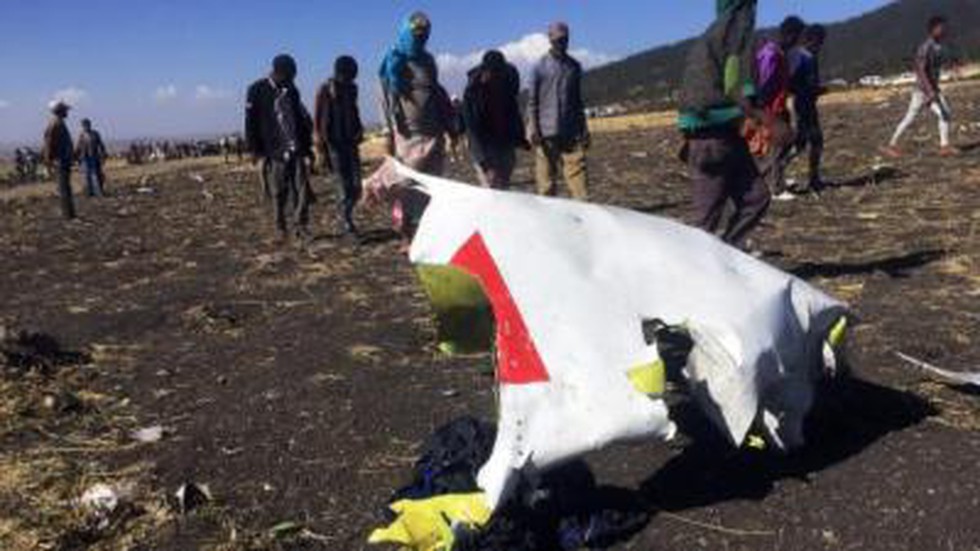
- The direction comes a day after a 737 MAX aircraft, operated by Ethiopian Airlines was crashed in which 157 people lost their life.
- Two deadly crashes in a span of less than five months involving one of the most modern aircraft in the market, the Boeing 737 MAX 8, have prompted aviation authorities and airlines to draw similarities between the two incidents.
- On October 29 last year, shortly after takeoff from Jakarta, a MAX 8 operated by Lion Air went down into the Java Sea after loss of control.
- This weekend, a Nairobi-bound jet of the same make operated by Ethiopian Airlines crashed minutes after it had become airborne in Addis Ababa.
- A total of 346 people were killed in the two accidents.
Directorate General of Civil Aviation (DGCA)?
- Mandate: The DGCA is the Indian governmental regulatory body for civil aviation responsible for investigating aviation accidents and incidents.
- Parent agency: Ministry of Civil Aviation.
- HQ: New Delhi.
March 11, 2019
Prelims Pointers
March 11, 2019
About:
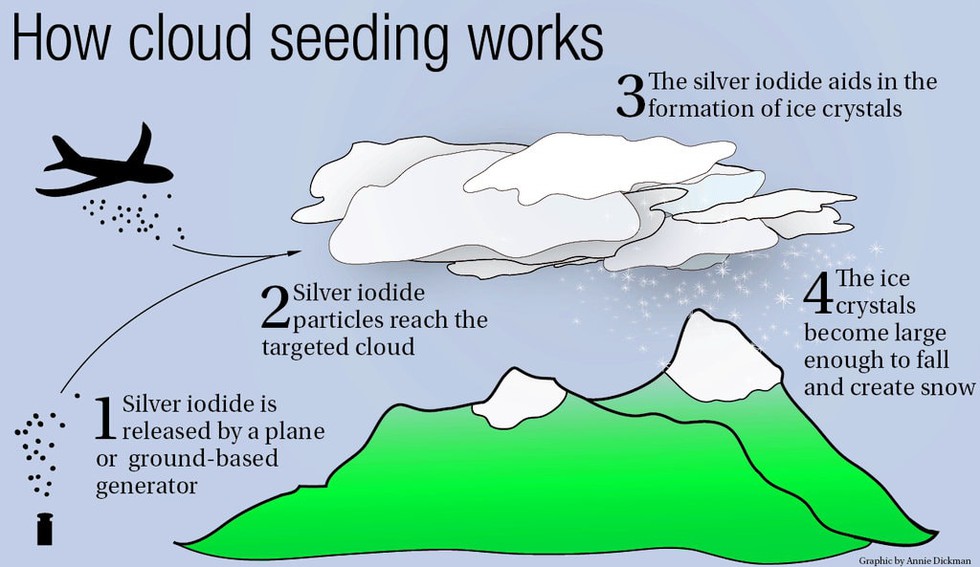
- Cloud seeding is a common term for one form of weather modification. It is used for a variety of reasons, including -
- increasing the amount of rainfall produced from clouds,
- reducing hail from thunderstorms, and
- eliminating fog that reduces visibility at busy airports.
- increasing the amount of rainfall produced from clouds,
- Modern cloud seeding dates back to the late 1940's, springing from a discovery at the General Electric (GE) labs in Schenectady, New York in 1946.
- How does cloud seeding work?
- Cloud seeding does not create new clouds.
- It increases the amount of rainfall by 10-15% from existing clouds by adding tiny particles called ice nuclei to the clouds. Inside the seeded clouds, water vapour freezes onto the particles. These heavier frozen particles fall towards the ground as rain.
- Cloud seeding materials are released via ground-based and/or airborne systems.
- The most common cloud seeding materials are silver iodide and dry ice.
- Cloud seeding does not create new clouds.
- Why is cloud seeding so attractive?
- Cloud seeding is a highly portable and flexible technology. It does not require construction of large, permanent and costly structures, such as dams or water conveyance systems.
- Projects can be mobilized quickly and operations can be regulated.
- Studies have indicated no significant environmental impacts.
- Further, the benefit/cost ratios associated with most cloud seeding projects are typically very favourable.
- Cloud seeding is a highly portable and flexible technology. It does not require construction of large, permanent and costly structures, such as dams or water conveyance systems.
Project Varshadhare:
- The department is aiming to replicate the Rs. 35-crore ‘Varshadhare’ project two years ago that was called a success by an independent evaluation committee.
- Its report, submitted to the State government in 2018, estimated that rainfall was enhanced by 27.9% and there was an extra inflow of 2.5 tmcft into Linganamakki reservoir.
Prelims Pointers
March 11, 2019
About:
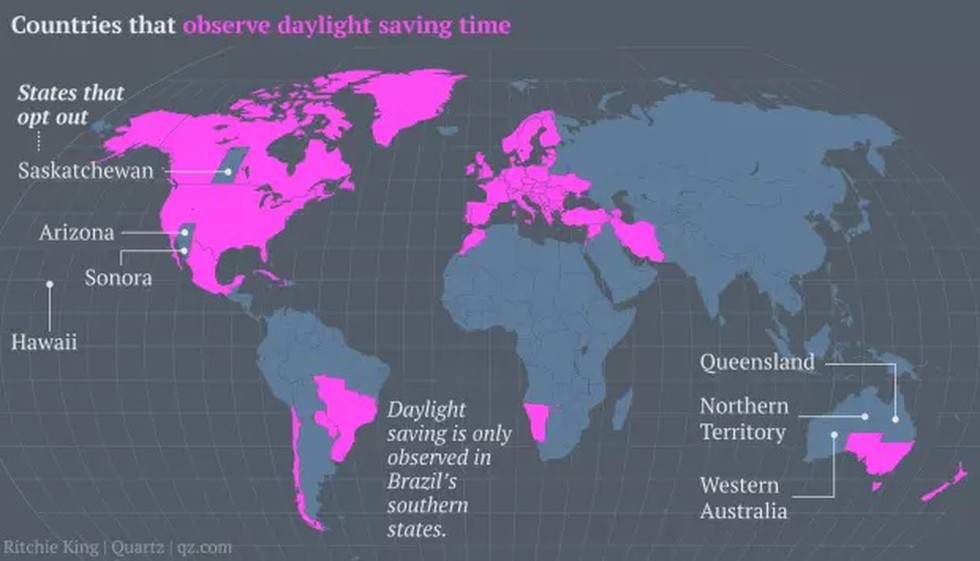
- During the summer months the sun stays visible for a longer time and sunset happens late in the day. For this reason, certain countries advance the time by one hour near the start of summer and put it back one hour during autumn.
- The time during summer is called Daylight saving time(DST). In Europe it is called Summer time.
- Global scenario: According to timeanddate.com, over 70 countries on various dates follow daylight saving time.
- Indian scenario:
- India does not follow daylight saving time.
- Daylight Saving Time was observed briefly during the Sino-Indian war in 1962 and the Indo-Pakistani wars in 1965 and 1971 respectively, so that energy consumption by civilians would be reduced.
- In fact, tea gardens in Assam start work at 8am, continuing a practice started during the colonial rule. This timing is so widespread that it is nick-named “Bagaan Timing” or the tea garden time. In effect, tea gardens in Assam follow their own informal time zone.
- India does not follow daylight saving time.
Debate:
Arguments in favor of a DST:
- The rationale behind setting clocks ahead of standard time, usually by 1 hour during springtime, is to ensure that the clocks show a later sunrise and later sunset — in effect a longer evening daytime.
- Individuals will wake an hour earlier than usual, complete their daily work routines an hour earlier, and have an extra hour of daylight at the end.
- It also leads to energy saving. However, some experts argue that a century ago, when DST was introduced, more daylight did mean less use of artificial light. But modern society uses so much energy-consuming appliances all day long that the amount of energy saved is negligible.
Arguments against DST:
- Among the biggest cons is disruption of the body clock or circadian rhythm. USA Today cited a study that found DST increases the risk of heart attack by 25%, while a return to original times lowers the risk by 21%. Disrupted sleep patterns might affect memory, learning, social interactions and overall cognitive performance.
- Countries near the Equator do not experience high variations in daytime hours between seasons, so they don’t follow it. Therefore, different time zones may not result in any benefits to India.
- Having a different time-zone may pose difficulties for airlines, railways and communication services.
Prelims Pointers
March 11, 2019
About:
- The five-year term of the 16th Lok Sabha is due to expire on 3rd June, 2019.
- Article 324 of the Constitution of India bestows the relevant powers, duties and functions upon the Election Commission of India to conduct Credible elections at regular prescribed intervals.
- Section 14 of the Representation of the People Act, 1951 provides for the conduct of the elections to constitute a new Lok Sabha before the expiry of its current term.
- Delimitation:
- The General Election to the House of People, 2019 to constitute the 17th Lok Sabha shall be held on the basis of the extent of Parliamentary Constituencies as contained in the “Delimitation of Parliamentary and Assembly Constituencies Order, 2008”.
- Therefore, there is no change in the extent and status of any Parliamentary Constituency after General election to Lok Sabha, 2009.
- The General Election to the House of People, 2019 to constitute the 17th Lok Sabha shall be held on the basis of the extent of Parliamentary Constituencies as contained in the “Delimitation of Parliamentary and Assembly Constituencies Order, 2008”.
- Election schedule:
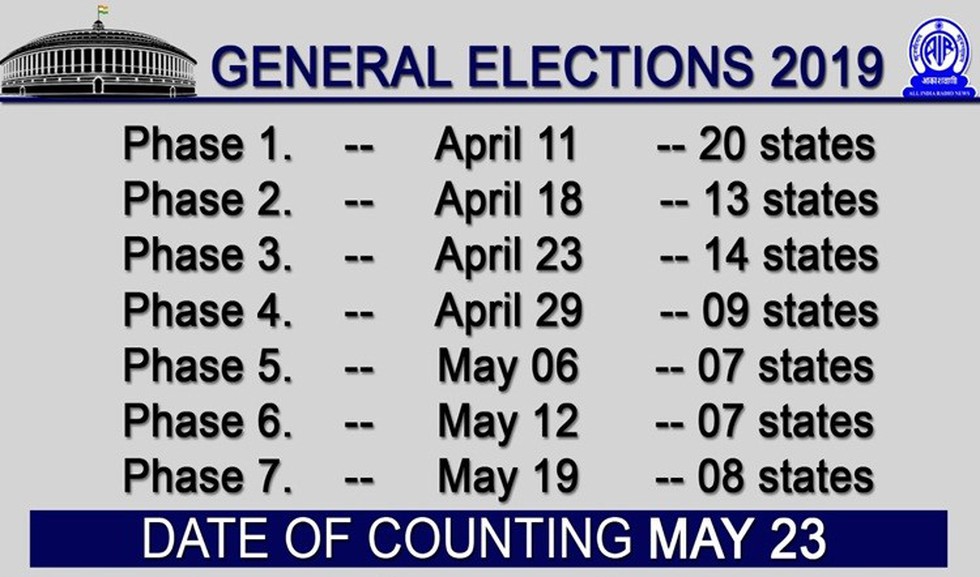
- 90 crore electorates of 29 states and 7 Union territories will elect 543 Lok Sabha members in seven phases from 11th April to 19th May.
- Simultaneously, Assembly elections in Andhra Pradesh, Odisha, Sikkim and Arunachal Pradesh will also take place.
- The counting will be held on the 23rd of May. Twenty-two states and Union Territories will have single phase elections, while 4 states will go to polls in two phases.
- 90 crore electorates of 29 states and 7 Union territories will elect 543 Lok Sabha members in seven phases from 11th April to 19th May.
Prelims Pointers
March 11, 2019

About:
- What is it? Model Code of Conduct (MCC) for political parties and candidates is a set of norms evolved with the consensus of political parties and enforced by the Election Commission of India.
- Objectives:
- To help the Election commission of India to conduct free and fair elections.
- To provide a level playing field between contestants so that ruling party doesn’t misuse its position to gain an unfair advantage.
- To help the Election commission of India to conduct free and fair elections.
- Duration of enforcement: From the date of announcement of election schedule till announcement of election result.
- Legal status: It is not under a law, it is not even under conduct rules in short it has no statutory backing.
- Background:
- The Model Code of Conduct for election was for the first time adopted for Assembly Election of Kerala way back in 1960.
- Since 1991 it exists in the present form.
- The Model Code of Conduct for election was for the first time adopted for Assembly Election of Kerala way back in 1960.
Prelims Pointers
March 11, 2019
About:
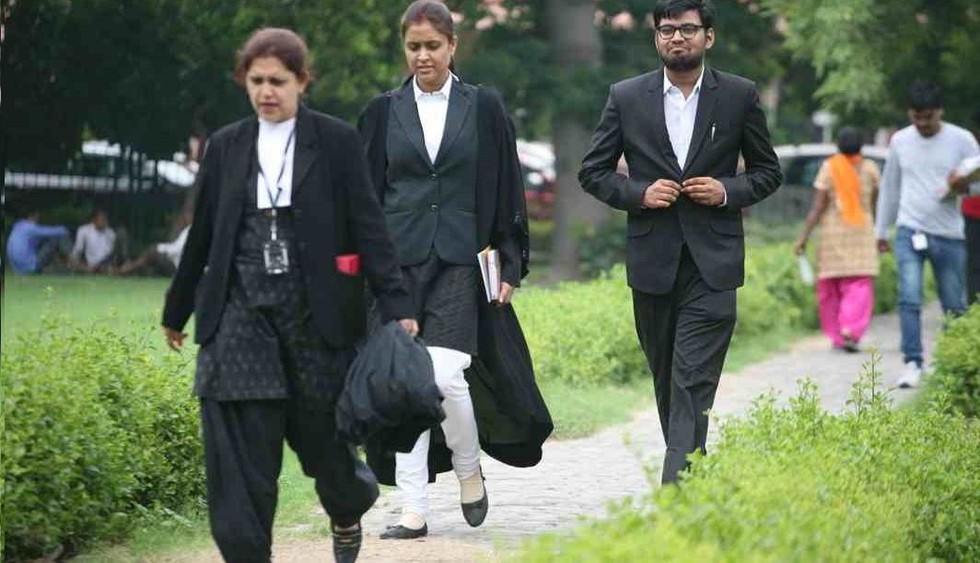
- Law and Justice Minister Ravi Shankar Prasad has set up the five-member panel under the chairmanship of Alok Srivastava, Secretary Legal Affairs.
- The committee will recommend a comprehensive insurance scheme for the welfare of advocates all over the country to address concerns relating to untimely death and medical insurance.
- The committee will submit its reports within three months.
Prelims Pointers
March 11, 2019
About:
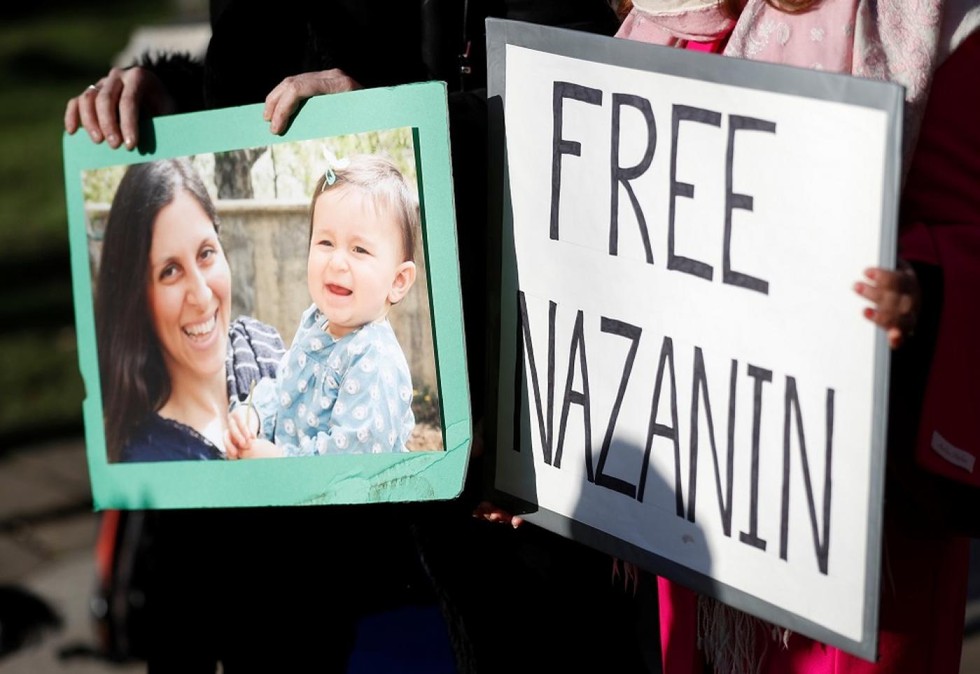
- Diplomatic protection is a rarely-used mechanism allowing nations to seek protection on behalf of its citizens on the grounds that they have been wronged by another state.
- The fate of Nazanin Zaghari-Ratcliffe has been a bone of contention between Iran and Britain since her arrest in Iran in January 2016.
- Thomson Reuters Foundation employee Nazanin Zaghari-Ratcliffe was sentenced to five years in prison in September 2016 for allegedly trying to topple the Iranian government.
- The Thomson Reuters Foundation and the British government have consistently denied the charges against her.
Diplomatic immunity?
- The concept of diplomatic immunity can be traced back to ancient text of Ramayana (When Ravana ordered the killing of hanuman, then Vibhishana points out that messengers or diplomats can’t be killed or arrested).
- But the modern usage of DI can be traced back to Article 29 of Vienna Convention on Diplomatic Relations, 1961 which says that “Diplomats must not be liable to any form of arrest or detention. They are immune from civil or criminal prosecution in the host country.”
- Arguments in favour of DI:
- Diplomats should be able to function without fear or intimidation in a foreign country esp. in times of international conflicts.
- If one nation punishes diplomats by taking them as hostage, then other nation can do the same, thus straining of relations and can even led to war.
- e.g. arrest of the envoy of Raja Raja Chola by king of Kulasekhara dynasty led to Kandalur war in 994 AD.
- Arguments for revisiting DI:
- Vienna Convention offers a high degree of legal protection to diplomats which is being misused to save diplomats facing charges of heinous crimes (drug trafficking, rape and murder), which cannot be justified.
- Violence against women is against the UN convention of 1993 and UNDHR, 1948. In 2015 a Saudi diplomat Majed Hassan was left free under diplomatic immunity inspite of being accused of raping two Nepalese women.
- Only options before an aggrieved government are:
- Expelling the diplomat by declaring him “persona non grata” under article 9 of Vienna Convention. This leads to denial of justice to victim.
- Ensuring that diplomats are tried in their home state. This rarely happens.
- Terminating relations with the country (which happened twice between Britain & Libya in 1984 and US & Iran in 1979). This is not desirable.
- Vienna convention itself states that the diplomat should respect the laws and regulations of the receiving State.
Prelims Pointers
March 11, 2019
About:
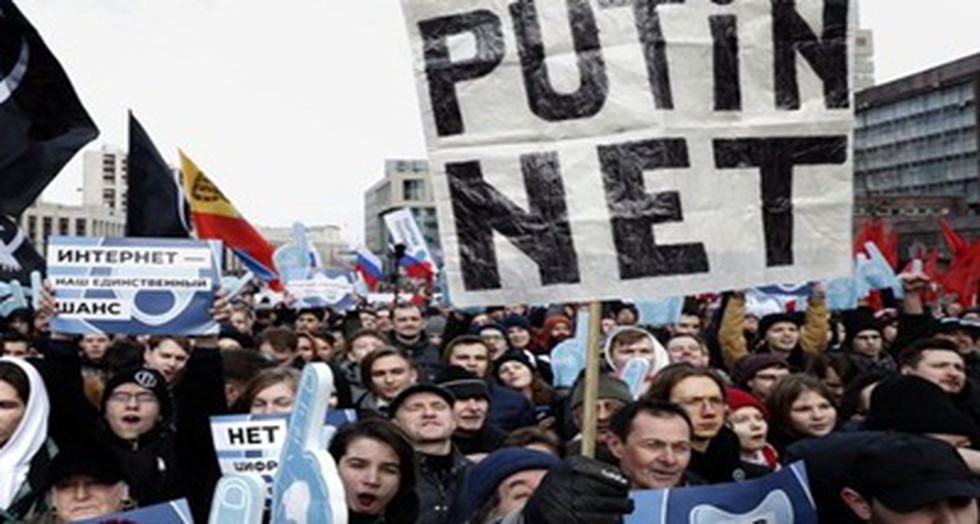
- The draft law, called the Digital Economy National Programme, is aimed at experimenting with isolating the country's internet (Runet) from the rest of the world to ensure it could remain available and secure in the event of a cyber-attack or other incident.
- This means that data from its own organisations and users would remain within Russia, rather than being distributed globally.
- Arguments in favour: Proponents say the bill will increase the cyber security and stability of Russian internet in the event of foreign interference.
- Arguments against: The legislation was one of several new laws that "seriously threaten internet freedom".
- The new bill is just one more layer of censorship from the government, which will end up costing consumers more money for internet services and risks further isolating them from the outside world.
- The new measures would allow the government to gain control over traffic exchange points and cross-border internet traffic transitions.
- internet pre-filtering centres will also be introduced and the Russian Federal Service for Supervision of Communications, Information Technology and Mass Media (also known as the Roskomnadzor) will be able to regulate traffic routing.
- The high costs of the project — which could be more than 20 billion roubles (€270 million) — would "negatively impact" telecom providers and eventually consumers.
- The new bill is just one more layer of censorship from the government, which will end up costing consumers more money for internet services and risks further isolating them from the outside world.
Prelims Pointers
March 11, 2019

About:
- Launched in: 2016.
- Objective: Providing clean-cooking fuel to the poor households, which are otherwise vulnerable to health hazards associated with indoor air pollution.
- Target: Initial target was to provide 5 crore free LPG connections to BPL households by March 31, 2019. Since the target has been achieved, the target has been revised to 8 crores.
- Coverage: PMUY is under implementation in the all the States/UTs. The scheme was launched with the identification from the Socio Economic and Caste Census, but was subsequently expanded to cover all the poor of the country.
- Implementation mechanism: It is implemented by Ministry of Petroleum and Natural Gas through its Oil Marketing Companies (i.e., IOC, BPCL and HPCL) and their distributors network.
- Identification of Beneficiaries:
- Beneficiaries are identified through Socio-Economic Caste Census List-2011.
- If names are not covered under SECC list, beneficiaries are identified from 7 categories such as SC/ST households, Most Backward Classes, Forest Dwellers etc.
- Beneficiaries are identified through Socio-Economic Caste Census List-2011.
- Achievements:
- World Health Organisation (WHO) has recognised PMUY as an important step towards addressing the Indoor Air Pollution (which annually causes 10 lakh deaths in India).
- The Seven Croreth connection has been released within just 34 months of the scheme’s launch. Nearly 69 thousand connections are being released per day.
- Nearly 42 per cent of the total beneficiaries belong to the SCs and STs.
- World Health Organisation (WHO) has recognised PMUY as an important step towards addressing the Indoor Air Pollution (which annually causes 10 lakh deaths in India).
Prelims Pointers
March 11, 2019
About:
- Background: The fund was setup in the year 1962.
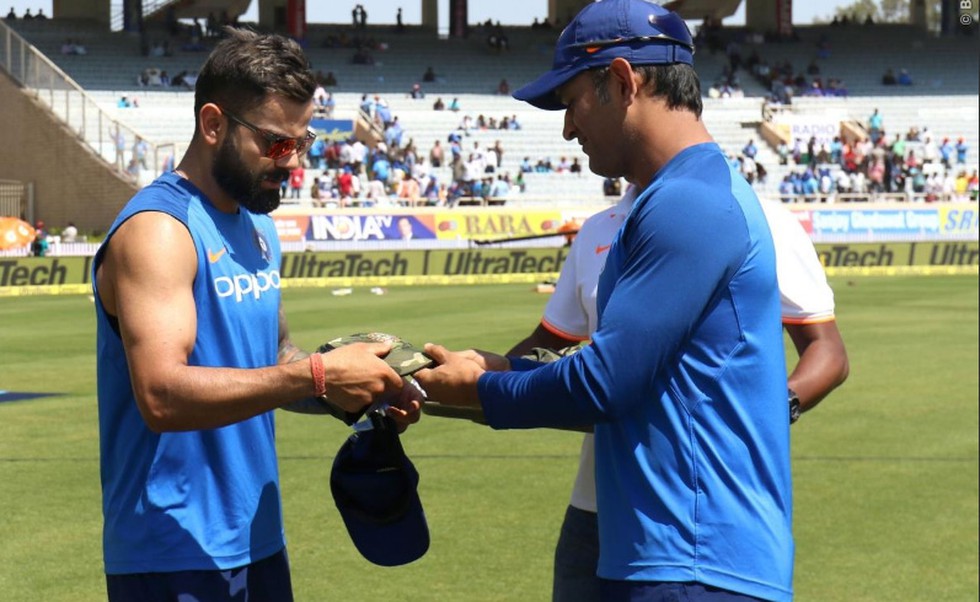
- Objective: The Fund is used for the welfare of the members of the Armed Forces (including Para Military Forces) and their dependents.
- Type of funding: The fund is entirely dependent on voluntary contributions from the public and does not get any budgetary support.
- Administration:
- It is administered by an Executive Committee, with PM as Chairperson, and Defence, Finance and Home Ministers as Members.
- Finance Minister is the Treasurer of the Fund.
- The Joint Secretary, PMO is Secretary of the Executive Committee.
- Accounts of the Fund are kept with the Reserve Bank of India (RBI).
- It is administered by an Executive Committee, with PM as Chairperson, and Defence, Finance and Home Ministers as Members.
PM Scholarship Scheme under the NDF:
- Background: ‘Prime Minister’s Scholarship Scheme’ was introduced by Government of India w.e.f. Academic year 2006-2007.
- Funding: The scholarship is paid out of the National Defence Fund (NDF).
- Objective: To encourage higher, technical and professional education for the widows and wards of the deceased personnel of Armed Forces and Para Military Forces is being implemented.
- Implementing agencies:
- For Armed forces: Department of Ex-Servicemen Welfare, Ministry of Defence.
- For Paramilitary Forces: Ministry of Home Affairs.
- For Railway Protection force (RPF): Ministry of Railways.
Prelims Pointers
March 11, 2019
About:
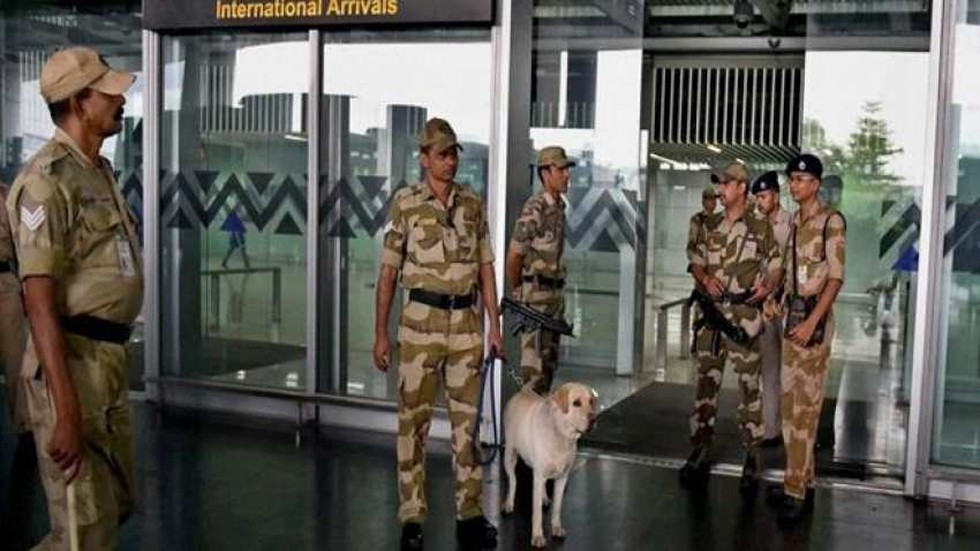
- The Central Industrial Security Force (CISF) is a Central Armed Police Force in India.
- Established in: 1983.
- Parent Body: Union Ministry of Home Affairs.
- Headquarters: New Delhi.
- Director-general: The CISF is headed by an Indian Police Service officer with the rank of Director-General.
- Mandate:
- The CISF provides security cover to government infrastructure projects, buildings and industrial units like atomic power plants, space installations, mines, oil fields and refineries, major ports etc. controlled by Central Public Sector Undertakings (PSUs).
- The CISF (Amendment) Act, 2009 authorised the provision of CISF security to private and cooperative establishments across the country for a fee. It also provides for deployment of CISF to protect Indian missions abroad and its participation in the UN peacekeeping operations.
- CISF also plays a major role in Disaster Management and dealing with fire accidents.
- The CISF provides security cover to government infrastructure projects, buildings and industrial units like atomic power plants, space installations, mines, oil fields and refineries, major ports etc. controlled by Central Public Sector Undertakings (PSUs).
- Special Security Group (SSG): In 2006, CISF raised a special unit called Special Security Group (SSG) to provide security cover to persons nominated by the Home Ministry.