March 2, 2019
Prelims Pointers
March 2, 2019
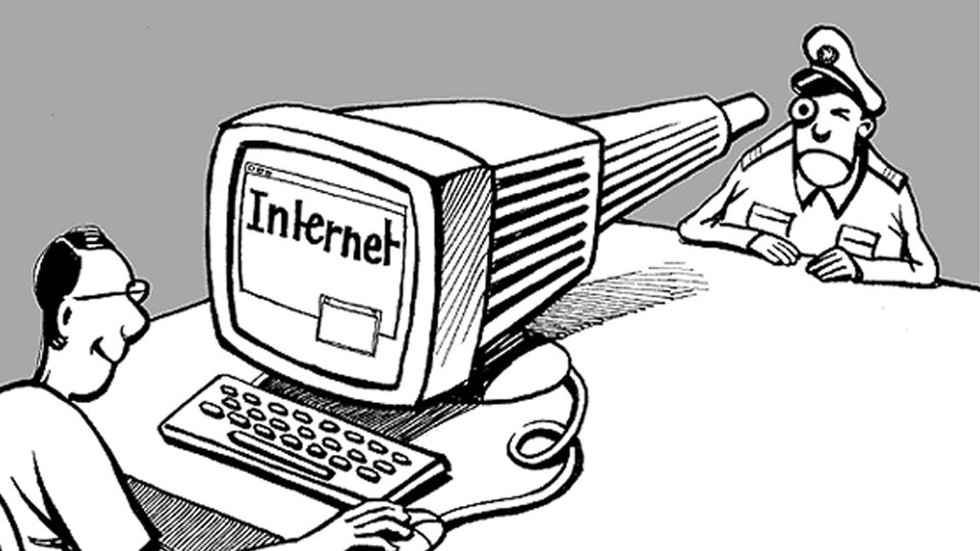
December 20 order:
- The government was responding to a PIL filed by advocate M.L. Sharma, challenging the December 20 notification as a violation of the fundamental right to privacy.
- The order allows central agencies (such as IB, RAW, CBDT etc.) to intercept, monitor and de-crypt “any information” generated, transmitted, received or stored in “any computer resource”.
- Features: The purpose of the order is to –
- ensure that surveillance is done as per due process of law;
- ensure that any interception, monitoring, decryption of computer resource is done only by authorised agencies and with approval of competent authority;
- prevent unauthorised use of these powers by any agency, individual or intermediary so that the right to privacy of citizen is not violated.
- ensure that surveillance is done as per due process of law;
- Restricted powers:
- Permission for surveillance needs to be got from the Union Home Secretary.
- Besides, the law mandates the Centre and States to constitute a review committee with the Cabinet Secretary.
- Permission for surveillance needs to be got from the Union Home Secretary.
Justification of order:
- The order is based on Section 69 (1) of the Information Technology Act of 2000 and Rule 4 of the Information Technology 2009 Rules (Procedure and Safeguards for Interception, Monitoring and Decryption of Information) Rules, 2009.
- Surveillance is necessary “in the modern world where modern tools of information communication, including encryption, is used”. Surveillance is done only in the defence of India, to maintain public order, etc.
- In fact, the order limits the power of surveillance to these 10 central agencies and none other.
Section 69 of the information technology act of 2000:
- Section 69 gives the government the power to intercept, monitor or decrypt any information through any computer resource.
- It says surveillance can be done if authorities are satisfied that it is necessary or expedient to do so in the interest of the sovereignty or integrity of India, defence of India, security of the state, friendly relations with foreign states or Public order or for preventing incitement to the commission of any cognizable offence or for investigation of any offence.
- The reasons for surveillance have to be recorded in an order in writing.
- The subscriber or intermediary or any person in-charge of the computer resource shall provide access to the computer resource to the government. Lack of cooperation shall be punished with a prison term which may extend to 7 years and a penalty.
Prelims Pointers
March 2, 2019
About:
- The SPV will be called Air India Assets Holding Ltd. (AIAHL) and will house ₹29,646 crore debt of Air India, which is more than half of the total debt of ₹55,000 crore.
- Subsidiaries: It will also house four subsidiaries of Air India —
- Air India Air Transport Services Ltd. (AIATSL),
- Airline Allied Services Ltd. (AASL),
- Air India Engineering Services Ltd. (AIESL) and
- Hotel Corporation of India Ltd. (HCI).
- Air India Air Transport Services Ltd. (AIATSL),
- Mandate:
- The SPV will house ₹29,646 crore debt of Air India, which is more than half of the total debt of ₹55,000 crore. The non-core assets, paintings and artefacts will also be moved into the SPV.
- The transfer of the debt is expected to help the carrier save costs on servicing the huge debt The airline pays nearly ₹4,500 crore per annum as interest on its total debt.
- The disinvestment proceeds will be utilized to set off the working capital loan liability of Air India not backed by any asset also warehoused in the same SPV.
- The SPV will house ₹29,646 crore debt of Air India, which is more than half of the total debt of ₹55,000 crore. The non-core assets, paintings and artefacts will also be moved into the SPV.
- Background: Ministry of Civil Aviation (MoCA) issued order for creation of a new SPV. The SPV, Air India Assets Holding Ltd. was incorporated on 22nd January 2018.
- Composition: The Board of Directors of SPV includes CMD, Air India Ltd. and Joint Secretaries of MoCA, Deptt. of Expenditure, Deptt. of Economic Affairs, DIPAM and Director(Finance) Air India Ltd.
- Present status: As on date, one subsidiary, namely AIATSL has been transferred to AIAHL, as per the Share Purchase Agreement between Air India Ltd. and AIAHL subject to conditions precedents which include lenders’ approval.
Prelims Pointers
March 2, 2019

Background:
- The International Centre for Alternative Dispute Resolution (ICADR), was set up in 1995.
- It works under the aegis of the Supreme Court. The chief justice of India is the ex-officio chairperson of the ICADR, while former law minister H R Bhardwaj is the patron of the institution.
- However, according to critiques, ICADR has not been able to embrace developments in the arbitration ecosystem.
- A high-level committee headed by Justice B N Srikrishna, a former Supreme Court judge, was constituted to promote institutional arbitration and make India its hub.
- In the aftermath, the New Delhi International Arbitration Centre, Bill, 2019 was passed by Lok Sabha.
- However the NDIAC Bill, 2019, could not be taken up for consideration and passing by the Rajya Sabha in the recently concluded session. Therefore, the government has decided to promulgate an Ordinance: ‘The NDIAC, 2019’.
Features of the ordinance:
- Objectives: It provide for the establishment and incorporation of New Delhi International Arbitration Centre (NDIAC) for –
- creating an independent and autonomous regime for institutionalised arbitration and
- take over the undertakings of the ICADR.
- creating an independent and autonomous regime for institutionalised arbitration and
- Composition:
- The NDIAC will be headed by a chairperson who has been a Judge of the Supreme Court or a Judge of an HC or an eminent person, having special knowledge and experience in the conduct or administration of arbitration law.
- The chairperson will be appointed by the Centre in consultation with the Chief Justice of India.
- There will also be two full-time or part-time members. They will be eminent persons having substantial knowledge and experience in institutional arbitration.
- The NDIAC will be headed by a chairperson who has been a Judge of the Supreme Court or a Judge of an HC or an eminent person, having special knowledge and experience in the conduct or administration of arbitration law.
Arbitration is a procedure in which a dispute is submitted, by agreement of the parties, to an arbitrator who make a binding decision on the dispute.
According to WIPO, its key characteristics are:
- Arbitration is consensual
- The parties choose the arbitrator
- A neutral arbitrator is chosen
- Arbitration is a confidential procedure
- The decision of the arbitral tribunal is final and easy to enforce
Prelims Pointers
March 2, 2019

Poshan Pakhwada:
- Poshan Pakhwada will be celebrated as part of Jan Andolan under POSHAN Abhiyaan from 08th to 22nd March, 2019. Secretary. The Pakhwada will be launched on International Women’s Day, 8th March, 2019.
- The Poshan Pakhwada will be celebrated on lines of ‘Poshan Maah’ held in the month of September, 2018.
- The Ministry of Women & Child Development is the nodal ministry for coordinating activities during the month.
- Activities to be covered:
- The key activities which include Poshan Melas, Rally on nutrition at all level, Prabhat Pheree, Session on nutrition at schools, Self help group meetings, anaemia camps, growth monitoring of children, home visits of newborn babies by ASHA/AWW.
- Awareness on nutrition in urban area will also be focused.
- It is also planned to organise workshop on Agri-Nutrition on 15th March 2019.
- The Jan Andolan Guidelines which are Multi Sectorial and cover 12 basic themes will be utilised to activate various platforms at ground level.
- The key activities which include Poshan Melas, Rally on nutrition at all level, Prabhat Pheree, Session on nutrition at schools, Self help group meetings, anaemia camps, growth monitoring of children, home visits of newborn babies by ASHA/AWW.
Poshan Abhiyaan:
- Timeline:
- The POSHAN (PM’s Overarching Scheme for Holistic Nourishment) Abhiyaan was launched by the Prime Minister in March 2018 at Jhunjhunu, Rajasthan.
- It will be implemented in three phases between 2017 and 2020 across all districts of the country.
- Objective: It aims at reaching 10 crore beneficiaries, mainly children upto the age of six years, pregnant women and lactating mothers and adolescent girls.
- Targeted reductions:
- A 2% reduction in both under-nutrition and low birth weight per annum.
- Bring down anaemia among young children, women and adolescent girls by 3% per year until 2020.
- Reduce the prevalence of stunting from the current level of 38.4% (as per the National Family Health Survey 4) to 25% by 2022.
- Funding:
- It has an approved budget of ₹9,046 crores. The total contribution of the Centre will be ₹2,849 crores and ₹1,700 crores will be contributed by the States.
- The remaining will be funded through the government’s tie-up with multilateral agencies such as the World Bank.
Prelims Pointers
March 2, 2019

About:
- The Sun releases a continuous outflow of particles and radiation called the solar wind. The solar wind washes over the planets, moons and other bodies in our solar system, filling a bubble of space -- called the heliosphere -- that extends far past the orbit of Pluto.
- On Earth, we are largely protected from the damaging effects of the solar wind. Since the solar wind is magnetised, Earth's natural magnetic field deflects the solar wind particles around our planet so that only a small fraction of them reach our planet's atmosphere.
- Unlike Earth, the Moon has no global magnetic field. However, magnetised rocks near the lunar surface do create small, localised spots of magnetic field that extend anywhere from hundreds of yards to hundreds of miles.
- These small bubbles of magnetic "sunscreen" can also deflect solar wind particles -- but on a much smaller scale than Earth's magnetic field. This has a fundamental effect on the Moon's appearance.
- Under these miniature magnetic umbrellas, the material that makes up the Moon's surface, called regolith, is shielded from the Sun's particles.
- As those particles flow toward the Moon, they are deflected to the areas just around the magnetic bubbles, where chemical reactions with the regolith darken the surface.
- This creates the distinctive swirls of darker and lighter material that are so prominent they can be seen from Earth.
Prelims Pointers
March 2, 2019
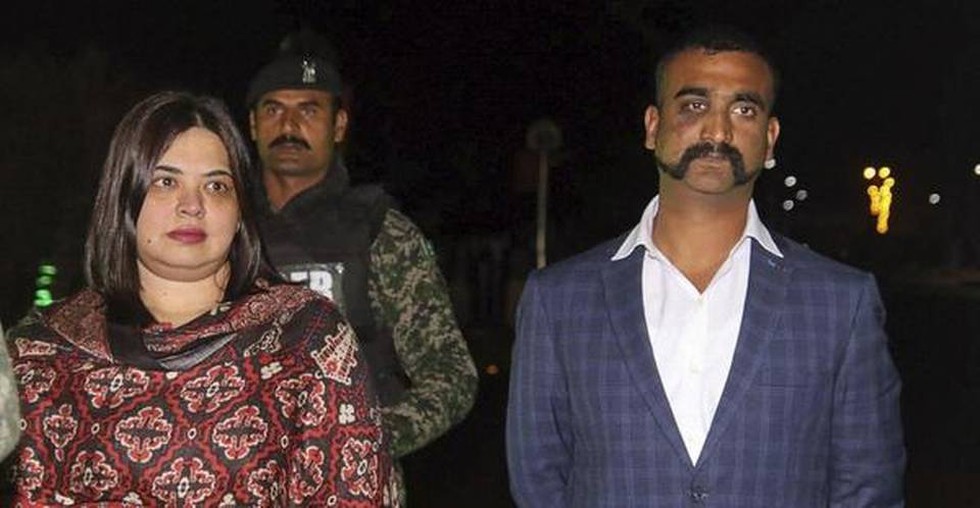
Abhinandan Varthaman:
- Abhinandan Varthaman is a fighter pilot and officer in the Indian Air Force who pilots a MiG-21 Bison fighter aircraft.
- On 27 February 2019, he was flying a MiG-21 when he crossed into Pakistan territory and was shot down by the Pakistani Air Force after which he ejected, deployed his parachute, descended safely to the ground, captured and held for three days in Pakistan during the 2019 India-Pakistan standoff.
- On 28 February 2019, Pakistan announced to release Abhinandan on 1 March 2019 via Wagah border as a peace gesture. He crossed the border on 1 March 2019 on foot at the border crossing at Wagah.
- Pakistani PM Imran Khan’s announcement to release the IAF pilot came as a surprise. However, Indian forces dismissed the release being a gesture of peace and suggested that it was mandated under the Geneva Conventions.
Geneva Conventions:
- The Geneva Convention were adopted in 1949 in the backdrop of World War II. However, the four Geneva Conventions, with three protocols added since 1977, continue to apply today to situations of armed conflicts. The conventions have been ratified by 196 countries.
- The first convention requires that all wounded and infirm soldiers as well as medical personnel and chaplains in the field are treated humanely without discrimination on the basis of race, colour, gender, religion or faith, and the like. It prohibits acts such as torture, mutilation, outrages upon personal dignity, and execution without judgment. It also grants them the right to proper medical treatment and care.
- The second convention extends the protections described above to shipwrecked soldiers and other naval forces, including special protections afforded to hospital ships.
- The third convention is related to the treatment of Prisoners of War (PoWs). It should be noted that the Wing commander who was at the helm of a MiG – 21 Bison has not been termed as a PoW either by India or Pakistan.
- The last Convention focuses on the protection of civilians in times of war.
Prelims Pointers
March 2, 2019
About:
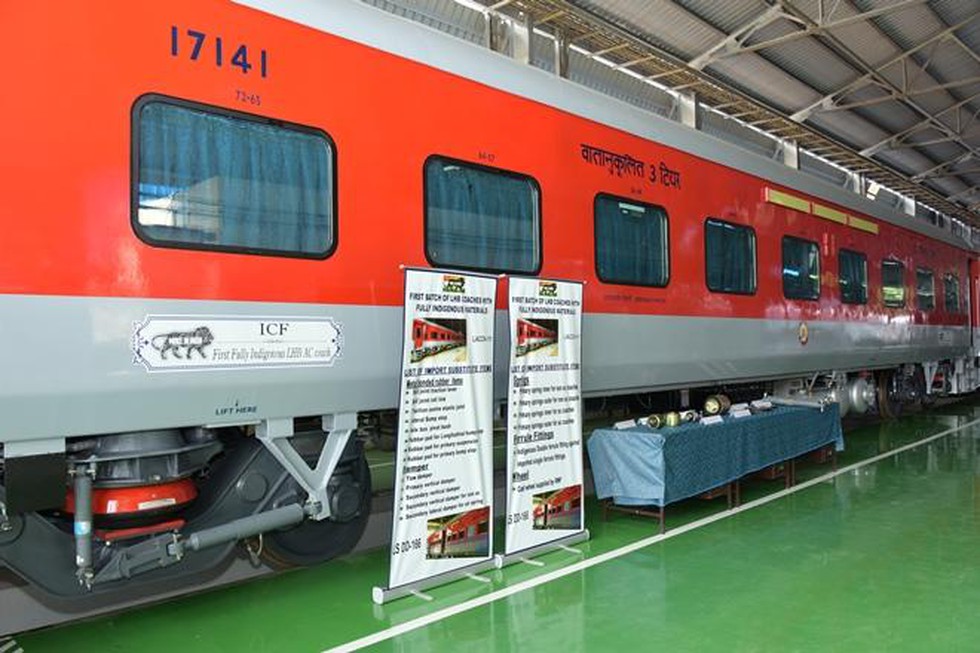
- Meaning: Linke Hofmann Busch (LHB) coaches are the passenger coaches of Indian Railways that have been developed by Linke-Hofmann-Busch of Germany and mostly produced by Rail Coach Factory in Kapurthala, India.
- History: They have been used since 2000 on the broad gauge network of Indian railways.
- Recent Decision: To better the safety standards in rail travel, Indian Railways has decided to use Linke Hofmann Busch (LHB) design coaches and stop production of the old ICF design coaches.
- Benefits:
- As compared to Integral Coach Factory (ICF) design coaches, the LHB design coaches are lighter in weight.
- Not only that, they also have higher carrying capacity as well as higher speed potential. Also, the LHB design coaches have increased codal life and better safety features.
- LHB coaches also have anti-climbing features, so that in case of a collision, the coaches do not climb on top of each other.
- As compared to Integral Coach Factory (ICF) design coaches, the LHB design coaches are lighter in weight.
Prelims Pointers
March 2, 2019

About:
- Parent act: The recent decision has been taken in terms of Section 74(2) of The Rights of Persons with Disabilities (RPwD) Act, 2016.
- Role: The above two Commissioners will assist the Chief Commissioner for Persons with Disabilities (CCPD) in discharging his statutory functions as per provisions of the said Act. This would enable the Office of CCPD to look into the complaints of persons with disabilities expeditiously, besides strengthening the implementation of the RPwD Act, 2016.
- Composition: Out of the two posts of Commissioners, one Commissioner will be a person with disability.
- The Chief Commissioner for Persons with Disabilities (CCPD) is appointed by the Central Government from persons having special knowledge or practical experience in matters relating to rehabilitation of Persons with Disabilities.
- The CCPD also coordinates the work of the State Governments’ Commissioners to monitor the utilization of funds disbursed by the Central Government; to take steps to safeguard the rights and facilities made available to persons with disabilities; and to submit reports to the Central Government on the implementation of the Rights of Persons with Disabilities (RPwD) Act, 2016.
Prelims Pointers
March 2, 2019
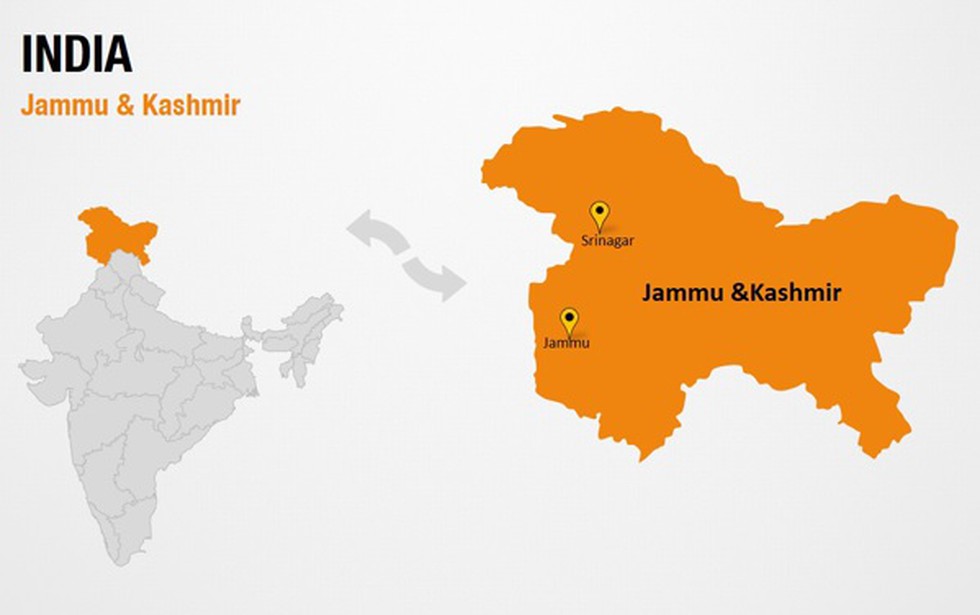
The Constitution (Application to Jammu and Kashmir) Amendment Order, 2019:
- The Constitution (Application to Jammu and Kashmir) Amendment Order, 2019 will serve the purpose of application of relevant provision of the constitution as amended through the constitution (77th Amendment) act, 2019 for Jammu and Kashmir by issuing the constitution Amendment order.
- Once notified, this will pave the way for giving the benefit of promotion in service to the SCs, STs and also extend the reservation of up to 10 per cent for the economically weaker section in educational institution and public employment in addition to the existing reservation in the state.
The Jammu and Kashmir Reservation (Amendment) Ordinance, 2019:
- The Cabinet has approved the Jammu and Kashmir Reservation (Amendment) Ordinance, 2019.
- This ordinance provides for amendment in the Jammu and Kashmir reservation act 2004 to bringing persons residing in the areas adjoining International Border within the ambit of reservation at par with persons living in areas adjoining actual line of control.
Prelims Pointers
March 2, 2019

About:
- National Institute of Unani Medicine (NIUM) Bangalore is as an autonomous organization under the Ministry of AYUSH, Government of India working since 2004.
- This Institute is being developed as a model of post graduate, teaching, training and research in Unani System of Medicine.
- NIUM, Ghaziabad:
- This institute would be developed with an approximate cost of 300 crore rupees on 10 acres of land.
- It would be one of the largest institutes of Unani Medicine in Northern India.
- The institute would cater to the needs of the masses and would have facilities for quality research and education at postgraduate and PhD levels with a 200 bedded hospital.
- This institute would be developed with an approximate cost of 300 crore rupees on 10 acres of land.
Unani System:
- The basic theory of Unani system is based upon the well- known four- humour theory of Hippocrates.
- It postulates the presence of four humours in the body: dam (blood), balgham (phlegm), safra (yellow bile) and sauda (black bile), a parallel to kapha, vata and pitta, the three doshas in ayurveda.
- The quality and quantity of four humors affect the state of health and disease in the body.
- Indian scenario:
- In India, it was introduced by Arabs and Persians sometime around the eleventh century.
- During 13th and 17th century A.D. Unani Medicine reached its zenith under Mughals.
- But, during the British rule in India all the traditional systems of medicine along with Unani System faced almost complete neglect for about two centuries.
- In India, it was introduced by Arabs and Persians sometime around the eleventh century.
- Revival by Hakim Ajmal Khan:
- It saw the beginning of its revival during the freedom struggle due to the efforts of Hakim Ajmal Khan, a renowned physician and a freedom fighter.
- He established Ayurvedic and Unani Tibbia College and Hindustani Dawakhana a pharmaceutical company for manufacturing of Ayurvedic and Unani medicine in Delhi in 1916. Mahatma Gandhi inaugurated the college in 1921.
- Birth anniversary of Hakim Ajmal Khan is celebrated as Unani Day on 11th February every year.
- It saw the beginning of its revival during the freedom struggle due to the efforts of Hakim Ajmal Khan, a renowned physician and a freedom fighter.
March 1, 2019
Prelims Pointers
March 1, 2019
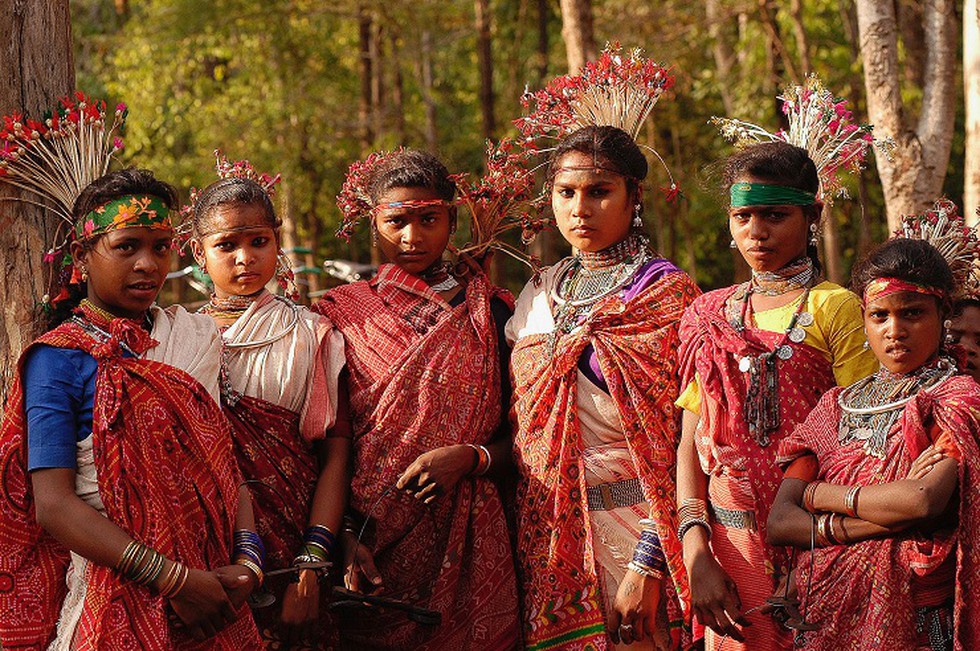
Union Minister of Tribal Affairs launched the following schemes on the occasion –
Minimum Support Price (MSP) for Minor Forest produces (MFPs):
- Almost 5.5 crores tribals residing in the dense forest areas of the Country will benefit from the Schemes of Minimum Support Price and Value Addition.
- The Scheme will offer remunerative MSP for 50 commercially viable items to the Tribals. MFPs now covered the entire range of forest produces. The MSP had been raised by 30% to 40%. This would go a long way in adding to the income of the Tribals.
- It is proposed to set up almost 6000 Van Dan Vikas Kendras comprising 300 tribal gatherers each in the Country providing employment to almost 45 Lakh tribals.
Release of guidelines of Van Dhan Vikas Karyakram:
- This programme promotes enterprise and marketing skills in tribals. This will be a game changer in the very near future, if implemented diligently.
- The tribals presently get only 20 – 30% of the value chain of the Minor Forest Produces. This situation will change after Van Dhan scheme which aims to take this share to 70 to 80%.
- The Prime Minister of India launched the Van Dhan Scheme in Bijapur District of Chhattisgarh on 14th April, 2018.
TRIFOOD project:
- TRIFOOD Scheme is a joint initiative of Ministry of Food Processing Industry, Ministry of Tribal Affairs and TRIFED.
- Under this scheme a tertiary value addition center will be set up in Jagdalpur in Chhattisgarh and Raigad in Maharashtra at a cost of approximately Rs.11 crores.
- A highlight of this is the production of “Heritage Mahua” drink. The traditional Mahua tribal drink will be mainstreamed and marketed all over the Country under this project.
TRIFEDs CSR initiatives –“Friends of TRIBES”:
- He also launched the “Friends of Tribes” initiative of the Ministry. TRIFED has tied up CSR funds to promote tribal livelihoods.
- Public Sector Organisations like BPCL, IOCL and SPMCL have sanctioned approximately Rs. 10.00 crores for promoting Van Dhan operations in Barwani, Rajnandgaon, Dewas and Hoshangabad Districts of Chhattisgarh and Madhya Pradesh.
Prelims Pointers
March 1, 2019

Scheme for Development of Knitting and Knitwear Sector:
- Main components of the scheme:
- Creation of new service centers on Public Private Partnership (PPP) model by industry and association in the knitting and knitwear clusters.
- Modernization and upgradation of existing power loom service Centers (PSCs) and institution run by Textile Research Associations (TRAs) and Export Promotion Councils (EPCs) Association in knitting and knitwear clusters.
- Group work shed scheme.
- Yarn bank scheme.
- Common facility center scheme.
- Pradhan mantra Credit Scheme.
- Solar Energy Scheme.
- Facilitation, IT, awareness, studies, surveys, market development and publicity for knitting and knitwear units.
- Creation of new service centers on Public Private Partnership (PPP) model by industry and association in the knitting and knitwear clusters.
- Significance:
- Knitting and knitwear sector is predominantly MSME in size and mainly located in decentralized sector and is one of the major employment generator sector.
- It also has a significant contribution on the exports of textiles.
- Knitting is a major segment in the entire textile value chain. Knitted fabrics contribute to 27% of the total fabric production in India and 15% of knitted fabric is being exported.
- Knitting and knitwear sector is predominantly MSME in size and mainly located in decentralized sector and is one of the major employment generator sector.
- Funding: The total combined outlay for PowerTex India Scheme and the Knitwear Scheme is ₹487 crore. Of this, ₹439.3 crore is for powerloom units for three years from April 1, 2017 to March 31, 2020 and ₹47.7 crore for the knitwear scheme for the remaining period of 2018-19 and for 2019-20.
Do you know?
- Some of the major clusters in the knitted garment sector are Tirupur in Tamil Nadu, Ludhiana in Punjab, Kanpur in Uttar Pradesh and Kolkata in West Bengal.
- Tirupur is the most important export cluster, followed by Ludhiana. More than 90% of the garment is manufactured in Tirupur are exported.
PowerTex India:
- Background: In 2017, the Union Government launched PowerTex India, a comprehensive scheme for powerloom sector development, simultaneously at over 45 locations in the country.
- Duration: From 1st April, 2017 and would be for a duration up to 31st March, 2020.
- Components: The comprehensive scheme has the following components –
- In-situ Upgradation of Plain Powerlooms
- Group Workshed Scheme (GWS)
- Yarn Bank Scheme
- Common Facility Centre (CFC)
- Pradhan Mantri Credit Scheme for Powerloom Weavers
- Solar Energy Scheme for Powerlooms
- Facilitation, IT, Awareness, Market Development and Publicity for Powerloom Schemes
- Tex Venture Capital Fund
- Grant-in-Aid and Modernisation & Upgradation of Powerloom Service Centres (PSCs).
Prelims Pointers
March 1, 2019

About the Policy:
- Objective: To have a more effective policy that brings in further transparency, better regulation and enforcement, balanced social and economic growth as well as sustainable mining practices.
- Salient Features: It includes provisions which will give boost to mining sector such as –
- Proposes to grant status of industry to mining activity to boost financing of mining for private sector and for acquisitions of mineral assets in other countries by private sector,
- introduction of Right of First Refusal for RP/PL holders,
- auctioning in virgin areas for composite RP cum PL cum ML on revenue share basis,
- encouragement of merger and acquisition of mining entities,
- making efforts to harmonize taxes, levies & royalty with world benchmarks to help private sector,
- transfer of mining leases and creation of dedicated mineral corridors to boost private sector mining areas,
- Focusses on use coastal waterways and inland shipping for evacuation and transportation of minerals and encourages dedicated mineral corridors to facilitate the transportation of minerals,
- Proposes a long term export import policy for the mineral sector to provide stability and as an incentive for investing in large scale commercial mining activity,
- utilization of the district mineral fund for equitable development of project affected persons and areas; introduces the concept of Inter-Generational Equity that deals with the well-being not only of the present generation but also of the generations to come and
- Proposes to constitute an inter-ministerial body to institutionalize the mechanism for ensuring sustainable development in mining.
- Proposes to grant status of industry to mining activity to boost financing of mining for private sector and for acquisitions of mineral assets in other countries by private sector,
- Benefits: The New National Mineral Policy will ensure more effective regulation. It will lead to sustainable mining sector development in future while addressing the issues of project affected persons especially those residing in tribal areas.
Background:
- National Mineral Policy 2019 replaces the extant National Mineral Policy 2008 ("NMP 2008") which was announced in year 2008.
- In 2017, supreme court in a judgement directed the government to review the policy.
- Subsequently the Ministry of Mines constituted a committee under the chairmanship of K Rajeswara Rao, Additional Secretary, Ministry of Mines to review NMP 2008.
- Based on the recommendations made by K Rajeswara Rao committee, the Ministry of Mines finalized the National Mineral Policy 2019.
Prelims Pointers
March 1, 2019

About:
- The present provision of the SEZs Act, 2005 do not permit 'trusts' to set up units in SEZs.
- Currently, the definition of "person" includes an individual, whether resident in India or outside India, a Hindu undivided family, co-operative society, a company, whether incorporated in India or outside India, a firm, proprietary concern, or an association of persons or body of individuals, whether incorporated or not, local authority and any agency, office or branch owned or controlled by such individual.
Recent amendment:
- The amendment will enable a trust to be considered for grant of permission to set up a unit in SEZs.
- The amendment will also provide flexibility to the Central Government to include in this definition of a person, any entity that the Central Government may notify from time to time.
- This will facilitate investments in Special Economic Zones.
Do you know?
- SEZs are major export hubs in the country as the government provides several incentives including tax benefits and single-window clearance system.
- The developers and units of these zones enjoy certain fiscal and non-fiscal incentives such as no licence requirement for import; full freedom for subcontracting; and no routine examination by customs authorities of export/import cargo. They also enjoy direct and indirect tax benefits.
- Exports from SEZs grew about 15% to ₹5.52 trillion in 2017-18.
Prelims Pointers
March 1, 2019
About:
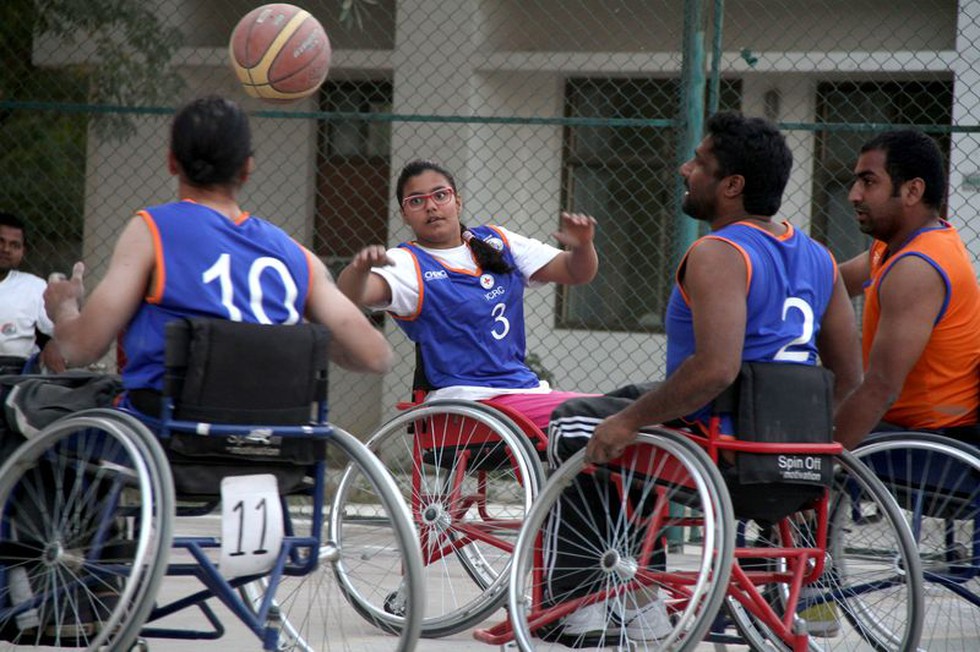
- Name: It will function under the name of Centre for Disability Sports, Gwalior.
- Status: It will be registered under the Societies Registration Act, 1860.
- Timeline: Setting up of the Centre shall entail an estimated cost of Rs. 170 crore, spread over a period of five years.
- Significance:
- At present no specialised sports training facilities for Divyangjan are available in the country.
- Improved sports infrastructure created by the Centre will ensure effective participation of persons with disabilities in sports activities and also enable them to compete at national and international levels.
- It will develop a sense of belonging in Divyangjan to facilitate their integration in society.
- At present no specialised sports training facilities for Divyangjan are available in the country.
Prelims Pointers
March 1, 2019
About:
- Full name of scheme: Faster Adoption and Manufacturing of Electric Vehicles in India Phase II (FAME India Phase II).
- Implementing agency: Department of Heavy Industry.
- Objective: Promotion of Electric and hybrid vehicle in the country by offering upfront Incentive on purchase of Electric vehicles and by establishing charging Infrastructure for electric vehicles.
- Duration:
- The scheme with total outlay of Rs 10,000 Crores over the period of three years (2019-20 to 2021-22) will be implemented with effect from 1st April 2019.
- This scheme is the expanded version of the present scheme titled 'FAME India1 which was launched on 1st April 2015, with total outlay of Rs. 895 crores.
- The scheme with total outlay of Rs 10,000 Crores over the period of three years (2019-20 to 2021-22) will be implemented with effect from 1st April 2019.
- Benefits: The scheme will help in addressing the issue of environmental pollution and fuel security.
Salient features of the scheme:
- Target is to support 10 Lakhs e-2Wheeler, 5 Lakhs e-3Wheelers, 55000 4Wheelers and 7000 Buses.
- Emphasis is on electrification of the public transportation that includes shared transport.
- The benefits of incentives, will be extended to only those vehicles which are fitted with advance battery like a Lithium Ion battery and other new technology batteries.
- About 2700 charging stations will be established in metros, million plus cities, smart cities and cities of Hilly states to ensure availability of at least one charging station in a grid of 3 km x 3 km.
- Charging stations will also be established on major highways connecting major city clusters at an interval of about 25 km each.
Prelims Pointers
March 1, 2019
About:
- Status: NHB is an All India Financial Institution (AIFl), set up in 1988, under an Act of Parliament, viz. the National Housing Bank Act, 1987.
- Mandate: It is the principal agency to promote housing finance institutions both at local and regional levels.
- Parent agency: NHB is a wholly owned subsidiary of Reserve Bank of India (RBI).
- Authorized Capital: Up till now, the authorized capital of NHB stands at Rs. 2,000 crore of which Rs. 1,450 crore has been subscribed by RBl.
- NHB RESIDEX: It is the country’s first official housing price index (HPI). It captures movements in the prices of residential real estate prices.
Recent decision:
- Subsequent to the payment of Rs. 1450 to RBl, the subscribed capital of NHB shall stand transferred to and vested in the Central Government.
- This has been done consequent to amendments made to the NHB Act, 1987 in 2018.
- The expenditure of Rs.1,450 crore is to be met out of Gross Budgetary Support 2018-19.
Prelims Pointers
March 1, 2019

About:
- Background: The Indian IT Industry has predominantly been a service Industry. However, a need has been felt to move up the value chain through technology-oriented products and services.
- Objective: In this background, the new policy has been unveiled to develop India as the global software product hub, driven by innovation, improved commercialisation, sustainable Intellectual Property (IP), promoting technology startups and specialized skill sets.
- Expenditure involved:
- Initially, an outlay of Rs.1500 Crore is involved to implement the programmes/ schemes envisaged under this policy over the period of 7 years.
- 1500 Crore is divided into Software Product Development Fund (SPDF) and Research & Innovation fund.
- Initially, an outlay of Rs.1500 Crore is involved to implement the programmes/ schemes envisaged under this policy over the period of 7 years.
- Strategy/Targets: To achieve the vision, the Policy has the following five Missions –
- To ensure a ten-fold increase in India share of the Global Software product market by 2025.
- To nurture 10,000 technology start-ups in software product industry (including 1000 such technology start-ups in Tier-II and Tier-III towns & cities) and generating direct and in-direct employment for 3.5 million people by 2025.
- To create a talent pool for software product industry through (i) up-skilling of 1,000,000 IT professionals, (ii) motivating 100,000 school and college students and (iii) generating 10,000 specialized professionals that can provide leadership.
- 20 software product development clusters will be developed having integrated ICT infrastructure, marketing, incubation, R&D/testbeds and mentoring support.
- To monitor scheme the implementation of this policy, National Software Products Mission will be set up with participation from Government, Academia and Industry.
- To ensure a ten-fold increase in India share of the Global Software product market by 2025.
Prelims Pointers
March 1, 2019

About:
- Full name: IEA Bioenergy TCP is an acronym for International Energy Agency's Technology Collaboration Programme on Bioenergy.
- What is it? It is an international platform with the aim of improving cooperation and information exchange between countries that have national programmes in bioenergy research, development and deployment.
- Parent body: IEA Bioenergy TCP works under the framework of International Energy Agency (IEA) to which India has "Association" status since 30th March, 2017.
- Members: Apart from India, other 24 members are Australia, Austria, Belgium, Brazil, Canada, Croatia, Denmark, Estonia, Finland, France, Germany, Ireland, Italy, Japan, the Republic of Korea, the Netherlands, New Zealand, Norway, South Africa, Sweden, Switzerland, the United Kingdom, the United States, and the European Commission.
- Working:
- The R&D work in IEA Bioenergy TCP is carried out carried out within well-defined 3-years programmes called "Tasks".
- Each year the progress of the Tasks is evaluated and scrutinized and each 3 years the content of the Tasks is reformulated and new Tasks can be initiated.
- The R&D work in IEA Bioenergy TCP is carried out carried out within well-defined 3-years programmes called "Tasks".
India and IEA Bioenergy TCP:
- Union Ministry of Petroleum & Natural Gas joined IEA Bioenergy TCP as its 25th member on 25th January, 2019.
- The primary goal of joining it is to facilitate the market introduction of advanced biofuels with an aim to bring down emissions and reduce crude imports.
International Energy Agency (IEA)?
- Status: IEA is an autonomous intergovernmental organization established in the framework of the Organisation for Economic Co-operation and Development (OECD).
- Mandate: To act as a policy adviser in promoting alternate energy sources (including renewable energy), rational energy policies, and multinational energy technology co-operation.
- Secretariat: Paris, France.
- Established in: 1974 (in the wake of the 1973 oil crisis).
- Membership:
- Only the OECD member states can become members of the IEA. In 2018, Mexico joined the IEA and became its 30th member.
- Brazil, China, India, Indonesia, Morocco, Singapore and Thailand are the associate members of IEA.
Prelims Pointers
March 1, 2019
Nai Talim:
- Nai Talim is a principle promoted by Mahatma Gandhi which states that knowledge and work are not separate. Rather experiential learning or learning by doing is one the most effective methods.
- To him, it is a holistic approach of developing body, mind and soul (hand, head and heart), by making a productive art, craft or community engagement activity as the centre of learning.
- This was similar to what Confucius had said, “I hear and I forget. I see and I remember. I do and I understand”.
Recent initiative:
- In September 2018, Union Human Resource Development (HRD) Minister released a book titled “Experiential Learning – Gandhiji’s Nai Talim.
- The book contains:
- basic principles of Gandhiji’s Nai Talim and
- Work and Education curriculum for Schools, D.Ed, B.Ed and Faculty Development Programmes for teachers.
- basic principles of Gandhiji’s Nai Talim and
- This book and this project are a joint effort of Mahatma Gandhi National Council of Rural Education (MGNCRE), State Councils of Educational Research and Training (SCERTs) along with the universities in the country.
- This curriculum was brought out simultaneously in 13 languagese., Assamese, Tamil, Bengali, Odiya, Kannada, Malayalam, Punjabi, Marathi, Telugu, Gujarati, Urdu, Hindi and English.
- Mahatma Gandhi National Council of Rural Education (MGNCRE) was formerly known as National Council of Rural Institutes (NCRI).
- It was established in 1995 under the Ministry of HRD.
- MGNCRE designs and promotes curriculum inputs for higher education programmes offered by Universities with special focus on Rural Development, Rural Management etc.