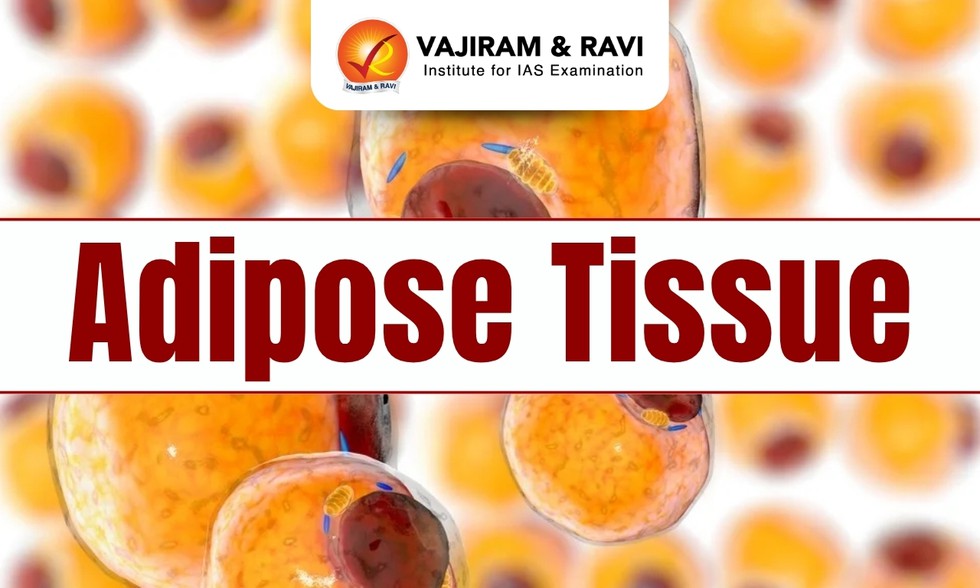
Recently, scientists highlighted that adipose tissue (fat) is not only a passive storage site for excess calories but acts as metabolic and endocrine organ.
About Adipose Tissue:
Adipose tissue, otherwise known as body fat, is a connective tissue that extends throughout body.
It's found under skin (subcutaneous fat), between internal organs (visceral fat) and even in the inner cavities of bones (bone marrow adipose tissue).
Types of Adipose Tissue:
White adipose tissue
It is the most abundant type of fat in adults, does store energy in the form of triglycerides.
Functions:
It releases hormones like leptin that reduce appetite, as well as adiponectin, which regulates insulin and blood sugar levels.
It also cushions organs, insulates against heat loss and acts as a metabolic buffer, safely storing excess lipids.
They contribute to insulin resistance, fatty liver disease and cardiovascular risk.
Brown adipose tissue (Fat)
It is specialized to burn energy.
Brown adipose cells are packed with mitochondria and contain a protein called UCP1 that allows them to convert chemical energy directly into heat.
Beige fat cells:
These cells arise within white fat depots under certain conditions – such as cold exposure or specific hormonal signals.
They acquire some of the heat-producing properties of brown fat.
Dear Student,
You have still not entered your mailing address. Please enter the address where all the study materials will be sent to you. (If applicable).