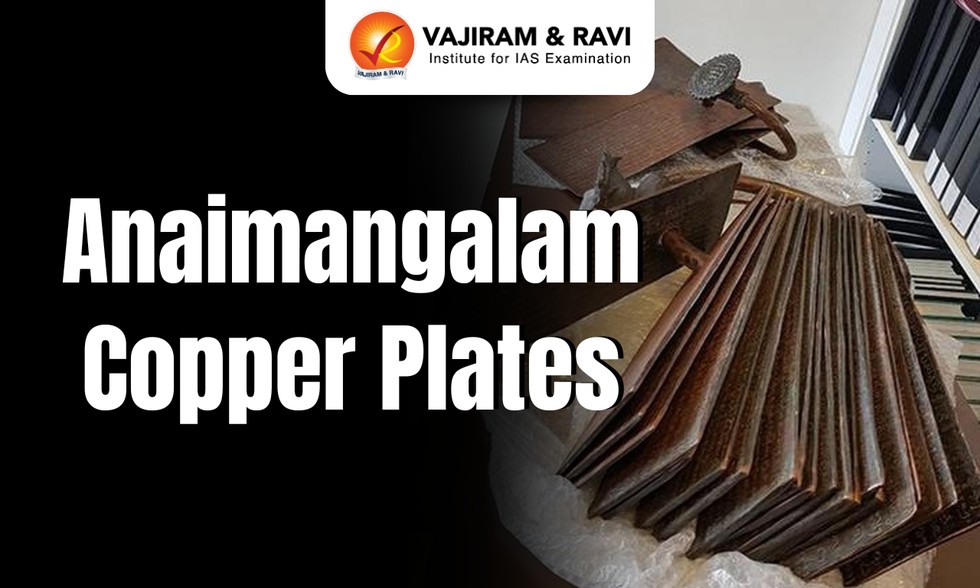
About Anaimangalam Copper Plates:
- The Anaimangalam Copper Plates, also known as the Leiden Plates, are 11th-century inscriptions associated with the Chola Empire.
- They are held together by a bronze ring locked with the royal seal of Rajendra Chola I.
- The inscriptions on the copper plates date to the reign of Emperor Rajaraja Chola I (985–1014 CE) and his son Rajendra.
- The plates are divided into two sections: one has texts in Sanskrit; the other, in
- The initial plates are in Sanskrit, offering a detailed genealogy of the Chola rulers and linking them to mythological figures.
- The majority of plates are in Tamil, documenting administrative and grant details.
- The Tamil section records Rajaraja’s grant of land revenues and taxes to the Chudamani Vihara, a Buddhist monastery in Nagapattinam.
- The monastery was built by Sri Mara Vijayotunga Varman, the ruler of the Srivijaya kingdom in present-day Indonesia.
- The land grants were originally issued by Rajaraja Chola I, but his son, Emperor Rajendra Chola I, later had the order engraved onto the copper plates to preserve it.
- The inscriptions provide a rare insight into the maritime links, religious pluralism, and cultural exchanges that existed between South India and Southeast Asia during the peak of the Chola period.
- The plates’ journey abroad began around 1700 when Dutch missionary Florentius Camper acquired them during the Dutch East India Company’s control of Nagapattinam.
- They eventually found their way to Leiden University Library, Netherlands, where they have been studied by scholars but are largely inaccessible to the public.