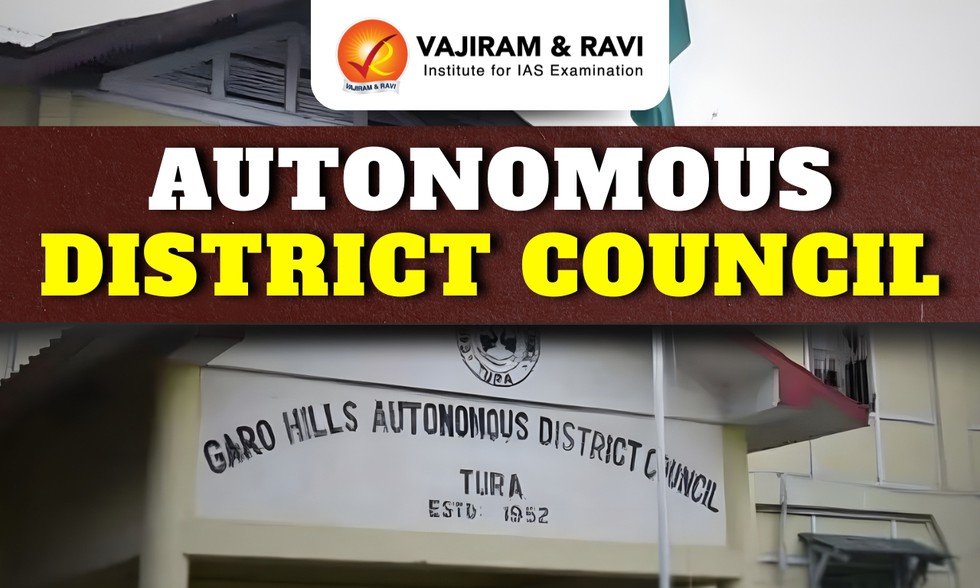
About Autonomous District Council:
- The Autonomous District Councils being autonomous bodies under the Sixth Schedule to the Constitution of India.
- The Sixth Schedule of the Indian constitution provides a list of ten tribal areas in Assam, Meghalaya, Tripura and and Mizoram.
- Each of these tribal areas constitutes an autonomous district. Each autonomous district has an Autonomous District Council (ADC).
- Membership of Autonomous District Council
- They have up to 30 members with a term of five years.
- Out of 30, four are nominated by the governor and the remaining 26 are elected on the basis of adult franchise.
- Tenure of Autonomous District Council: Five years from the date of their constitution.
- Functions of Autonomous District Council:
- They makes laws on land, management of forests, except reserved forests, appointment of traditional chiefs and headmen,
- They make rules regulating the inheritance of property, marriage, divorce, the constitution of village courts,
- It can establish, construct or manage primary schools, dispensaries, markets, ferries, fisheries, roads and so on in the district.
- It can also make regulations for the control of money lending and trading by non-tribals. But such regulations require the assent of the governor.
- Revenue source of Autonomous District Council:
- Taxes on professions, trades, callings and employment; taxes on animals, vehicles and boats;
- Taxes on the entry of goods into a market and sale therein, and tolls on passenger and goods carried on ferries; and taxes for the maintenance of school, dispensaries or roads.