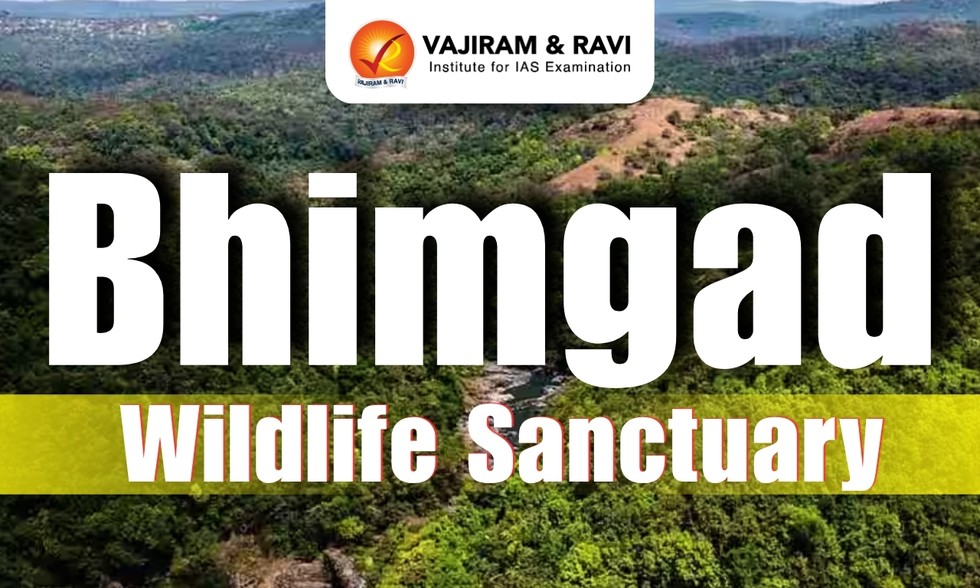
About Bhimgad Wildlife Sanctuary:
- Location: It spans over the Western Ghats in the Belgaum district of Karnataka.
- The sanctuary derives its name from Bhimgad Fort, built by the legendary Maratha king Shivaji in the 17th century.
- Bhimgad Fort acted as a strategic outpost to guard against Portuguese expansion from Goa.
- It shares its boundary with the north of Dandeli Wildlife Sanctuary, north-west of the Bhagwan Mahaveer Sanctuary and Mollem National Park, north of Netravali Wildlife Sanctuary, and east of Mhadei Wildlife Sanctuary.
- Terrain: It features rugged terrain with limestone formations and several caves, contributing to its unique biodiversity.
- Rivers: The sanctuary is the origin of several rivers, including the Mhadei, Malaprabha, and Tillari and several perennial streams.
- It is most famous for the Barapede Caves, the only known breeding ground of the Wroughton’s Free-tailed Bat, a threatened species on the verge of extinction.
- Vegetation: The dominant vegetation of the forest comprises tropical and subtropical moist broadleaf forests.
- Flora: Forests are dominated by towering trees like Malabar teak, rosewood, and various species of dipterocarps
- It also hosts a number of medicinal plants.
- Fauna:
- It provides habitat for several endangered species, such as the Indian sloth bear, Indian pangolin, and the elusive Black Panther.
- Other notable residents include the Malabar giant squirrel, gaur, sambar deer, and a plethora of bird species, including the Malabar trogon and the great Indian hornbill.
- Reptiles: It serves as ideal breeding grounds for the King Cobra, the world’s longest venomous snake.