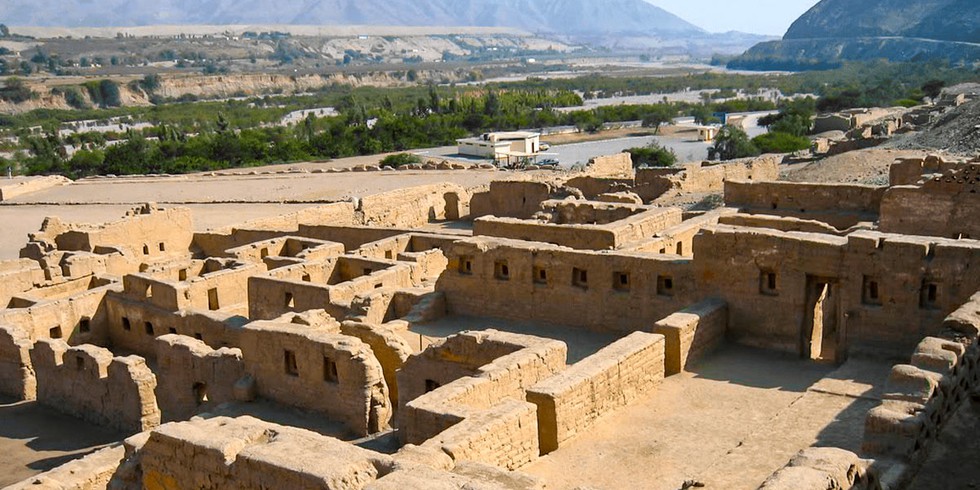
New archaeological evidence reveals that seabird guano – nutrient-rich bird droppings - may have been a major factor in the rise of Peru’s precolonial Chincha Kingdom.
About Chincha Kingdom:
The 'Chincha Kingdom,' which was established in the coastal region of modern-day Peru, was a powerful ancient state that flourished before the rise of the Inca Empire.
It ruled the Chincha Valley.
The Chincha Kingdom and its culture were very strong between 900 CE and 1450 CE. This time is known as the Late Intermediate Period in pre-Columbian Peru.
It was organised into specialist communities such as fisherfolk, farmers, and merchants.
The Chinchas did not build enormous cities but left important marks in their religious and administrative constructions.
Their temples, palaces, and fortresses were built mainly with adobe, a technique they mastered skillfully.
They applied stucco to decorate walls,shaping figures of fish heads, gannets, and seabirds.
The dwellings of most of their inhabitants were built around these enclosures, made with mats and reeds.
An important old ruin linked to the Chincha is La Centinela, found near the city of Chincha Alta.
Decline:
Conquered by the Inca Empire around 1476 CE.
Later affected by Spanish conquest in the 16th century. The population drastically declined due to diseases and colonization.
A new analysis suggests that the secret to the Chincha Kingdom's prosperity was seabird droppings (guano).
The analysis indicates that the nutrient-rich droppings, high in nitrogen, acted as a fertilizer, increasing corn yields and significantly contributing to the economic development of the time.
Dear Student,
You have still not entered your mailing address. Please enter the address where all the study materials will be sent to you. (If applicable).