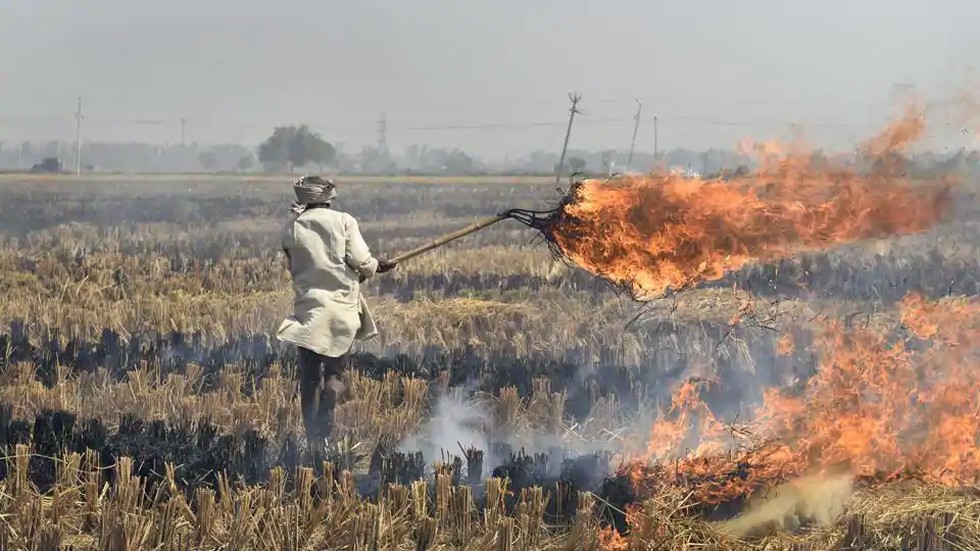
About:
- The findings were based on a study of the health records of 250,000 people in Haryana (which sees a spike in crop burning episodes in winter), and Andhra Pradesh and Tamil Nadu, which don’t see similar burning episodes.
- The study is to appear in the peer-reviewed International Journal of Epidemiology.
- The researchers used health records and satellite data from September 2013-February 2014.
Key Findings of the study:
- The burning of agricultural residue increases the risk of respiratory illnesses by threefold for those who experience it.
- It may also be responsible for an annual $30 billion (approximately ₹2 trillion) loss in terms of days of work lost in States affected by crop burning,
- Living near 100 fires a day is ‘leading risk factor’ for Acute Respiratory Illness. This outweighs factors like cracker burning in Diwali or high motor vehicle congestion.
- Whereas high-intensity fire exposure was virtually absent in south India, 17.5% of individuals in Haryana lived in a district where 100 or more fires per day were observed by the satellite.
- A lancet study found that 12.5% of the total deaths in India were attributable to air pollution.
- Delhi was the state with the highest annual population-weighted mean PM2.5 followed by Uttar Pradesh, Bihar and Haryana in North India.
Zero tolerance:
- In 2013, the National Green Tribunal (NGT) issued a directive to Punjab, Haryana and Uttar Pradesh, asking them to ban stubble burning.
- The Environment Ministers of these States as well as top officials at the Centre declared a “zero tolerance” policy on the burning of stubble, which has been estimated to contribute anywhere from 7% to 78% of the particulate matter-emission load in Delhi during winter.