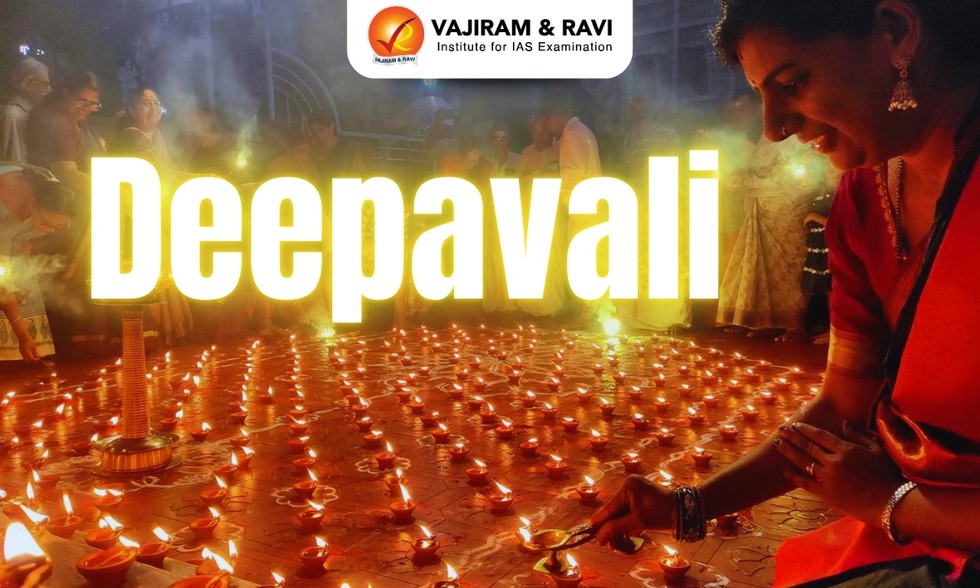
Recently, Deepavali has been inscribed on UNESCO’s List of the Intangible Cultural Heritage of Humanity.
About Deepavali:
Deepavali, also known as Diwali, is the festival of lights celebrated across India.
‘Deepa’ means lamp or light and ‘Vali’ means string or row, and Deepavali means rows of lights.
It is celebrated on Kartik Amaavasya, which typically falls in October or November.
The fundamental philosophy of Deepavali encompasses the celebration of prosperity, renewal, and abundance for all individuals.
Celebration of Deepavali:
It begins with Dhanteras, a day of auspicious beginnings when families buy new metalware or essentials that symbolise prosperity.
The second day marks Naraka Chaturdashi, observed with rituals and lighting lamps to dispel negativity and welcome positive energy.
The third day is the highlight of Deepavali- the sacred Lakshmi-Ganesha Puja.
On the fourth day, families and friends visit one another, exchange gifts, and reconnect, strengthening their bonds and shared happiness.
The celebrations conclude with Bhai Dooj, a heartfelt tribute to the bond between brothers and sisters, observed with prayers, blessings, and meaningful rituals.
It is the 16th Indian element on UNESCO’s List of the Intangible Cultural Heritage of Humanity.
Dear Student,
You have still not entered your mailing address. Please enter the address where all the study materials will be sent to you. (If applicable).