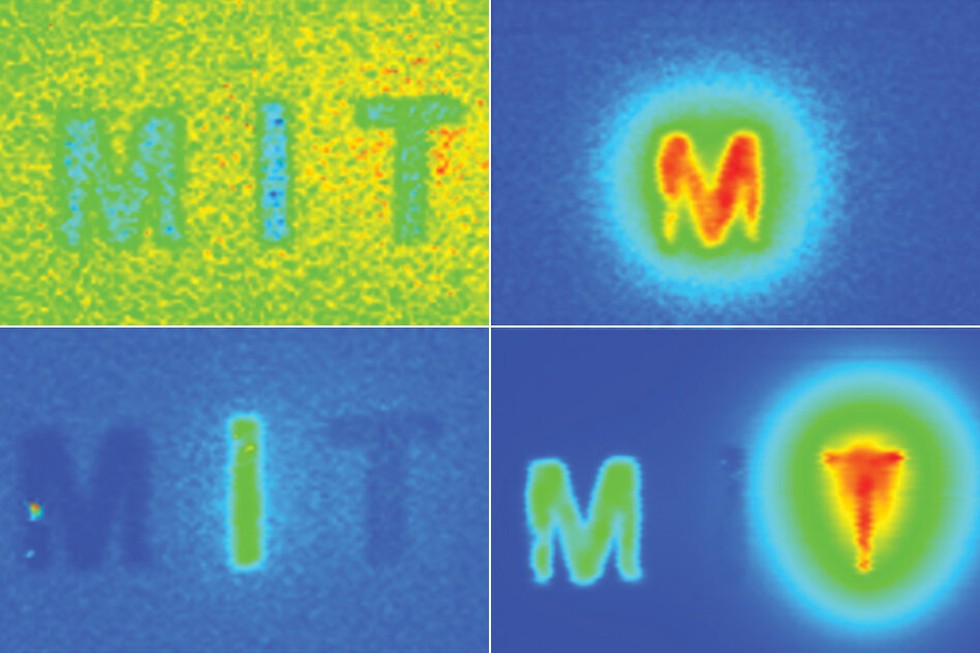
The researchers at the Massachusetts Institute of Technology (MIT) in the US have developed an optical imaging system, named "DOLPHIN," for finding tiny tumours.
About:
DOLPHIN is an optical imaging system which could be deployed to find tiny tumours, as small as a couple of hundred cells, deep within the body.
It relies on near-infrared light, to track a 0.1-millimetre fluorescent probe through the digestive tract of a living mouse. Researchers also showed that they can detect a signal to a tissue depth of eight centimetres, far deeper than any existing biomedical optical imaging technique.
The researchers hope to adapt their imaging technology for early diagnosis of ovarian and other cancers that are currently difficult to detect until late stages.
Existing methods for imaging tumours all have limitations that prevent them from being useful.
Most have a trade-off between resolution and depth of imaging, and none of the optical imaging techniques can image deeper than about three centimetres into tissue.
Commonly used scans such as X-ray computed tomography (CT) and magnetic resonance imaging (MRI) can image through the whole body. However, they cannot reliably identify tumours until they reach about one centimetre in size.
Dear Student,
You have still not entered your mailing address. Please enter the address where all the study materials will be sent to you. (If applicable).