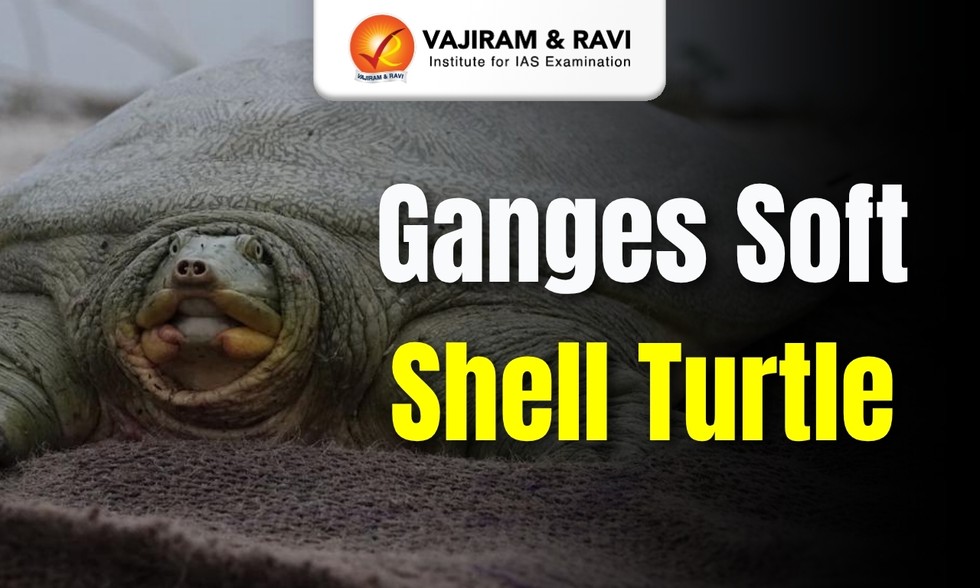
About Ganges Soft-shell Turtle:
- It is one of the largest freshwater turtle species in the world.
- It is also known as the Indian softshell turtles (Nilssonia gangetica)
- Appearance:
- It has a long neck and tube-like snouts help them to extend their nose out of the water to breathe.
- Habitat: These turtles inhabit deep rivers, streams, canals, lakes and ponds, typically preferring areas with sandy or muddy bottoms.
- They thrive in turbid water and spend most of their time hidden under the sand.
- Geographical Distribution: They are found in Afghanistan, India, Bangladesh and Pakistan.
- Mainly found in Indus, Ganges, Meghna, Brahmaputra, Yamuna, Narmada and Mahanandi river basins.
- Diet: Indian softshell turtles are omnivorous, feeding on fish, amphibians, mollusks, insects, carrion and aquatic plants.
- These turtles breed from February to April.
- Cultural Significance: These are often maintained in the temple ponds of Orissa where they are considered sacred.
- Threat: Habitat alteration and destruction, Poaching and illegal trading for traditional medicines, expansion of agriculture, commercial exploitation.
- Conservation Status
- IUCN Red List: Endangered
- Wildlife Protection Act, 1972: Schedule I.