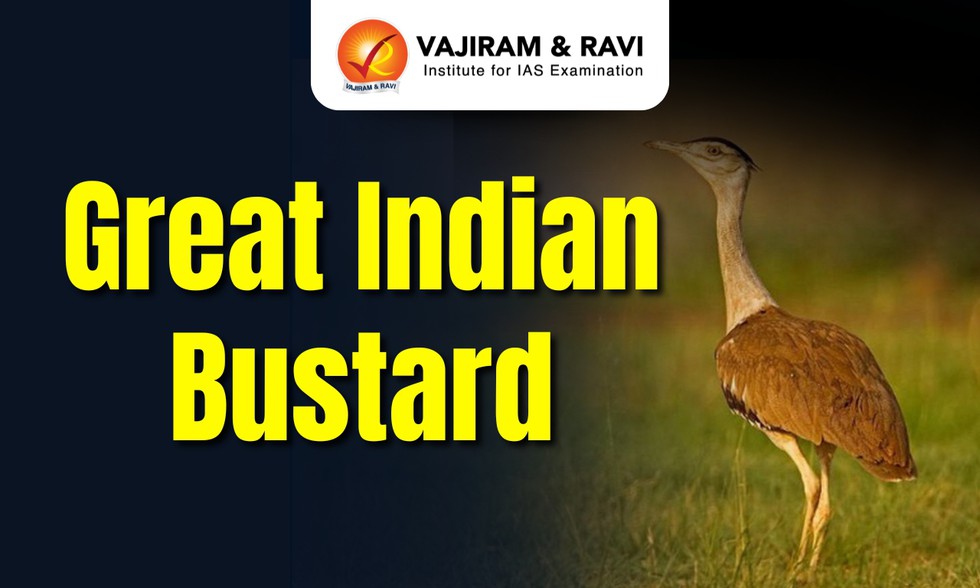
About Great Indian Bustard:
- It is a large terrestrial bird endemic to the Indian subcontinent.
- Habitat: The bird is primarily found in dry grasslands and scrublands, which are rapidly declining due to agricultural expansion and development.
- Distribution: Its core population survives in the Thar Desert, mainly in Jaisalmer and Barmer districts of Rajasthan.
- Characteristics of Great Indian Bustard:
- It is one of the heaviest flying birds in the world.
- Life Span: The bird has a lifespan of 12–15 years.
- Diet: These birds are opportunist eaters. Their diet ranges widely depending on the seasonal availability of food. They feed on grass seeds, insects like grasshoppers and beetles, and sometimes even small rodents and reptiles.
- Conservation Status:
- IUCN: Critically Endangered
- CITES: Appendix 1
- Wildlife (Protection) Act, 1972: Schedule 1