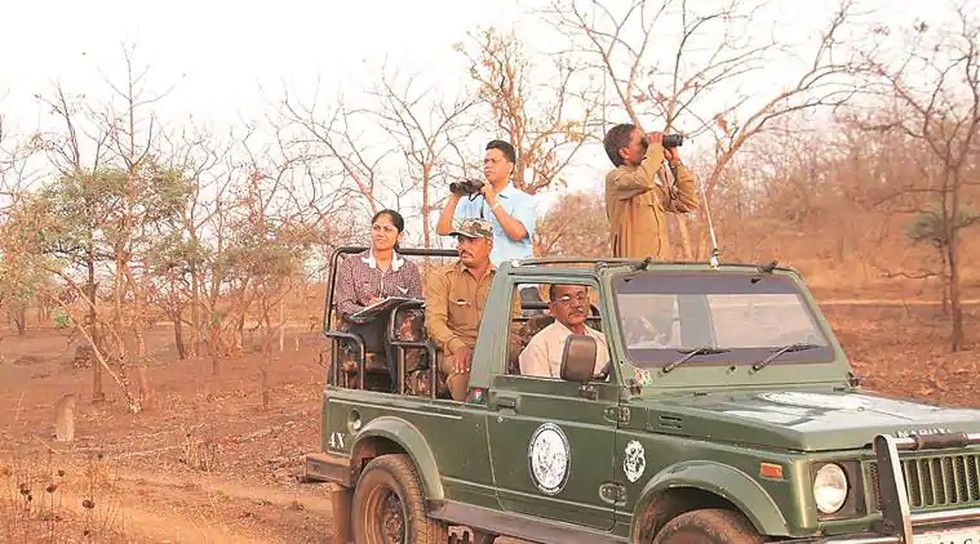
The forest department of Gujarat is conducting a census of herbivores in Gir forest and other protected areas, the last abode in the world of Asiatic lions.
About:
When conducted:
Every year during summer, the forest department of Gujarat conducts a census of herbivores in Gir forest and other protected areas, the last abode in the world of Asiatic lions.
During summer, foliage is reduced to its minimum levels in dry and deciduous tropical forests like Gir. Such a forest affords the best opportunity to spot maximum number of wild animals in the forest.
Animals covered:
The census covers wild ungulates like spotted deer, blue bulls (nilgais), sambars, Indian gazelles (chinkaras), four-horned antelopes (choshinga) and wild boars.
Additionally, the forest department also counts Indian langurs as well as peafowl.
Wild ungulates and langurs are the main prey of Asiatic lions.
Significance:
A count of ungulates gives the forest department an idea of the availability of prey-base for the top predator lions as well as other predators like leopards, hyenas, wolves etc.
Such a count helps the forest department to notice any changes in the food availability for lions and also indicates the health of the forest in general and of fauna in particular.
What has been the herbivore population trend in recent years? Since 1974, the population of herbivorous in Gir forest has been on the rise. In 2013, the population of ungulates was estimated to be 1,26,893 or 76.49 animals per square kilometres.
Dear Student,
You have still not entered your mailing address. Please enter the address where all the study materials will be sent to you. (If applicable).