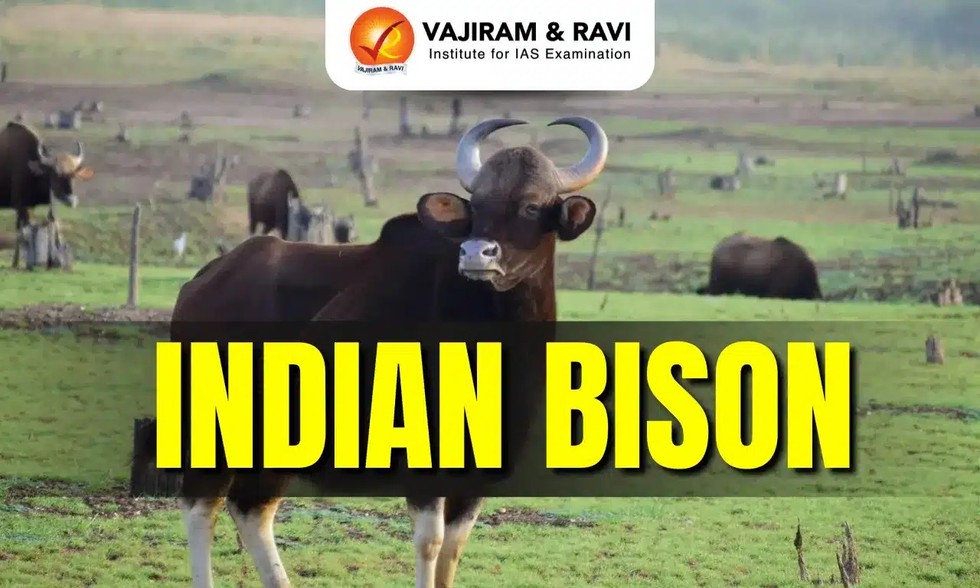
About Indian Bison:
- It is the largest species among the wild cattle and the Bovidae.
- Distribution: These are indigenous to the South and Southeast parts of Asia.
- Habitat: They are primarily found in evergreen and semi-evergreen forests along with moist deciduous forests with open grasslands.
- They prefer hilly-terrains with large and undisturbed forest tracts and abundant water.
- Conservation Status of Indian Bison:
- IUCN Red List: Vulnerable
- CITES: Appendix I
- Wild Life Protection Act, 1972: Schedule I
- Ecological Significance: It plays a vital role in maintaining ecological balance in forests besides serving as important prey species for tigers.
- They also help shape vegetation dynamics and contribute to seed dispersal.
- Threats: Loss of habitat throughout most of their range. It is susceptibility to domestic cattle diseases like rinderpest, hoof, or mouth disease.
Key Facts about Debrigarh wildlife sanctuary
- Location: It is situated in the Bargarh district of Odisha.
- It is located near Hirakud Dam (the longest dam in India and the longest earthen dam in the world) on the Mahanadi River.
- Vegetation: Most of the plant sanctuary is covered with mixed and dry deciduous forest.
- Flora: Major trees found here are Sal, Asana, Bija, Aanla, Dhaura, etc..
- Fauna: Indian leopards, sloth bears, chousingha (four-horned antelope), sambar deer, gaurs (Indian bison).