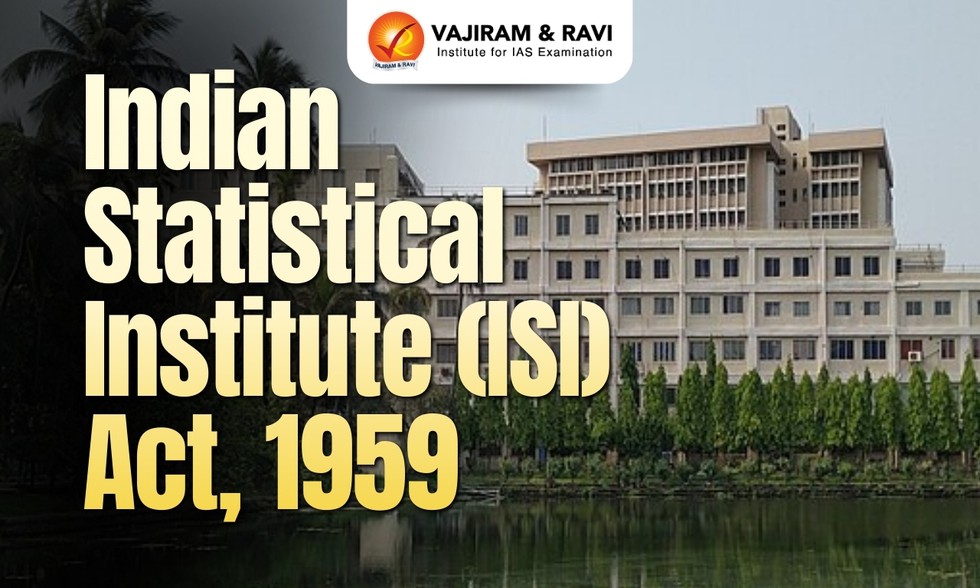
About Indian Statistical Institute (ISI) Act, 1959:
- The Indian Statistical Institute was founded by Professor P.C. Mahalanobis in Calcutta in 1931.
- The ISI, established earlier as a society, plays a crucial role in statistical research, education, and training in India.
- The ISI Act, 1959 primarily applies to the ISI, its governing body, employees, and students.
- The Act aimed to recognize the ISI’s contributions to national development and provide it with the necessary autonomy and support to carry out its functions effectively.
- The ISA Act 1959 declared the ISI an institution of national importance.
- This Act falls under the Ministry of Statistics and Programme Implementation.
- Salient Features of ISI Act, 1959:
- Empowers the ISI to grant degrees and diplomas in statistics, mathematics, quantitative economics, computer science, and related subjects.
- Provides for grants, loans, and other financial assistance from the Central Government.
- Mandates the audit of the Institute’s accounts by qualified auditors.
- Requires prior approval from the Central Government for certain actions by the Institute, such as altering its objectives, amending its memorandum, or disposing of certain properties.
- Provides for the constitution of committees by the Central Government to prepare the Institute’s program of work and review its activities.
- Empowers the Central Government to issue directions to the Institute.
- Allows the Central Government to assume control of the Institute under certain circumstances.