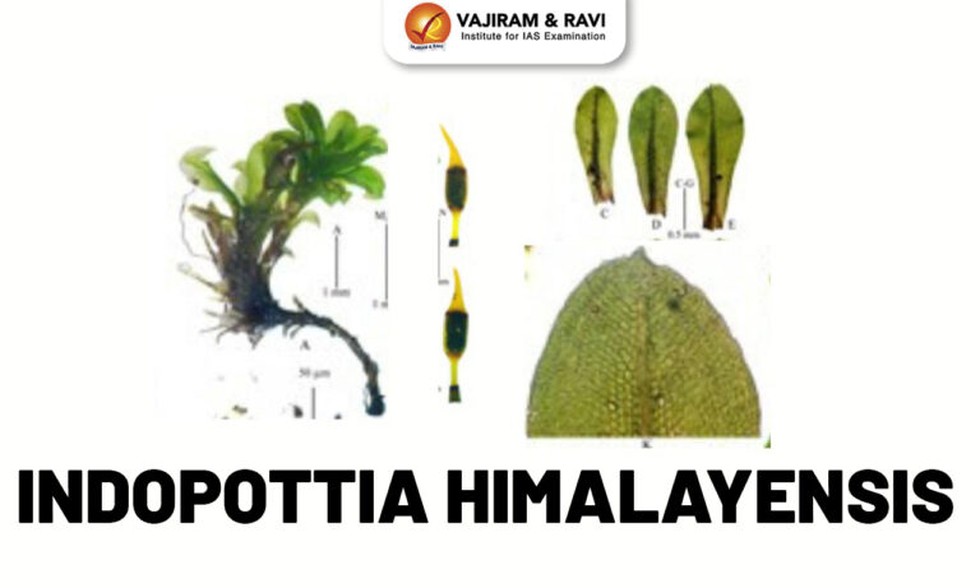
About Indopottia Himalayensis:
- It is a new moss species discovered from high-altitude forests of the Western Himalayas in Uttarakhand state.
- It is only the third species of its kind ever identified globally.
- Other two species reside far away in the Western Ghats of southern India and the mountains of Thailand.
- The research team chose the name Indopottia himalayensis as a tribute to the magnificent Himalayan mountain range.
- Features:
- It is entirely terrestrial, thriving directly on soil-covered rocks.
- This moss produces a single, upright, cylindrical spore-capsule.
- This capsule features a distinctive lid that bends sideways when dry.
- Its leaves lack the specific patch of transparent, bulging cells found in its closest relatives.
Key Facts about Moss:
- It is a small nonvascular spore-bearing land plant belongs to the taxonomic division Bryophyta.
- It is among the earliest land plants and has colonised some of the harshest environments on the planet, including Antarctica, volcanic fields, and deserts.
- Types of Moss: There are three main types: peat moss, granite moss and true moss.
- Distribution: Mosses are distributed throughout the world except in salt water.
- Habitat: It is the small plant commonly found in damp, shady spots is already known for its resilience on Earth.