Recent decision:
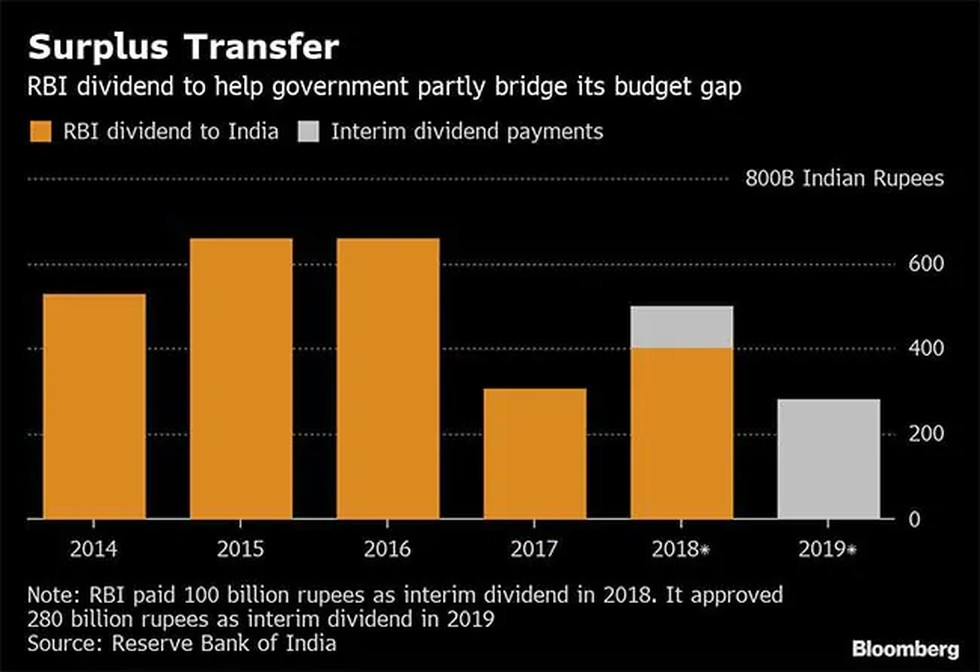
- The Reserve Bank of India (RBI) has decided to transfer an additional ₹28,000 crore as dividend to the Union government for the half-year ended 31 December 2018.
- The move could help the government meet its revised fiscal deficit target of 3.4% of GDP in 2018-19 amid a shortfall in revenue collections.
- This is beyond the ₹40,000 crore it has already paid during the year as surplus from its 2017-18 operations. This is the second successive year that the Reserve Bank will be transferring an interim surplus.
What is interim dividend?
- The interim dividend is the future income that the RBI has prepaid. This will have to be adjusted from its dividend payment due next year.
- RBI transfers its surplus amount to the government after making provisions for bad and doubtful debts, depreciation in assets, and contribution to staff and superannuation fund. The central bank follows a July-June financial year, while the central government follows an April-March year.
Comment:
- Transfers of dividends have become a bone of contention between the government and the central bank. Urjit Patel resigned from the post of RBI governor in December 2018 after alleged differences with the government on the issue.
- RBI set up an expert committee in December headed by former governor Bimal Jalan to review the economic capital framework of the bank. It will suggest how the central bank should handle its reserves and whether it can transfer its surpluses to the government. It is to submit its report by March-end.