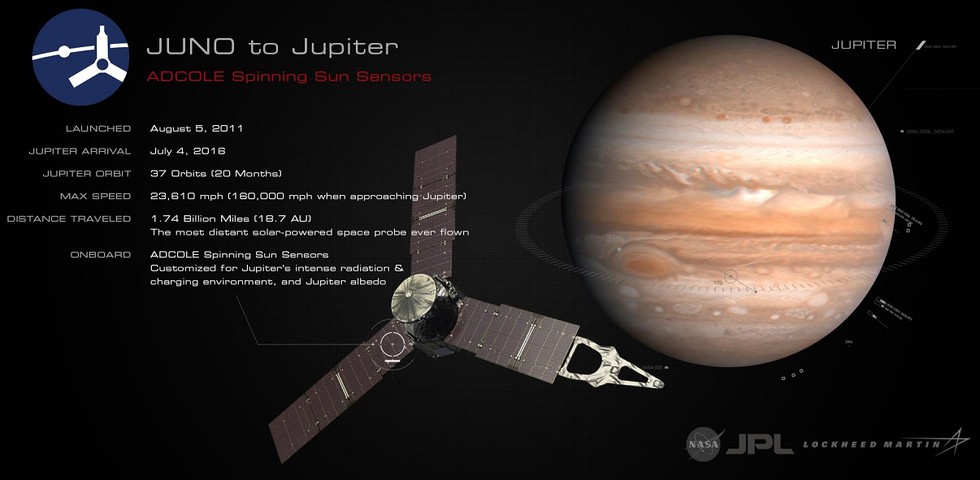
According to analysis of data collected by NASA's Juno spacecraft, Jupiter may have been smacked head-on by an embryonic planet 10 times Earth's mass not long after being formed, which had lasting effects on the Jovian core.
About:
Jupiter, a gas giant planet covered in thick red, brown, yellow and white clouds, boasts a diameter of about 89,000 miles (1,43,000 km).
Interior models based on Juno data indicated Jupiter has a large "diluted" core representing about 5 to 15 % of the planet's mass comprised rocky and icy material unexpectedly mixed with light elements like hydrogen and helium.
Computer models indicated that a head-on collision with a protoplanet - a planet in its formative stages - of roughly 10 Earth masses would have broken apart Jupiter's dense core and mixed light and heavy elements, explaining Juno's findings.
Dear Student,
You have still not entered your mailing address. Please enter the address where all the study materials will be sent to you. (If applicable).