
Jute Crop
Recently, the Jute Commissioner has imposed fresh stockholding limits on raw jute to curb excessive accumulation, directing entities holding stocks beyond the prescribed ceiling to sell and physically deliver the excess quantity by December 10.
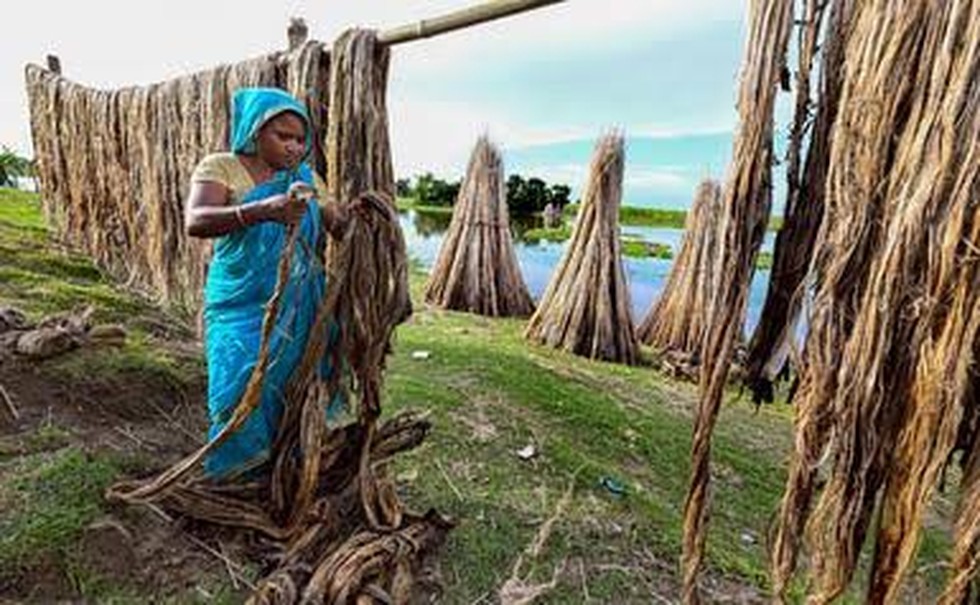
About Jute Crop:
- The Jute crop is the second most important fibre crop in India after cotton.
- It is a crop of humid tropical climates.
- Required Climatic Conditions for Jute Crop
- Climate: Relative humidity between 40-90%.
- Soil: It can grow in a wide range of soil but fertile loamy alluvial soil is better suitable.
- Temperature: It requires temperatures between 17° C and 41°C.
- Rain: It requires well distributed rainfall over 1200 mm which is ideal for cultivation and growth of jute.
- Generally sown in February and harvested in October; the crop matures in 8–10 months.
- Jute Distribution in India:
- Over 99% of India’s jute is produced in five states including West Bengal, Bihar, Assam, Odisha, and Andhra Pradesh.
- West Bengal (81% share), Bihar, Assam, Odisha and Andhra Pradesh (delta regions are important contributors).
- Applications: It is used in multiple ways like for making ropes, gunny bags, rugs, carpets, tarpaulins and many other products.
Source: Jute Commissioner caps raw jute stockholding, sets December 10 deadline to offload excess stocks