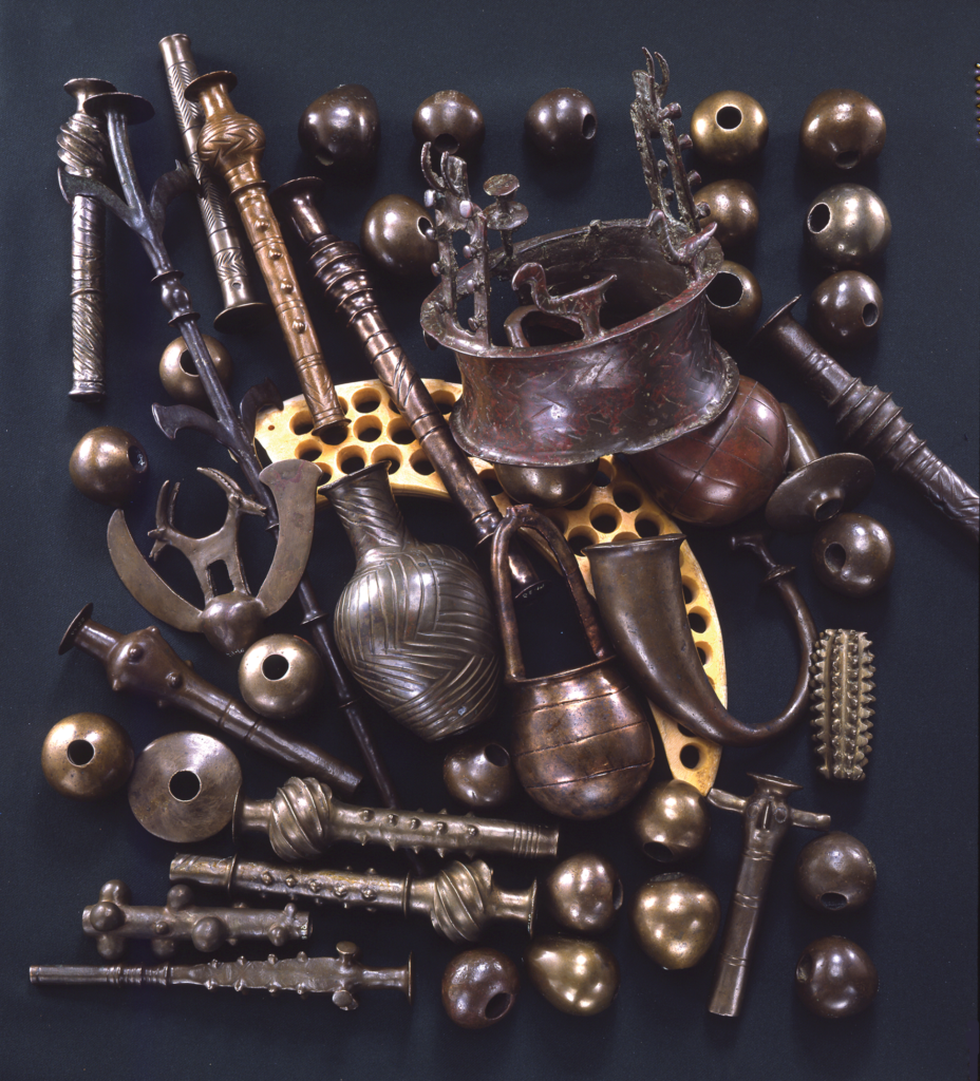
Archaeologists in Italy recently made a remarkable discovery of a 5,000-year-old cemetery that belonged to a Copper Age society.
About Copper Age:
The Copper Age, or Chalcolithic time period, is a period that spans from about 5,000 to 2,000 years ago, depending on the region.
It was a transitional phase from the Neolithic period (the New Stone Age) to the Bronze Age.
Features:
It is characterized by the emergence of metallurgy, especially the use of copper, along with stone tools.
It coincides with the beginnings of craft specialization, the development of agriculture, long-distance trade, and increased sociopolitical complexity.
Farmers typically raised domestic animals such as sheep-goats, cattle, and pigs, a diet supplemented by hunting and fishing.
Crops grown by Chalcolithic farmers included barley, wheat and pulses.
A main identifying characteristic of the Chalcolithic period is polychrome painted pottery.
Houses built by Chalcolithic farmers were constructed of stone or mudbrick.
One characteristic pattern is a chain building, a row of rectangular houses connected to one another by shared party walls on the short ends.
Another pattern, seen in larger settlements, is a set of rooms around a central courtyard, which may have facilitated the same sort of social arrangement.
In archaeology, the first signs of massacres, battles and warrior burials begin appearing with the rise of the Copper Age.
By the end of the Copper Age, people discovered that by adding tin to copper, a stronger and more durable metal could be created: bronze. From that point on, the Bronze Age begins.
Dear Student,
You have still not entered your mailing address. Please enter the address where all the study materials will be sent to you. (If applicable).