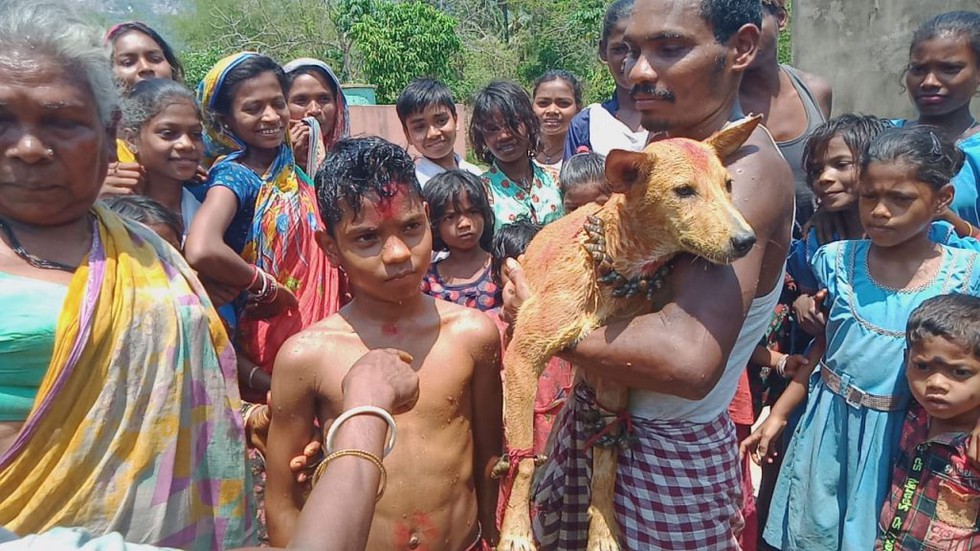
The Ho Samaj Yuva Mahasabha (AHSYM) recently called upon tribal people not to celebrate picnics but to observe ‘Black Day’ on January 1 and 2.
About Ho Tribe:
The Ho, or Kolha, people are an Austroasiatic Munda ethnic group of India.
They call themselves the Ho, Hodoko, and Horo, which mean ‘human’ in their own language.
Distribution:
They are mostly concentrated in the Kolhan region of Jharkhand and Odisha.
Ho also inhabit adjacent areas in the neighboring states of Odisha, West Bengal, and Bihar.
They also live in Bangladesh and Nepal.
Language: Ho people speak the Ho language, an Austroasiatic language closely related to Mundari.
Occupation: The majority of the Ho tribe is involved in agriculture, either as landowners or labourers, while others are engaged in mining.
The men and women of this community wear very minimal dress. The women prefer to wear tribal jewelleries.
Women have higher status among the Ho than they do in most tribes.
Dance is very important in Ho culture. Most villages have a dedicated dancing ground, called akhra, usually consisting of a cleared space of hard ground under a spreading tree.
Traditional Ho music incorporates native instruments, including a dama (drum), dholak, dumeng (mandar), and the rutu (flute).
Religion:
The majority of the Ho have their own nature-based religion (Sarnaism) that doesn't fit in with Hinduism.
Dear Student,
You have still not entered your mailing address. Please enter the address where all the study materials will be sent to you. (If applicable).