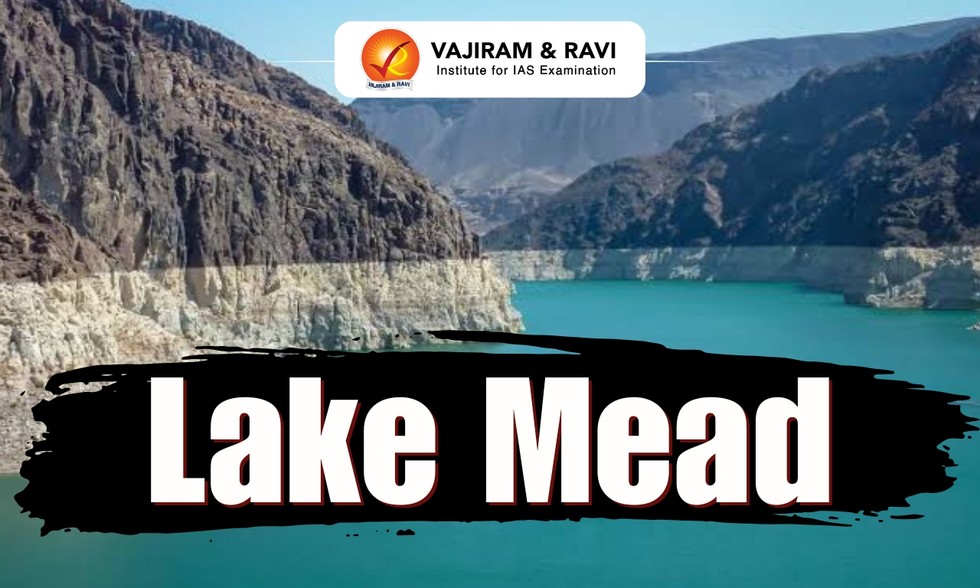
About Lake Mead:
- It is one of the largest man-made lakes in the world, located on the border between Southern Nevada and northwestern Arizona in the United States.
- It was formed in the mid-1930s by the damming of the Colorado River through the construction of the Hoover Dam.
- It is the largest reservoir in the U.S. when it's full of water.
- When Lake Mead is completely full, it stretches 180 km long. It can be 162 m deep at its deepest point.
- Most of the water is drawn from Rocky Mountain snowmelt and runoff.
- It supplies drinking water for about 25 million people.
- It is home to many species of mammals, including desert bighorn sheep, mountain lions, beavers, coyotes, and bats.
- Since 1999, periods of extended drought paired with increased water demands driven by population growth have caused a drastic drop in lake levels.
Key Facts about Colorado River:
- It is a major river of North America.
- Course:
- It rises in the Rocky Mountains of Colorado, United States.
- The river drains a vast arid and semiarid sector of the North American continent.
- It is often referred to as the “Lifeline of the Southwest.”
- Lakes: It forms several major reservoirs, including Lake Mead and Lake Powell.
- International boundary: Colorado forms an international boundary between Arizona (US) and Mexico.
- Tributaries: The Colorado River has several tributaries, including Green, Gunnison, San Juan, Dolores, Little Colorado, Gila, and Virgin Rivers.
- One of the Colorado River’s most famous features is the Grand Canyon, which it carved over millions of years.
- Grand Canyon landscape is a UNESCO World Heritage Site and a major tourist attraction.
- The river also flows through Canyonlands National Park and Horseshoe Bend in Arizona.