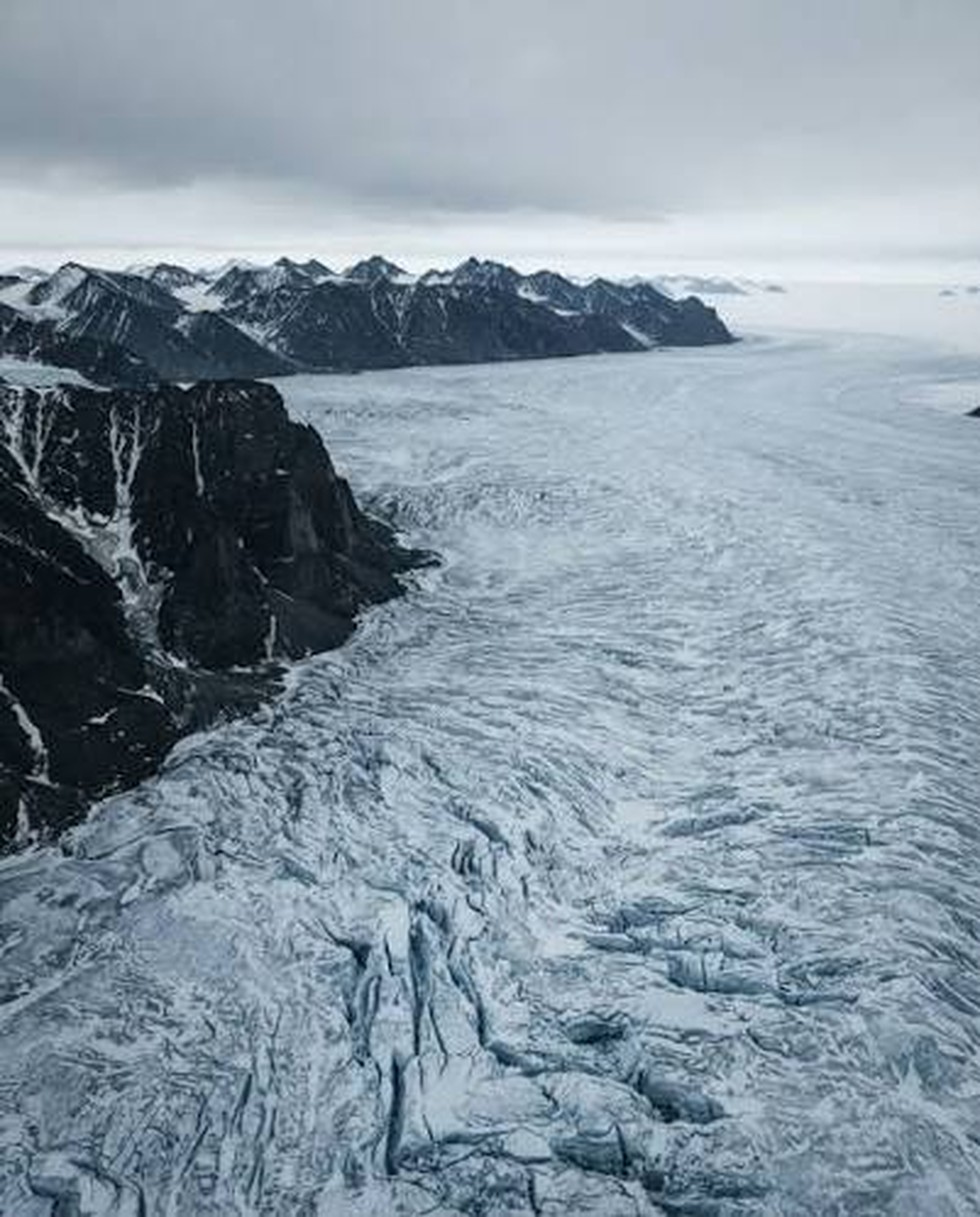
In January 2019, a rare glacial flood caused Lake Untersee to rise by two metres after a neighbouring lake released 17.5 million cubic metres of water.
About Lake Untersee:
Lake Untersee, meaning "lower lake" in German, is a uniquely isolated freshwater lake in Antarctica.
It is one of Antarctica’s largest and deepest surface lakes.
Despite being a surface lake, it remains frozen throughout the year.
The lake is fed from seasonal meltwater draining from the edges of the nearby Anuchin Glacier, which flows south from the Gruber Mountains.
It is known for its distinctive water chemistry.
Its ice-covered waters contain high levels of dissolved oxygen,very low levels of dissolved carbon dioxide, and a strongly alkaline, or basic, pH.
It is one of the only perennially frozen lakes with a community of large, conical stromatolites.
Stromatolites are layered microbial reef structuresformed by communities of photosynthetic microbes, mainly cyanobacteria.
The lake’s largest creatures are tardigrades—microscopic “water bear” invertebrates known for their ability to survive in extreme environments.
Although Lake Unter-See appears stable, scientists have observed occasional changes. During fieldwork in 2019, researchers noticed that the lake’s water levels had risen.
Dear Student,
You have still not entered your mailing address. Please enter the address where all the study materials will be sent to you. (If applicable).