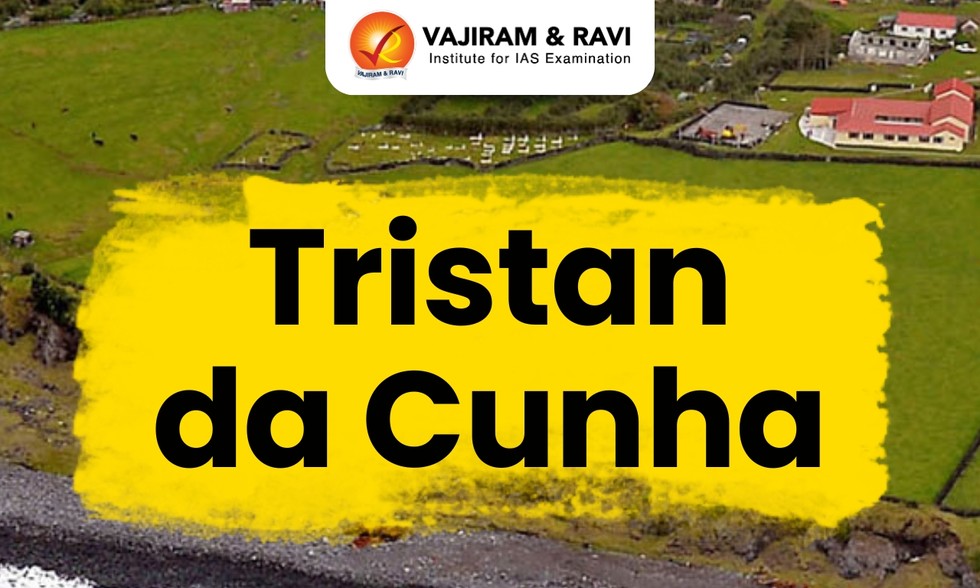
British military medics recently carried out a rare parachute mission to the remote South Atlantic island of Tristan da Cunha to assist a UK national suspected of contracting hantavirus after leaving the virus-hit cruise ship MV Hondius.
About Tristan da Cunha:
It is both a group of islands in the South Atlantic Ocean and the largest island of that group.
The archipelago is volcanic in origin.
It is about midway between southern Africa and South America.
It is considered the most remote inhabited chain of islands in the world.
The islands were discovered in 1506 by Portuguese explorer Tristão da Cunha, after whom they are named.
The island group is a constituent part of the British overseas territory.
The main island,Tristan da Cunha, has a small settlement named Edinburgh of the Seven Seas. It has an estimated population of 250 permanent residents.
Other islands in the Tristan Archipelago are uninhabited: two (Gough Island and Inaccessible Island) form a UNESCO World Heritage Site; Nightingale Island, Stoltenhoff and Alex (or Middle) Island also have globally significant biodiversity.
The archipelago contains no airstrip and is accessible only by boat or helicopter.
Tristan da Cunha has a unique economic and social structure in which land is communally owned and all families engage in farming.
Outsiders cannot settle or buy land on the islands.
In addition to agriculture, the other sectors of the economy are government and commercial fishing.
Dear Student,
You have still not entered your mailing address. Please enter the address where all the study materials will be sent to you. (If applicable).