Low vitamin D levels may make recovery from breast cancer surgery more painful, according to a study of 184 women undergoing mastectomy.
About Vitamin D:
Vitamin D (also referred to as calciferol) is a fat-soluble vitamin that is naturally present in a few foods, added to others, and available as a dietary supplement.
Also known as the sunshine vitamin, it is produced endogenously when ultraviolet (UV) rays from sunlight strike the skin and trigger vitamin D synthesis.
During periods of sunlight, vitamin D is stored in fat and then released when sunlight is not available.
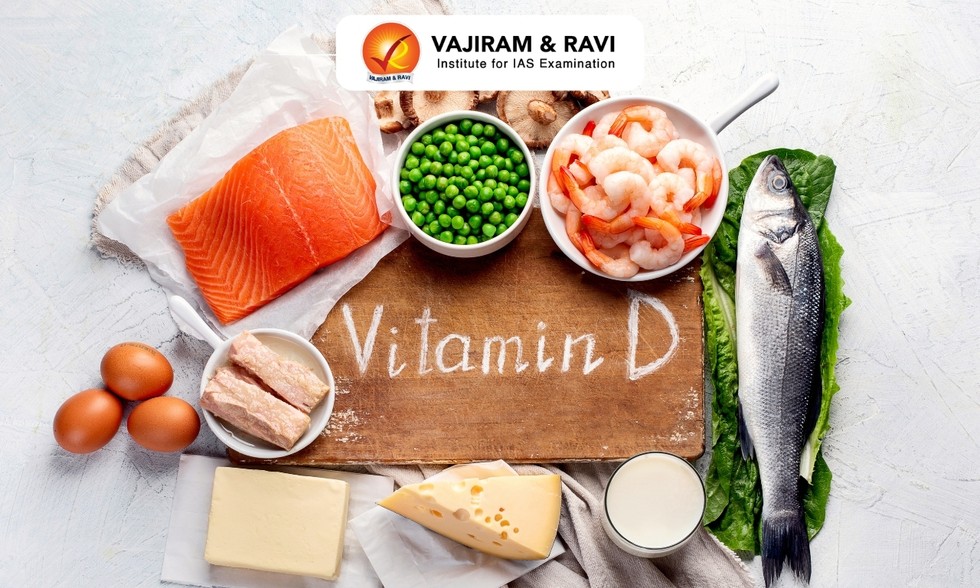
Very few foods naturally contain vitamin D. Most people get vitamin D in their diet from foods that are fortified. This means that vitamin D is added to the food. These foods may include milk, cereal, and yogurt.
Foods that naturally have vitamin D include egg yolks, saltwater fish, and liver.
The amount of vitamin D you need each day depends on your age.
Why is Vitamin D so important?
Vitamin D promotes calcium absorption and helps maintain adequate levels of calcium and phosphorus in the blood, which is necessary for healthy bones and
Without sufficient vitamin D, bones can become thin, brittle, or misshapen.
Vitamin D has other roles in the body, including reduction of inflammation as well as modulation of such processes as cell growth, neuromuscular and immune function, and glucose metabolism.
Vitamin D Deficiency:
In children, vitamin D deficiency causes rickets, a disease in which the bones become soft, weak,deformed, and painful.
In teens and adults, vitamin D deficiency causes osteomalacia, a disorder that causes bone pain and muscle weakness.
Vitamin D deficiency may be more common in people with higher skin melanin content (darker skin) and who wear clothing with extensive skin coverage.
Can Vitamin D be Harmful?
Very high levels of vitamin D in your blood can cause nausea, vomiting, muscle weakness, confusion, pain, loss of appetite, dehydration, excessive urination and thirst, and kidney stones.
Extremely high levels of vitamin D can cause kidney failure, irregular heartbeat, and even death.
Dear Student,
You have still not entered your mailing address. Please enter the address where all the study materials will be sent to you. (If applicable).