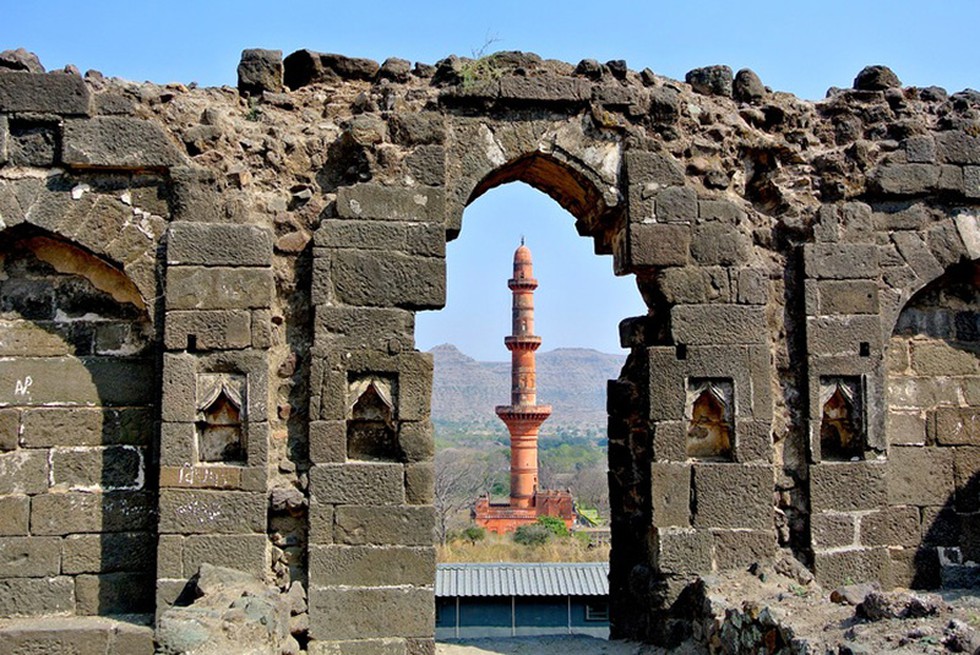
Remains of a 12th-century Mandir-style stone pillar from the Seuna (Yadava) dynasty have been recently discovered near the Vena River in Hinganghat, Wardha district, Maharashtra.
About Yadava Dynasty:
The Yadava Dynasty, also known as the Seuna Dynasty, ruled around 12th–14th-in central India.
At its zenith they ruled a vast kingdom stretching from the River Tungabhadra to the River Narmada, including modern Maharashtra, the north of Karnataka, and parts of Madhya Pradesh.
Originally a feudatory of the Eastern Chalukyas of Kalyani, the dynasty became paramount in the Deccan under Bhillama (c. 1187–91), who founded Devagiri (later Daulatabad) as his capital.
Under Bhillama’s grandson Singhana (reigned c. 1210–47), the dynasty declared independence and reached its height, as the Yadava campaigned against the Hoysalas in the south, the Kakatiyas in the east, and the Paramaras and Chalukyas in the north.
Later rulers continued expansionist wars with varying success.
During the reign of the last Yadava king, Ramachandra (reigned 1271–c. 1309), a Muslim army commanded by the Delhi sultan Alauddin Khilji invaded the kingdom in 1294 and imposed tributary status.
A later attempt to throw off the vassalage brought another Delhi army; Ramachandra was imprisoned but was later released and remained loyal to Delhi until his death.
In a further attempt, his son and successor died in battle, and the kingdom was annexed by the Khilji empire in 1317.
The foundations of Marathi culture were laid by the Yadavas, and the peculiarities of Maharashtra's social life developed during their rule.
The Hemadpanti architectural style (stone masonry without mortar) is associated with this period.
Dear Student,
You have still not entered your mailing address. Please enter the address where all the study materials will be sent to you. (If applicable).