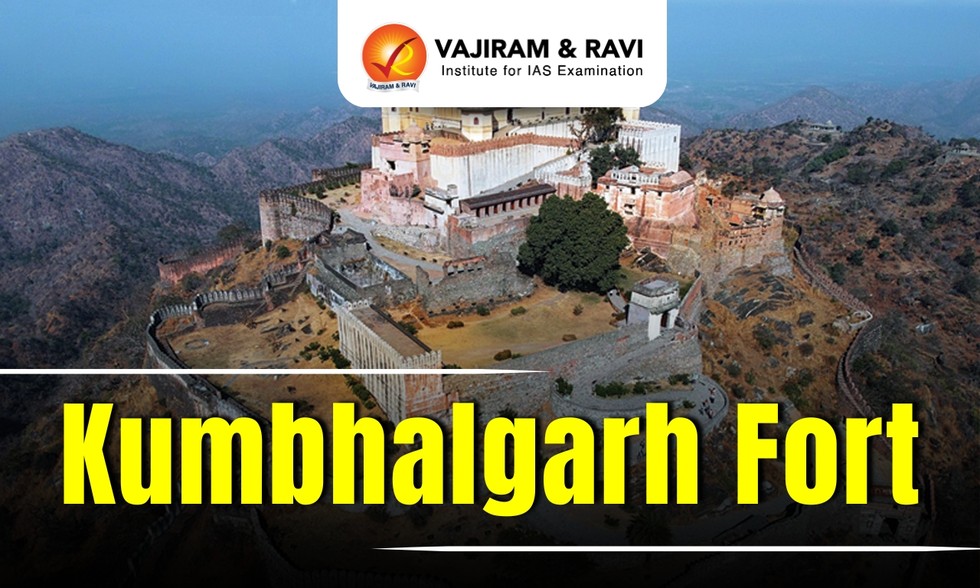
Kumbhalgarh Fort Wall in Rajasthan, often called the Great Wall of India, has been named the second-longest surviving wall in the world by a UNESCO survey.
About Kumbhalgarh Fort:
It is located in the Rajsamand district of Rajasthan.
It is strategically located in the western Aravalli hills.
Considered to be the second most significant citadel in the Mewar region after Chittorgarh, this majestic fort was constructed in the 15th century AD by Rana Kumbha, the ruler of the Kingdom of Mewar.
Spanning over 36 kilometers, its walls are second only to the Great Wall of China, earning it the moniker “the Great Wall of India.”
The fort has also been designated a UNESCO World Heritage Site as part of the group of Hill Forts of Rajasthan.
The fort contains seven fortified gateways and ancient temples—both, Hindu and Jain, as well as the Lakhola Tank, the most famous tank within the fort, which was built by Rana Lakha.
For centuries, Kumbhalgarh Fort served as a refuge for Mewar rulers during times of war.
It is the birthplace of Mewar’s legendary king, Maharana Pratap. Maharana Pratap led numerous battles against the Mughal Empire, with Kumbhalgarh serving as his sanctuary..
The fort is surrounded by the Kumbhalgarh Wildlife Sanctuary.
Dear Student,
You have still not entered your mailing address. Please enter the address where all the study materials will be sent to you. (If applicable).