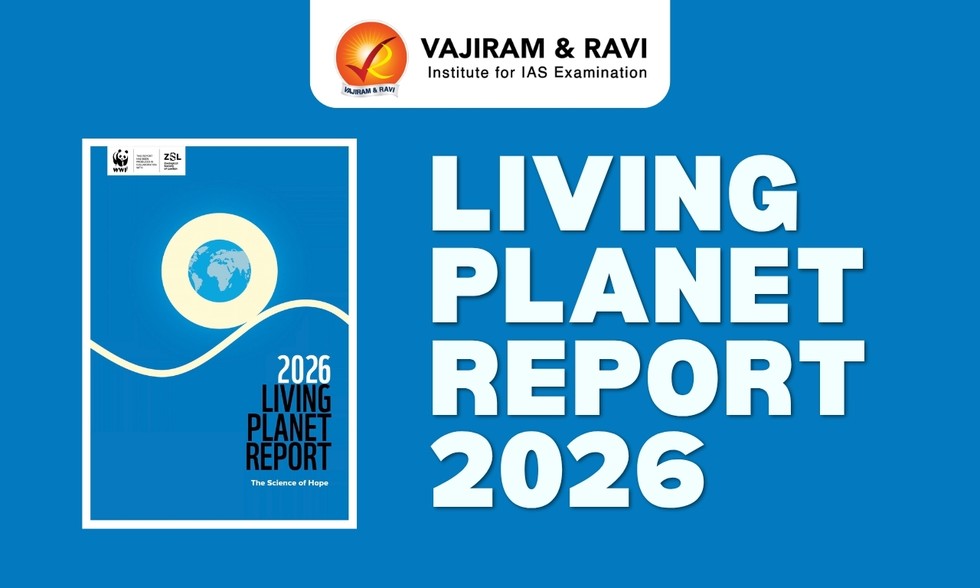
About Living Planet Report 2026:
- It is published biennially by the World Wide Fund for Nature (WWF).
- It is a comprehensive study of trends in global biodiversity and the health of the planet.
- This year it is the 16th edition of the report.
- It utilises the Living Planet Index (LPI) to track average trends in wildlife populations.
- The LPI is a measure of the state of the world’s biological diversity based on population trends of vertebrate species from terrestrial, freshwater and marine habitats.
- It measures the average rate of change in population size across the species monitored.
Key Highlights of Living Planet Report 2026
- Global Trend: The average size of monitored vertebrate populations declined 73% over 52 years between 1970 and 2022.
- Ecosystem-wise Decline: The strongest declines were seen in freshwater ecosystems with average population sizes plunging 85%, followed by terrestrial ecosystems, at 69% and marine ecosystems at 59%.
- Region wise decline: At a regional level, the steepest declines since 1970 have been recorded in Latin America and the Caribbean (-95%), Africa (-80%), and Asia and the Pacific (-49%).
- Recovery of Biodiversity: The report highlights recoveries in populations of green turtles, bluefin tuna, tigers and southern African elephants,
- The report noted rise in global wild tiger numbers between 2010 and 2025 — from 3,200 to around 5,700 individuals.
- Causes of Wildlife Decline: Habitat loss and degradation, overexploitation of resources, climate change, and impact of invasive species, pollution and disease are some of the dominant drivers of changes across ecosystems and wildlife populations.