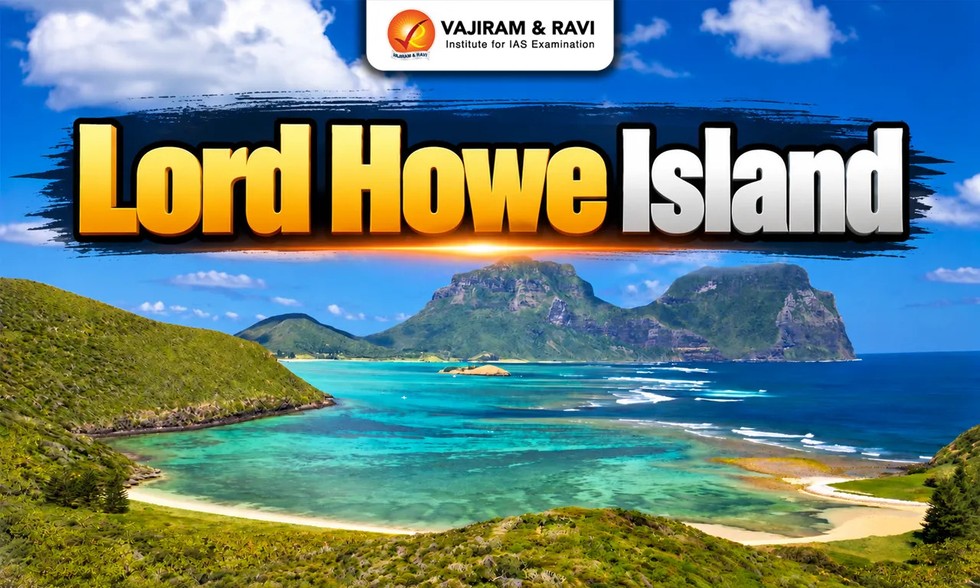
A 16-year study from Lord Howe Island found record levels of plastic ingestion in fledgling sable shearwaters.
About Lord Howe Island:
It is a crescent-shaped, volcanic island.
Discovered By: It was discovered in 1788 and named for Admiral Lord Howe by Lieutenant Henry Lidgbird Ball of the British navy.
Flora and Fauna:
About 47% of the island's vascular plants are endemic, including the famous Kentia Palm (Howea forsteriana).
It has endemic species like the Lord Howe Island Phasmid which is considered the world’s largest stick insect, and the flightless Lord Howe Woodhen (Gallirallis sylvestris).
It hosts the world’s largest known population of sable shearwaters.
The Lord Howe Island Group is a UNESCO World Heritage Site that boasts countless unique plants and animals, many of which are endemic to the region.
Dear Student,
You have still not entered your mailing address. Please enter the address where all the study materials will be sent to you. (If applicable).