
Mahua Tree
In Madhya Pradesh's Bhimpur block, tribal communities that once extracted their own oil from mahua (Madhuca longifolia) began depending on market-bought resources.
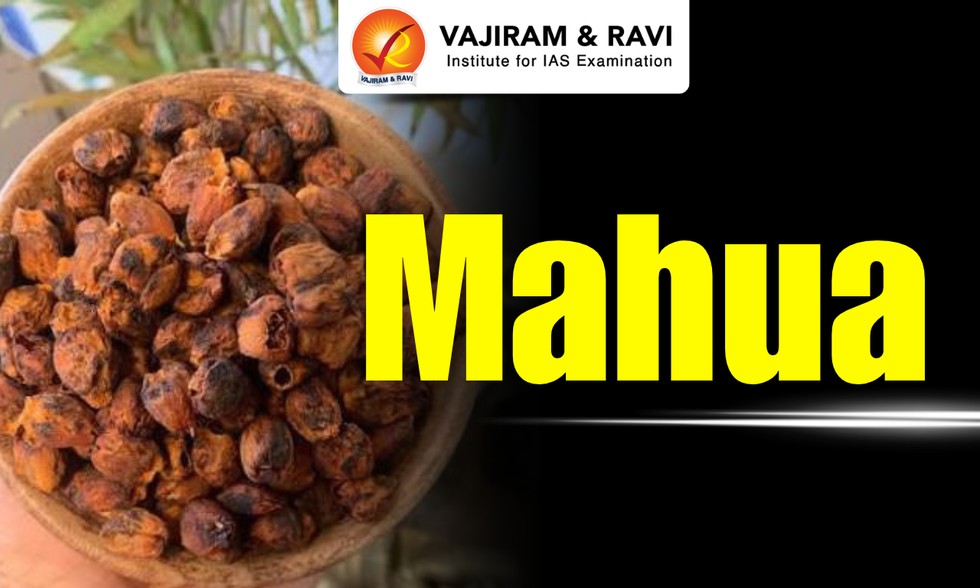
About Mahua Tree:
- It is a medium-sized deciduous tree that grows to a height of 16–20 metres, predominantly found in the forests of Central India.
- Mahua is revered as a “Tree of Life” among tribal communities and is considered sacred.
- Distribution: It is commonly found in West Bengal, Odisha, Chhattisgarh, Jharkhand, Bihar, parts of Northern and Central India, and also in Maharashtra, Gujarat, Telangana, Tamil Nadu, and Kerala.
- Nutritional and Economic Role: The flowers are consumed raw or sun-dried and are highly nutritious. They are traditionally fermented to produce a strong alcoholic drink, which is a major source of livelihood for tribal families.
- Livelihood Support:
- Its flowers, leaves, fruits, seeds, and even fruit shells are used in everyday tribal practices, including funeral rites.
- The collection and processing of Mahua flowers support tribal economies, offering food security, employment, and income generation, especially for women collectors.
- Ecological importance:
- Mahua’s night-blooming, strong-smelling flowers attract bats, aiding in pollination and seed dispersal.
- Sloth bears and other forest animals also feed on its flowers, showing its importance in the forest food web.
Source: How a tribal village in Madhya Pradesh is reclaiming mahua economy