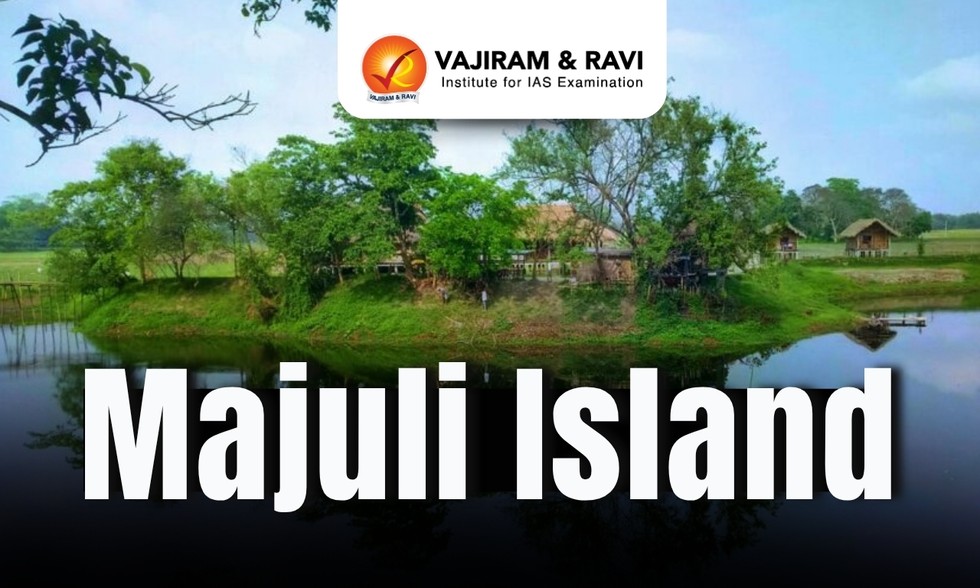
A new study has reconstructed nearly 4,000 years of climate and vegetation history of Majuli Island in Assam.
About Majuli Island:
Location: It is located in the Brahmaputra river system, in Assam.
It is the world’s largest river island located in Assam.
Formation: It is formed by the Brahmaputra River in the south and the Kherkutia Xuti, a branch of the Brahmaputra, joined by the Subansiri River in the north.
Crops cultivated:Rice cultivation is the primary livelihood for the residents of Majuli, with several unique varieties of rice, such as Komal Saul and Bao Dhan, grown in the region.
Tribes: Most of the islanders belong to three tribes-Mishing, Deori, and Sonowal Kachari, with the non-tribal Assamese comprising the rest.
Culture: The island has also been the hub of Assamese neo-Vaishnavite culture, initiated around the 16th century by the great Assamese saint-reformer Srimanta Sankerdeva and his disciple Madhavdeva.
They initiated the tradition of Satras (monastic institutions), and these Satras have preserved Sattriya dance, literature, bhaona (theatre), dance forms, mask making, and boat-making.
Apart from Satras or Vaishnavite monasteries, Majuli is famous for mask-making and has a tradition of pottery making.
Dear Student,
You have still not entered your mailing address. Please enter the address where all the study materials will be sent to you. (If applicable).