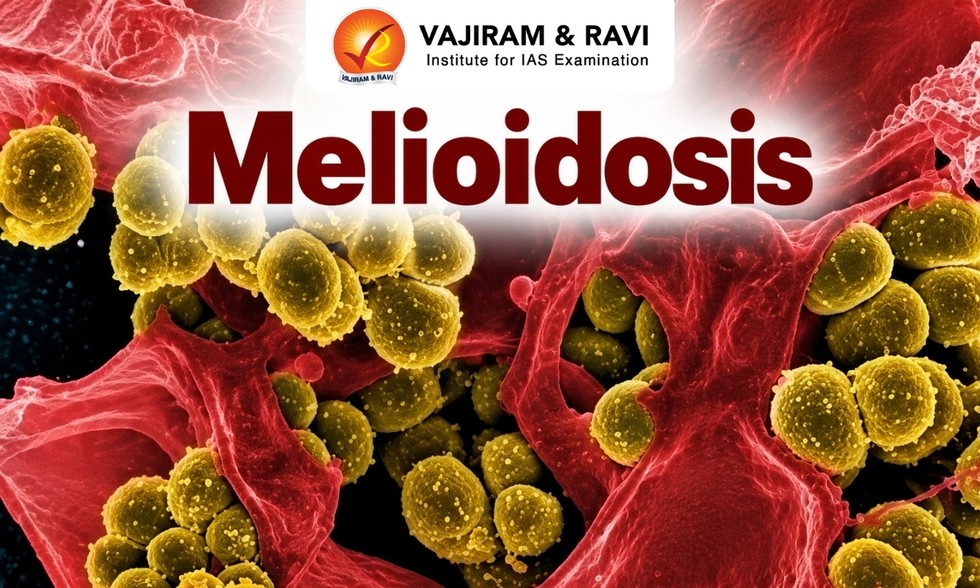
A study published in The Lancet Global Health, assessed high-risk hospitalised adults at 15 Indian tertiary-care centres between 2023 -2025 and confirmed melioidosis was found in 262 of 2,953 patients, of those diagnosed, 50 (19.1%) died in hospital.
About Melioidosis:
It is an infectious disease caused by the environmental Gram-negative bacterium Burkholderia pseudomallei.
Burkholderia pseudomallei is found in soil and water in tropical and subtropical regions.
It is seasonal, with 75–85% of cases occurring during the rainy season.
It is common in people living with: Diabetes, Alcohol use disorder, Chronic kidney disease, Chronic lung disease (like cystic fibrosis or COPD).
Transmission:
Infection usually occurs when contaminated soil or water enters the body through cuts or wounds.
Inhalation of contaminated dust or water droplets and, less commonly, ingestion of contaminated water can also transmit the bacterium.
It is not typically transmitted from animals to humans, and human-to-human transmission is exceptionally rare.
Melioidosis can cause pneumonia, bloodstream infection, skin and soft-tissue infections, abscesses in organs such as the liver and spleen, septic arthritis and bone infections.
It is an infectious disease endemic in Southeast Asia, northern Australia, much of the Indian subcontinent, southern China, Hong Kong, and Taiwan.
Treatment: Treatment has two phases: an initial intensive phase with intravenous antibiotics, followed by prolonged oral eradication therapy to reduce the risk of relapse.
Dear Student,
You have still not entered your mailing address. Please enter the address where all the study materials will be sent to you. (If applicable).