
Palaeoloxodon Namadicus
Researchers discovered a fossilised jaw along the Narmada River in Madhya Pradesh and revealed that this 75-cm-long remains may belong to Palaeoloxodon namadicus.
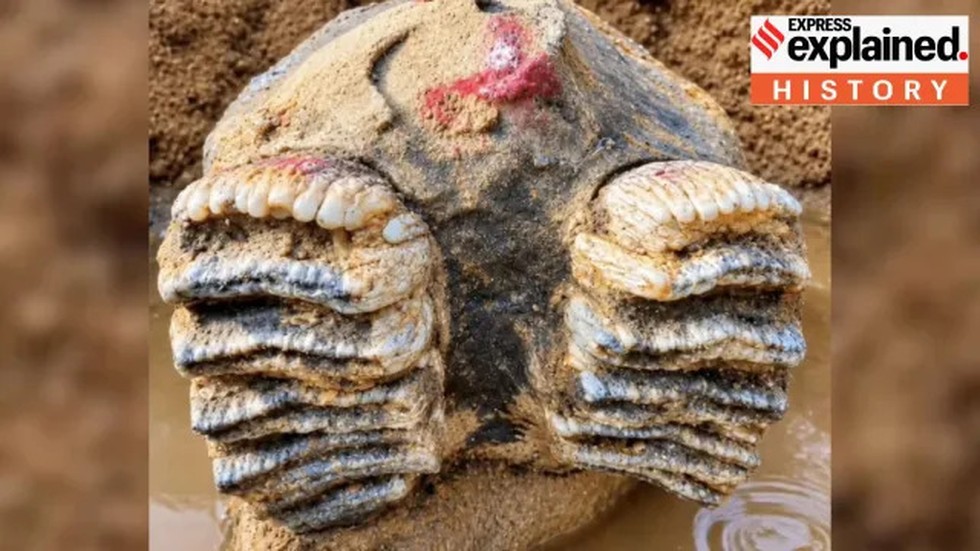
About Palaeoloxodon Namadicus:
- It is an extinct straight-tusked elephant species that was among the largest elephants to have ever lived.
- The species is considered one of the largest land mammals known to have existed.
- Its remains have been found in geological deposits associated with the Pleistocene period, which lasted from around 2.6 million years ago to approximately 11,700 years ago.
- It was found at Patai Ghat near Patai village in the Deori tehsil of Madhya Pradesh's Raisen district.
- Features of Palaeoloxodon Namadicus:
- It is the largest proboscidean currently known, making it slightly larger than the European Straight Tusked Elephant
- Distribution: It is mostly known from several post-Siwalik hills Pleistocene beds of India.
- The type locality is in Narmada-Godavari region of Madhya Pradesh and Maharashtra-Telangana respectively, with additional report from Ganga valley of Uttar Pradesh and Bankura district of West Bengal.
Source: A 75-cm jaw, a prehistoric giant: What MP’s latest fossil discovery reveals