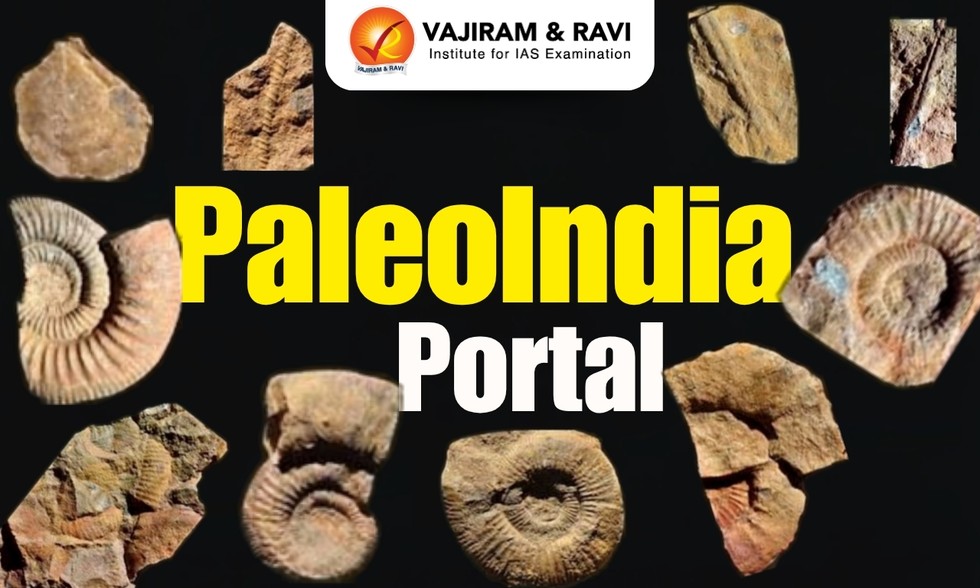
About PaleoIndia Portal:
- It is a digital initiative developed jointly by the Zoological Survey of India (ZSI) and the National Centre for Sustainable Coastal Management (NCSCM), Chennai, using dynamic geological maps provided by the GSI.
- The digital platform documents fossil fauna across all 28 states and 8 Union Territories.
- It currently hosts information on many fossil specimens spanning mammals, reptiles, birds, fishes, amphibians, molluscs, arthropods, foraminifera, echinoderms, and ichnofossils.
- It features a real-time data upload system to enable field-based and citizen science contributions for safeguarding India’s paleontological heritage.
Key Facts about National Centre for Sustainable Coastal Management (NCSCM):
- It was established by the Ministry of Environment, Forest, and Climate Change (MoEF&CC) in 2011 as an autonomous institution to support the protection, conservation, rehabilitation, management, and policy advice of the coast.
- Headquarters: Chennai, Tamil Nadu
- Aims and Objectives:
- Strive for being a world-class knowledge institution related to coastal zones, environment, resources, and processes.
- To promote integrated and sustainable management of the coastal and marine areas in India for the benefit and well-being of the traditional coastal and island communities.
- Advise the Union and State Governments and other associated stakeholder(s) on policy and scientific matters related to Integrated Coastal Zone Management (ICZM).
- Its work includes coastal vulnerability assessments, coastal environmental impact studies, mapping of Ecologically Sensitive Areas (ESAs), and creating Integrated Coastal Zone Management (ICZM) plans.
- The Six Research Divisions of the NCSCM are:
- Geospatial Sciences, Remote Sensing and Geographic Information Systems (GIS)
- Integrated Social Sciences & Economics
- Coastal environmental impact assessment
- Conservation of Coastal & Marine Resources
- Knowledge, Governance and Policy
- Futuristic Research and Integrated Island Management Unit.