
Pichwai Painting
Recently, the Prime Minister of India presented a Golden Pichwai painting from Nathdwara, Rajasthan, to US President.
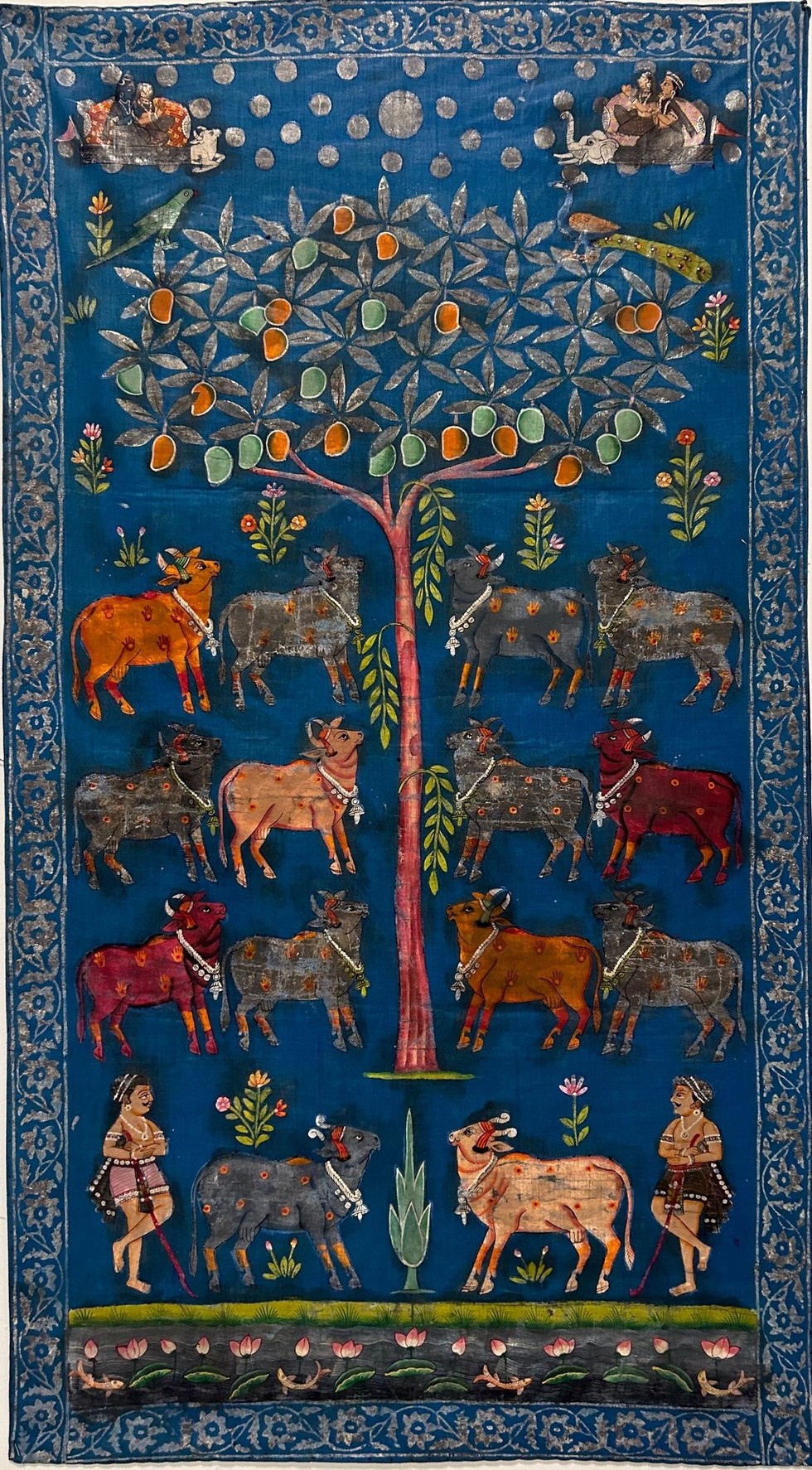
About Pichwai Painting:
- It is a traditional style of painting that originated in the state of Rajasthan in India.
- Time Period: The history of this art form can be traced back to the 17th century.
- Origin: It is believed to have originated in the town of Nathdwara in Rajasthan.
- Theme: It mainly features the various stages of Lord Krishna’s life.
- Material used: The artists use stone pigments, especially for gold and silver tones. The brighter orange, red, chrome yellow and kesari colours come from vegetable dyes
- Other schools of Pichwai — Nathdwara, Kishangarh and Bundi in Rajasthan and Deccan school
- They are often used to decorate the backdrops of Hindu temples, where they serve as a visual representation of the stories associated with Lord Krishna.
- Features:
- These paintings have distinct features of a heavier body and large elongated eyes, with a broad nose of Shrinathji, similar to the features of the idol at the temple.
- Patterns: The paintings are often filled with details, such as flowers, animals, and geometric patterns, which are arranged in a symmetrical and balanced composition.
- Famous Pishwai Paintings are:
- Shrinathji in Black & Gold
- Ras Leela – Krishna with Radha
- Giriraja Pichwai – depicting Lord Krishna carrying Govardhana mountain on his little finger.
Source: Pichwai painting for Trump, Banarasi stole for Takaichi: PM's gifts to world leaders