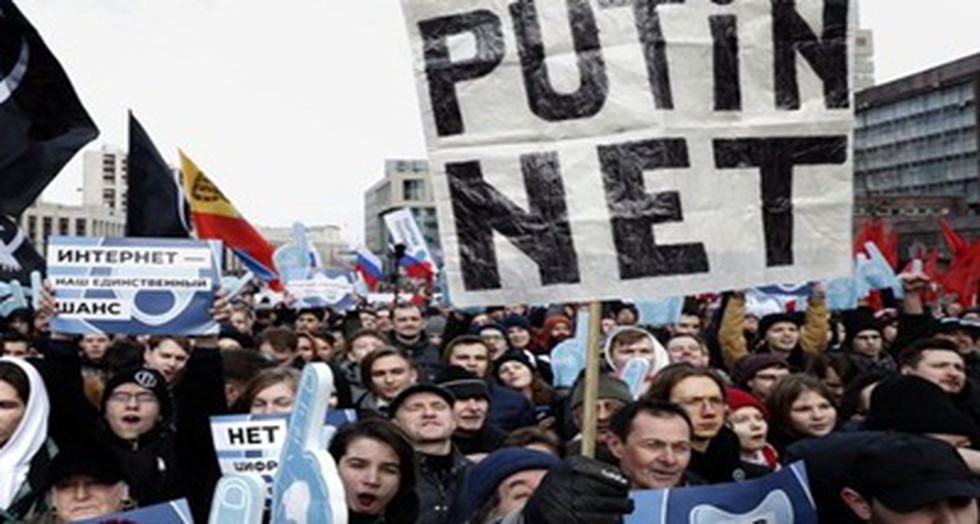
Thousands of people in Russia have protested against plans to introduce tighter restrictions on the internet. A mass rally in Moscow and similar demonstrations in two other cities were called after parliament backed the controversial draft bill last month.
About:
The draft law, called the Digital Economy National Programme, is aimed at experimenting with isolating the country's internet (Runet) from the rest of the world to ensure it could remain available and secure in the event of a cyber-attack or other incident.
This means that data from its own organisations and users would remain within Russia, rather than being distributed globally.
Arguments in favour: Proponents say the bill will increase the cyber security and stability of Russian internet in the event of foreign interference.
Arguments against: The legislation was one of several new laws that "seriously threaten internet freedom".
The new bill is just one more layer of censorship from the government, which will end up costing consumers more money for internet services and risks further isolating them from the outside world.
The new measures would allow the government to gain control over traffic exchange points and cross-border internet traffic transitions.
internet pre-filtering centres will also be introduced and the Russian Federal Service for Supervision of Communications, Information Technology and Mass Media (also known as the Roskomnadzor) will be able to regulate traffic routing.
The high costs of the project — which could be more than 20 billion roubles (€270 million) — would "negatively impact" telecom providers and eventually consumers.
Dear Student,
You have still not entered your mailing address. Please enter the address where all the study materials will be sent to you. (If applicable).