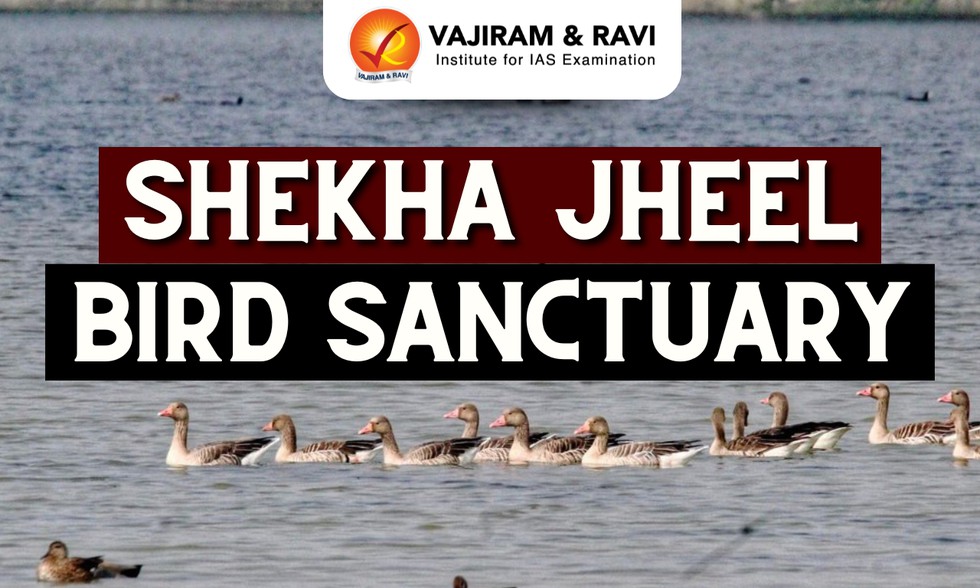
About Shekha Jheel Bird Sanctuary:
- Location: It is located in Uttar Pradesh.
- It is a typical monsoonal wetland of the Gangetic plains.
- It is a fresh water perennial water body that came into existence after the formation of the Upper Ganges Canal in 1852 which flows adjacent to the lake.
- It acts as a crucial stopover on the Central Asian Flyway.
- Vegetation:
- The submerged vegetation consists of Hydrilla verticillata, Ceratophyllum demersum, Vallisneria spiralis, Potamogeton crispus and Najas.
- Free-floating vegetation consists of Salvinia and Azolla, Eichhornia crassipes. Rooted floating vegetation includes Nymphoides cristata and Nymphoides indica.
- Fauna: It is providing a vital habitat for migratory birds such as the Bar-headed Goose, Painted Stork and various ducks during the winter season.
What are Ramsar Sites?
- It is a wetland recognized under the Ramsar Convention (1971) for its international importance in conserving biodiversity and sustaining ecological balance.
- These wetlands provide critical habitats for migratory birds, endangered species, and unique flora and fauna.
- They help in groundwater recharge, flood control, and climate regulation, while supporting local livelihoods like fishing and agriculture.
- India currently has 99 Ramsar Sites spread across 28 states and union territories.