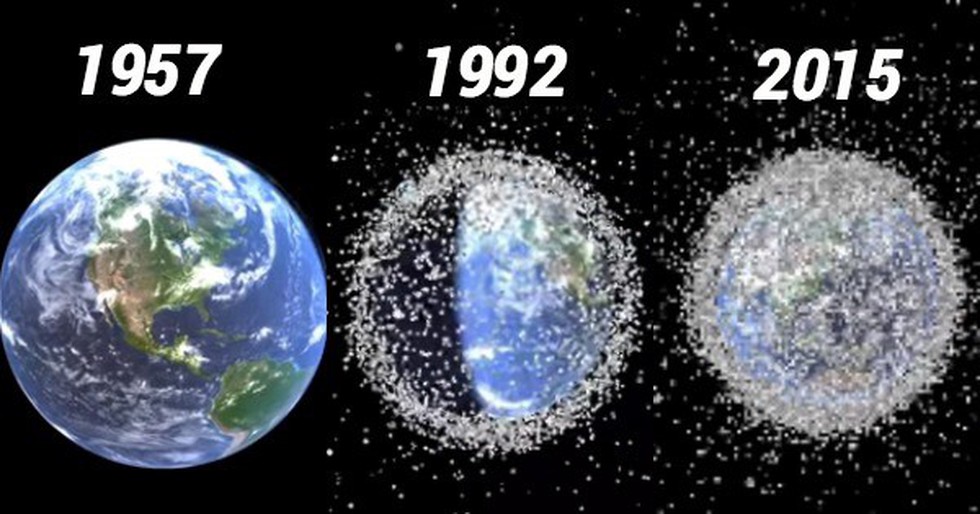
About:
- Space debris encompasses both natural (meteoroid) and artificial (man-made) particles
- Artificial debris (also referred as orbital debris) includes non-functional spacecraft, abandoned launch vehicle stages, mission-related debris and fragmentation debris.
Status of Orbital Debris:
- According to ESA’s Space Debris Office, in almost 60 years of space activities, more than 5200 launches have placed some 7500 satellites into orbit, of which about 4300 remain in space; only a small fraction − about 1200 − are still operational today (data as on January 2017).
- This amounts to 7,500 tonnes of defunct, artificially created objects currently in space.
- Space junk will further increase due to -
- Launching of CubeSats (inexpensive, tiny satellites) are going to add space junk in coming years,
- Entry of private players like SpaceX in the space domain and
- Kessler syndrome.
Recent development: RemoveDEBRIS spacecraft
- RemoveDEBRIS is a satellite research project intending to demonstrate various space debris removal technologies.
- The satellite's platform was manufactured by Surrey Satellite Technology Ltd (SSTL).
- It was launched aboard the SpaceX Dragon refill spacecraft in April 2018 as part of the CRS-14 mission.
- In September 2018, it demonstrated its ability to use net to capture a deployed simulated target.
- Recently, scientists using the RemoveDEBRIS spacecraft fired the harpoon at a speed of 20 metres per second to hit the planted satellite panel, demonstrating the potential for collecting the rubbish just beyond our atmosphere.
- RemoveDEBRIS is also fitted with cameras and scanners to analyse chunks of debris and the speed at which they whizz past the spacecraft.