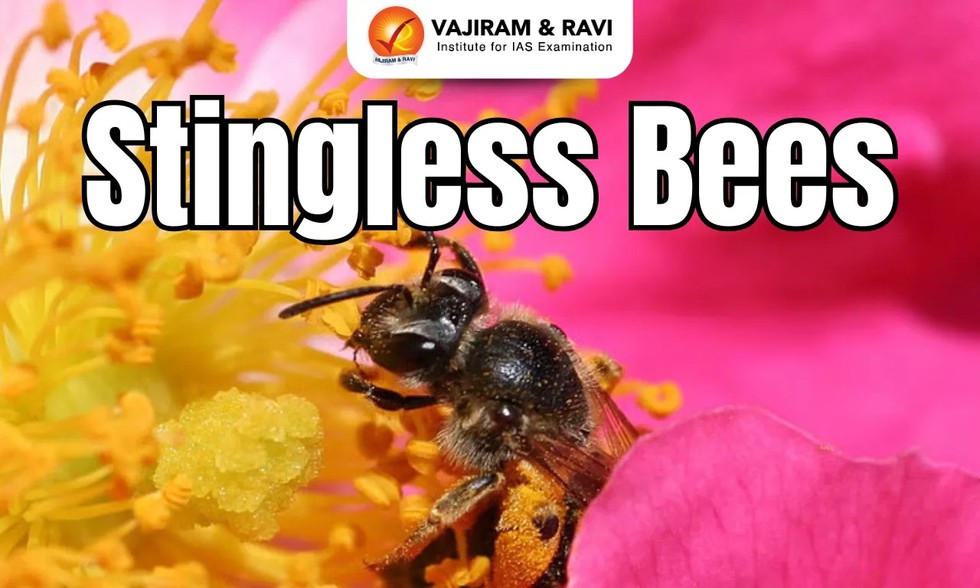
Amazonian stingless bees have become the first insect in the world to be granted legal rights, after two municipalities — Satipo and Nauta — in Peru passed an ordinance earlier this month.
About Stingless Bees:
Stingless Bees are a class of bees which either do not have stingers or have stingers that cannot cause much pain.
Common genera of stingless bees: Austroplebeia, Melipona, and Tetragonula.
Defence Mechanism: They do possess stingers, but they are too small to be useful in defense. Instead of stinging, stingless bees use their mandibles to bite their attackers.
Stingless bees are among the planet’s oldest pollinators, with a remarkable concentration of species in the Amazon rainforest.
Distribution: They are found in tropical regions across the world, and about half of the 500 known species live in the Amazon.
Africa, Australia, Southeast Asia, and parts of the Americas are the main areas where the stingless bee is found.
In India, these bees are reported primarily from the northeastern, eastern, and southern Indian States.
Benefits: Stingless bees can be used for pollination without fear of being stung. They are known for their popular medicinal honey and pollination potential.
Threats: Deforestation has reduced nesting sites, while pesticide use, climate change and competition from invasive honeybees have further weakened populations.
Dear Student,
You have still not entered your mailing address. Please enter the address where all the study materials will be sent to you. (If applicable).