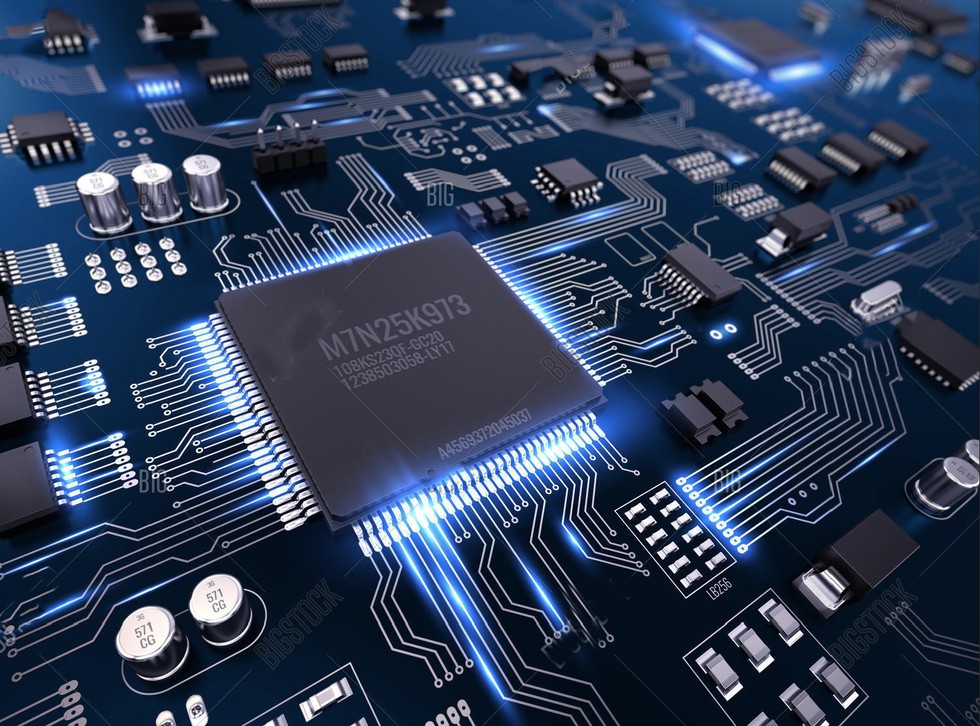
About Surface Mount Technology (SMT):
- It refers to a manufacturing technique where electronic components are directly applied to the surface of a printed circuit board (PCB).
- SMT, developed in the 1960s and 1970s, replaced conventional through-hole technology (THT), producing more compact, economical, and efficient electronic devices.
- This method enables automated production to conduct a more extensive assembly, resulting in the creation of a fully functional circuit board.
- Any electronic element installed in this manner is identified as a surface-mounted component (SMD).
- In opposition to conventional manufacturing techniques, SMT removes the necessity for elements to be placed through apertures; rather, elements are attached to the board via the process of soldering.
- The two main soldering techniques are reflow soldering and wave soldering.
- Assembling PCBs using SMT involves various steps like solder paste application, component placement, reflow soldering, and cleaning.
- SMT is used in many industries like consumer electronics, medical, and aerospace industries.
- THT vs. SMT:
- As compared to THT, SMT has cheaper production costs, increased component density, and superior electrical performance. But the initial cost is high, and it is difficult to repair.
- The process for SMT production setup is faster when compared to THT. This is because components are mounted using solder paste instead of drilled holes. It saves time and labor-intensive work.
- SMT supports microelectronics by allowing more components to be placed closer together on the board. This leads to designs that are more lightweight and compact.
- Simplicity: In THT, lead wires pass through the holes to connect components. Because SMT components are soldered right onto the PCB, the overall makeup is far less complex.
- The heat dissipated in SMT is also less than through-hole components.