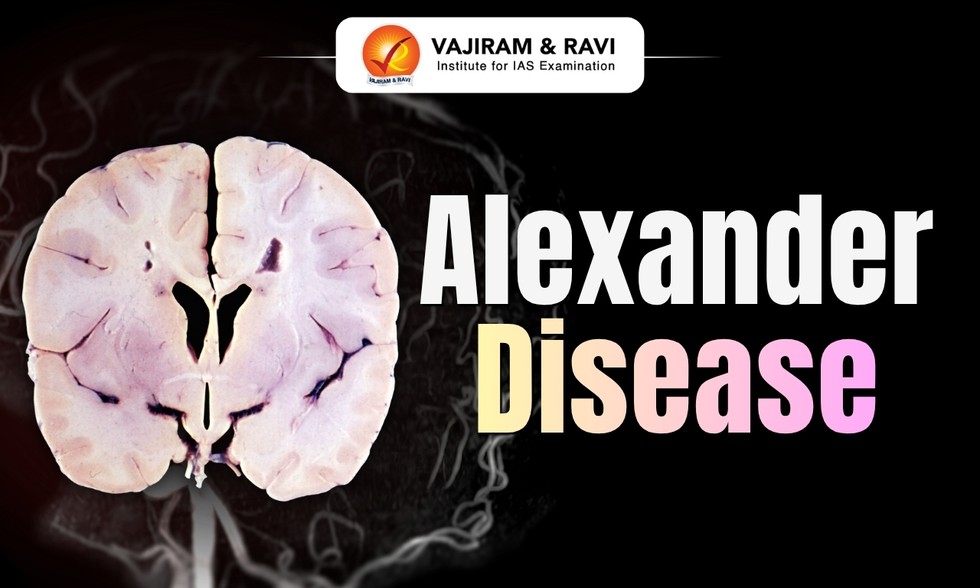
Ionis Pharmaceuticals recently said it would price its newly approved therapy to treat Alexander disease at $285,000 per dose, a day after the U.S. FDA cleared the injectable drug, making it the first approved treatment for the genetic disorder in adults and children.
About Alexander Disease:
It is a rare genetic disorder that progressively damages the nervous system.
It is a type of leukodystrophy, a group of conditions that affect the white matter of the brain.
These diseases damage the myelin sheath, which surrounds and protects the nerve cells in the brain and spinal cord and speeds transmission of messages between cell
In Alexander disease, the myelin insulating the nerve fibers in the brain deteriorates over time, and abnormal clumps of protein, called Rosenthal fibers, accumulate in the brain.
This causes the nervous system to stop working properly.
Cause:
Most cases of Alexander disease are caused by a mutation in the GFAP gene, which directs the body’s production of a glial fibrillary acidic protein (GFAP).
At normal levels, GFAP supports the brain’s white matter (the myelin sheath).
The mutation of this gene in Alexander disease causes this protein to accumulate.
Instead of helping maintain the brain’s white matter, the extra GFAP does the opposite, killing other cells and damaging the myelin.
In most cases, the gene mutation associated with Alexander disease is not inherited from a parent.
It is simply a random mutation and is new in the person who develops the syndrome.
In some cases, Alexander disease is inherited from a similarly affected parent.
Symptoms:
Most cases of Alexander disease begin before age 2 and are described as the infantile form.
Signs and symptoms of the infantile form typically include an enlarged brain and head size (megalencephaly), seizures, stiffness in the arms and/or legs (spasticity), intellectual disability, and developmental delay.
Less frequently, onset occurs later in childhood (the juvenile form) or in adulthood.
Common problems in juvenile and adult forms of Alexander disease include speech abnormalities, swallowing difficulties,seizures, and poor coordination (ataxia).
Rarely, a neonatal form of Alexander disease occurs within the first month of life and is associated with severe intellectual disability and developmental delay, a buildup of fluid in the brain (hydrocephalus), and seizures.
Treatment:
There is no complete cure for Alexander disease, but the U.S. FDA recently approved Zanvastro (zilganersen), which is the first disease-modifying therapy that directly targets the underlying protein buildup driving the condition.
Dear Student,
You have still not entered your mailing address. Please enter the address where all the study materials will be sent to you. (If applicable).