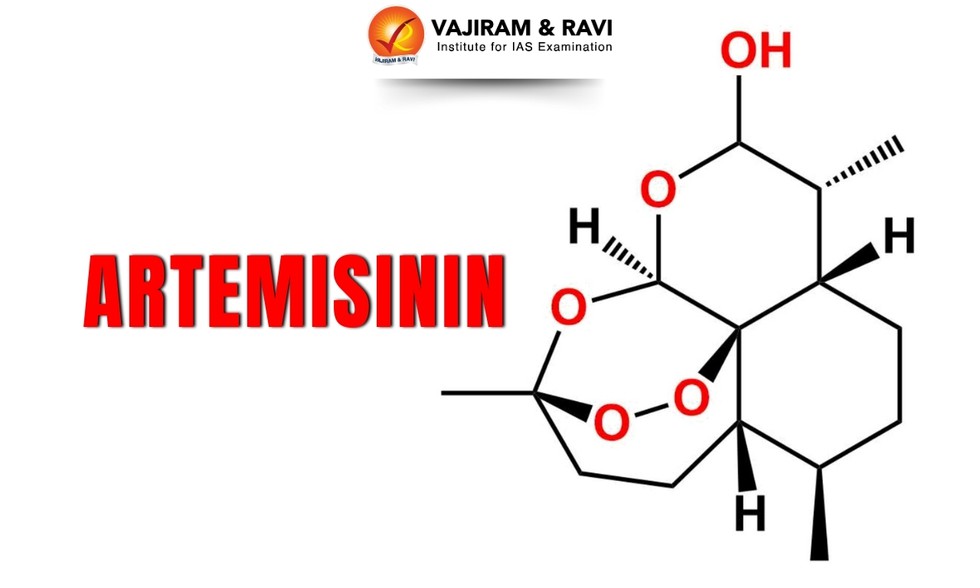
A new study has found that any place with heavy artemisinin use and favourable conditions could become a new hotspot for resistance, and that in some parts of Africa, the frequency of resistance markers is gradually increasing.
About Artemisinin:
It is an antimalarial drugderived from the sweet wormwood plant, Artemisia annua.
The process involves drying the leaves and using a solvent to extract the active ingredient.
Discovery of artemisinin's therapeutic benefits in the 1970s was a breakthrough in malaria treatment.
It offered a new option when the malaria parasite was becoming resistant to older drugs like chloroquine and sulfadoxine-pyrimethamine.
Artemisinin is effective against all the malaria-causing protozoal organisms in the genus Plasmodium.
It mainly targets the parasite during the blood stage, disrupting its ability to replicate within red blood cells.
It helps significantly reduce the parasites but doesn't stay in the body for a long time, being eliminated within hours.
It is usually partnered with another drug that eliminates the remaining parasites over a longer period of time.
The World Health Organization (WHO) recommends artemisinin-based combination therapies (ACTs) as the go-to treatment for Plasmodium falciparum malaria.
Today, there are several derivatives of artemisinin, including artesunate and artemether, that are used in the treatment of malaria.
Artesunate is highly effective at treating severe malaria as it is the only artemisinin derivative that can be given via intravenous injection.
Dear Student,
You have still not entered your mailing address. Please enter the address where all the study materials will be sent to you. (If applicable).