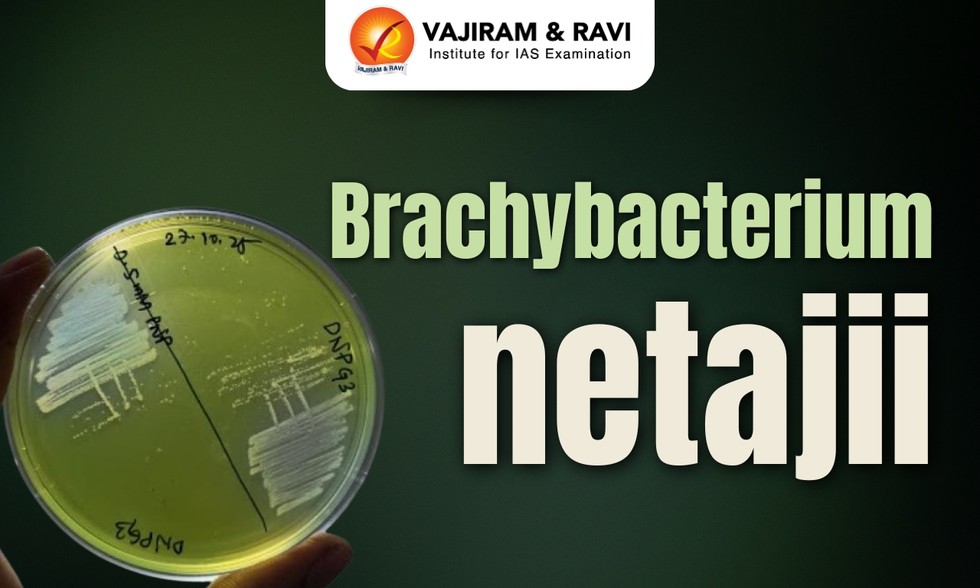
About Brachybacterium netajii:
- It is a new species of bacteria.
- It was discovered from the Hooghly (a distributary of the Ganges) region of West Bengal.
- It possesses a remarkable ability to break down toxic chemicals and survive heavy metal pollution.
- It can safely degrade p-nitrophenol (PNP), a toxic industrial chemical, and boasts extreme resilience, surviving high concentrations of toxic heavy metals like arsenic, cadmium, lead, and mercury.
- It is also halotolerant, meaning it can withstand highly salty environments containing up to 9% salt.
- Its cellular makeup is unique. It features specific fatty acids in its cell structure, notably ones known as C11:0 and C10:0 2-OH, which are absent in its closest relatives.
- Its genome is packed with unique genomic islands, chunks of DNA likely absorbed from other organisms.
- They contain instructions for producing industrial enzymes and natural protective shields, such as a compound called ectoine that helps it survive extreme environmental stress.