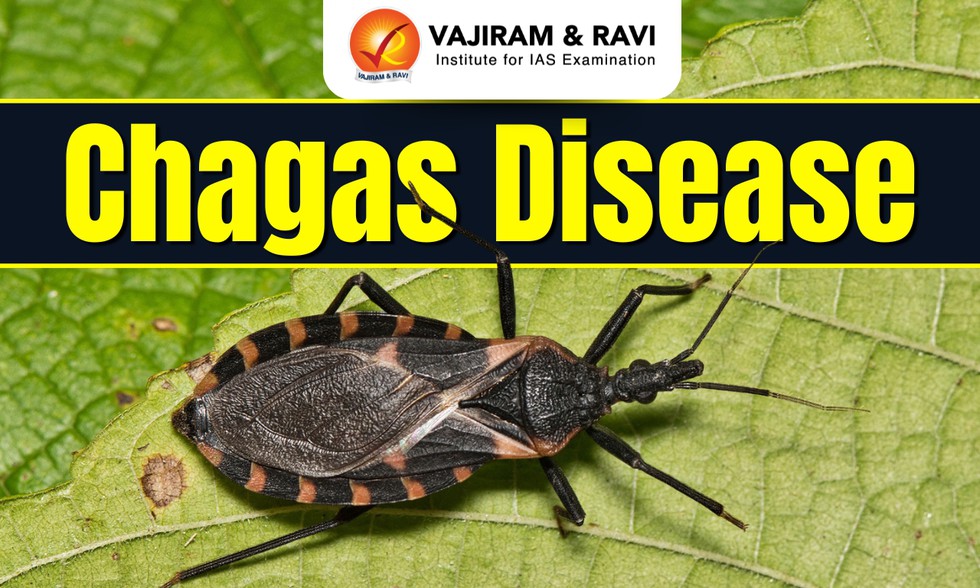
World Chagas Disease Day is observed every year on April 14 to raise awareness around the disease, and the impact it has on lives.
About Chagas Disease:
Chagas disease, also known as American trypanosomiasis, is an inflammatory, infectious disease caused by the protozoan parasite, Trypanosoma cruzi.
It is an illness that can cause serious heart and stomach problems.
It is the result of a complex health problem typical of neglected tropical diseases and socially- and environmentally-determined diseases.
Transmission:
The most common way people are infected with Chagas is through the blood-sucking triatomine bugs.
This parasite is found in the feces of the triatomine bug.
These bugs also are called reduviid. They may also be known as “kissing bugs” because they tend to bite people’s faces.
The parasite can also be transmitted from mother to child during pregnancy or childbirth, through contaminated food and beverages, blood transfusions, organ transplants, or laboratory accidents.
Once a person has the infection, they remain infected for decades, often with no signs or symptoms of illness.
Chagas disease is common in South America, Central America, and Mexico, the primary home of the triatomine bug.
Prevention:
There is no vaccine to prevent Chagas disease.
Vector control,reducing interaction between humans and vector insects, has been the most effective method of prevention.
Blood screening is necessary to prevent infection through congenital transmission, transfusion, and organ transplantation.
Treatment:
During the first phase of infection, treatment of Chagas disease aims to kill the parasite.
Later, it’s no longer possible to kill the parasite. Treatment in this later phase is about managing symptoms.
Dear Student,
You have still not entered your mailing address. Please enter the address where all the study materials will be sent to you. (If applicable).